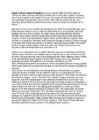
Benito Amilcare Andrea Mussolini was born on July 29, 1883 and died in April 28, 1945was an Italian politician who led the National Fascist Party and is credited with being one of the key figures in the creation of Fascism. He became the Prime Minister of Italy in 1922 and began using the title Il Duce by 1925. After 1936, his official title was "His Excellency Benito Mussolini, Head of Government, Duce of Fascism, and Founder of the Empire". Mussolini was born into a working class background; his father Alessandro Mussolini was a blacksmith and a Marxist activist, while his mother Rosa was a school teacher; unlike her husband, she was a devout Catholic. His father named Benito after Mexican reformist President Benito Juárez; while his middle names Andrea and Amilcare were from Italian socialists Andrea Costa and Amilcare Cipriani. Benito was the eldest of his parents' three children
rahutused. Kõrghetk oli sama aasta 7. juunil, mil Olympia saali kogunes koosolekule 2000 mustsärklast ja üle 10 000 huvilise. British Union of Fascists seisukohtade iseloomustus Tsitaadid Oswald Mosley raamatust The Greater England (London, 1932): "Fasism on ülim edasiviiv jõud ja revolutsiooniline dogma maailmas. See püüab oma eesmärke saavutada lähtudes tavadest ning jälgides korda ja seadusi, kuid objektiivselt võttes on see kas pöörettekitav või eimiski." ("Fascism is the greatest constructive and revolutionary creed in the world. It seeks to achieve its aim legally and constitutionally, by methods of law and order; but in objective it is revolutionary or it is nothing.") "Viimase neljateistkümne aasta jooksul pole vanad parteid toonud Suurbritanniale väljapääsu, nad ei too seda kunagi. Nad pole kriisist teadlikud, nad pole valmis sellele reageerima, isegi nende psüühika pole selliste asjade esilekerkimiseks valmis. Me ei saa nendega teha
2004, much less conjecture. Rev in 1960s-70s about Eur, not SU. Everywhere but SU, records about ind Js on pathways, ghettoization, labor, murder. SU, no Ger records, system fundamentally diff. Still probs w #s. 2/3 killing in camps, ghettos. 2 mill SU Js. Slave labor complex not known until recently, extensive throughout Europe. Not a straightforward subject, several subjects intertwined, SU Holocaust. Js dying en masse certainly at top. Context of total national mobilization for defeat of fascism. Unthinkable human suffering. Tens of mill SU citizens died, many more suffered. Yet regime would never admit, defeat of Germany meant taking up cause of Js. Rise in popular anti- Semitism, as Red Army losing battle, turns around 42-43. Decrease in anti- antisemitism. Dramatic shifts in J demography, not just deaths; color map, location of Js will change, no longer in Eur Russia. What is written about first year or two of war? Why so hard to find info about what happened
capella Art and architecture o Studio, fresco, miniature, attitude, corridor, balcony, cupola, dome Literature o Sonnet, motto Fashion o Umbrella, parasol, costume, Military o Squadron, squad, alarm, brigade, battalion, cartridge, cavalry, infantry, colonel Random o Fiasco, bankrupt, bimbo, volcano, influenza, lava, bandit, mafia, fascism, graffito, paparazzo Food o Pizza, pasta, macaroni, vermicelli, spaghetti, broccoli, zucchini, tutti-frutti, tiramisu Drinks o Asti, grappa, espresso, cappuccino, latte, 11. Dutch borrowings Nautical terms o Boom, caboose, buoy, skipper, yacht, dock, cruise, freight, Weaving o Spool, kink Art o Easel, etch, landscape, Random
There was great interest in Ancient literature and philosophy. English scolars borrowed words directly from Greek. They were bookish and scientific words. (nt, athlete, myth, enthusiasm). The Dutch lg- ship building terms were borrowed in the middle ages (nt, deck, rift(hari), skipper, yacht. Italian in the 16th cent Italic words penetrated into the Engl lg. Italy had a very developed culture (nt, violin, trio, piano, solo, libretto; studio, fresco, canto) Also casino, macaroni, spaghetti, fascism. Spanish borrowings were borrowed directly(nt, banana, cocoa, tomato, burrito,mosquito).Portugese: cobra, emu, port, tank, veranda. Russian: ruble, verst, steppe, vodka, tiga, crash. German words were translated word for word (nt, chain-smoker, home-sickness, masterpiece, swan-song; thing in itself, world outlook, world market; kinderkarten, schnaps, sour kraut, deli). Non-European lg: Arabic words came in the middle ages through French (nt, algebra, alixir, hashish, harem, islam, sherbet)
Gaps-places in a text- require reader's imagination, thinking ability. Allusions, symbols, metaphors, digression, rhetorical question, open endings. Balance is the key. Too many gaps in Modernist texts. Fiction as a way of finding order in chaotic world. Aggravating political and economic situation. A reflection of the general condition in Europe and America. 1929-stock market crash. 1930's-great depression. Mass unemployment in Britain, nazism in germany, fascism in italy, terror in stalinist russia. Fear of both fascism and stalinism. A turn in the mood, aesthetic programme, moral convictions and public taste. The Golden Age of the detective story. 1920 Agatha Christie's first novel (out of 80). The Mysterious Affair of Styles. Belgian private detective Hercule Poirot. 1926-1939-most famous crime stories. Crime wave after WWI. A renewed interest in crime fiction. A general tiredness with high intellectual demands of high modernism.
In crime fiction, chaos in the beginning, but order and also balance restored through the work of the intellect. Stock market crash took in America in 1929, spread to Europe – the 1930s and the Great Depression. Mass unemployment, Nazism, fascism in Europe, Stalin – people feared these powers. Many authors politically active (for instance Aldous Huxley). Much of the literature of the 1930s is very bleak and pessimistic. Topics: questions of class and sexual repression
17 Dessa författare kom inte bara att förnya romanens miljö och form, utan också organisera sig runt små egna förlag och stötta varandra i utgivningen, vilket till en början gjorde dem till utmanare till de stora bokförlagen. Över tid blev de dock alltmer etablerade och upptagna i den högre kulturkrets där storförlagen fanns. De förblev dock socialt och politiskt engagerade, och gjorde ställningstaganden mot nazism och fascism som förekom under kriget. Det sociala engagemanget kom av deras bakgrund som också blivit deras litterära miljö. Vilhelm Moberg skrev sin realistiska prosa om bönderna medan Jan Fridegård, Moa Martinson och Ivar Lo- Johansson skrev om statarna och deras hårda livsvillkor. Många av autodidakternas verk räknas som svenska klassiker. Moa Martinsons Kvinnor och äppelträd, Mobergs utvandrarepos, Ivar Lo-Johanssons Godnatt, jord och Fridegårds böcker om Lars Hård är några av dem.
2 downfall 6 uprising was really a commentary on the Transcript WB 15 3 make-up 7 comeback terrible consequences of fascism Fiona If I ever got the chance, I'd 4 takeover 8 outbreak and communism that swept really love to go to Egypt to the Valley 2 They were convicted criminals. across Europe during the 1930s of the Kings, where all the pharaohs, The British expected them to build and 1940s.
 annaabi.ee