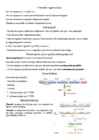
polümeraas fosforüleeritakse ning algab RNA süntees Oluline osa geenide regulatsioonis on enhaanseritel Enhaanseralade kasutamine (ja geenide aktivatsioon) sõltub rakus olevatest spetsiifilistest transkriptsioonifaktoritest Immuunrakkudel on retseptorite ja antikehade geenid, mis rekombineeritakse unikaalsel viisil Hamba arenguks on vaja paljude geenide koostöö Rakuvälised signaalid mõjutavad geenide ekspressiooni Eukaryotic cells have many different gene regulatory mechanisms A protein encoded from a gene may directly or indirectly affect its own gene activity (both positive or negative way) Transkriptsioonifaktori mitme seondumispiirkonna olemasolu geeni promootoris võimendab oluliselt transkriptsiooni taset Tuuma arhitektuur mõjutab geenide
domään, mis seondub kindla DNA järjestusega ja aktsivatsioonidomään, mis interakteerub teiste valkudega, et stimuleerida transkriptsiooni lähedaloleva promootori juurest. Kui N-terminaalne DNA-siduv domään siduda erinevate C-terminaalsete osade külge, siis tema funktsioon säilib. Kompleksid kas moodustuvad või ei moodustu. 5. Missugused TAFid on TBPga vahetus interaktsioonis? TBPga seonduvad TFIIB, TFIIA TBP is a subunit of the eukaryotic transcription factor TFIID. 6. Missugune TFII valk hüdrolüüsib ATPd ja mis protsessiga on tegu? ATPd hüdrolüüsib helikaasse aktiivsusega TFIIH, mis kasutab ATP hüdrolüüsi energiat selleks, et DNA dupleks startsaidis lahti kerida. 7. Võrdle transkriptsiooni initsitatsiooni protsesse prokarüootidel ja eukarüoo-tidel. Prokarüoodid toimuvad tsütoplasmas. *RNA polümeraasi holoensüümi (2 , ß, ß', ) seondumine DNA promootorpiirkonda
Heterotrophic bacteria take an active part in the natural recycling of substances. Autrotrophic bacteria Autotrophic bacteria make their own food, either by photosynthesis (which uses sunlight, carbon dioxide and water to make food) or by chemosynthesis (which uses carbon dioxide, water and chemicals like ammonia to make food - these bacteria are called nitrogen fixers and include the bacteria found living in legume roots and in ocean vents). Fungi - is a member of a large group of eukaryotic organisms that includes microorganisms such as yeasts and molds (British English: moulds), as well as the more familiar mushrooms. Actinomycetes - any member of a heterogeneous group of gram-positive, generally anaerobic bacteria noted for a filamentous and branching growth pattern that results, in most forms, in an extensive colony, or mycelium. The mycelium in some species may break apart to form rod- or coccoid-shaped forms. Many genera also form spores; the sporangia, or spore cases,
transkriptsioonifaktor seondub. Regioon (valgus, DNA-s jne), mis on spetsiifiliseks seostumiseks teistele molekulidele, ioonidele. · Speiser - geenide vaheline ala. Puuduvad prokarüootsetes geenides. · TBP - The TATA-binding protein (TBP) is a general transcription factor that binds specifically to a DNA sequence called the TATA box. Kuulub TFIID kompleksi. TBP is a subunit of the eukaryotic transcription factor TFIID. TFIID is the first protein to bind to DNA during the formation of the pre-initiation transcription complex of RNA polymerase II. TBP is also a necessary component of RNA polymerase I and RNA polymerase III, and is, it is thought, the only common subunit required by all three of the RNA polymerases. · HAT histoonide atsetüültranseferaas. Histone acetyltransferases (HATs) are enzymes
Abstract Multicopy genes, like ribosomal RNA genes (rDNA), are widely used to describe and distinguish individuals. Despite concerted evolution that homogenizes a large number of rDNA gene copies, the presence of different gene variants within a genome has been reported. Characterization of an organism by defining every single variant of tens to thousands of rDNA repeat units present in a eukaryotic genome would be quite unreasonable. Here we provide an alternative approach for the characterization of a set of internal transcribed spacer sequences found within every rDNA repeat unit by implementing direct sequencing methodology. The prominent allelic variants and their relative amounts characterizing an individual can be described by a single sequencing electropherogram of the mixed amplicon containing the variants present within the genome
The size, color, shape and form of a colony is characteristic of the bacterial species, its specific genetic makeup (its strain), and the environment which supports its growth. Microbial culture may also be used in the identification of viruses: the medium in this case being cells grown in culture that the virus can infect, and then alter or kill. In the case of viral identification, a region of dead cells results from viral growth, and is called a "plaque". Eukaryotic parasites may also be grown in culture as a means of identifying a particular agent. Microscopy Another principal tool in the diagnosis of infectious disease is microscopy. Virtually all of the culture techniques discussed above rely, at some point, on microscopic examination for definitive identification of the infectious agent. Microscopy may be carried out with simple instruments, such as the compound light microscope, or with instruments as complex as an electron microscope
rõngas ei tohiks laguneda. cap-sõltuva ja sõltumatu translatsiooni initsiatsiooni võrdlus. Miks kasutada IRES-t ? CAP-dependent initiation. Initiation of translation usually involves the interaction of certain key proteins with a special tag bound to the 5'-end of an mRNA molecule, the 5' cap. The protein factors bind the small ribosomal subunit (40S), and these initiation factors hold the mRNA in place. The eukaryotic Initiation Factor 3 (eIF3) is associated with the small ribosomal subunit, and plays a role in keeping the large ribosomal subunit from prematurely binding. CAP-sõltumatu initsiatsioon. The best studied example of the cap-independent mode of translation initiation in eukaryotes is the Internal Ribosome Entry Site (IRES) approach. What differentiates cap-independent translation from cap-
Ribosüümi mõiste. Ribosoom koosneb 2/3 RNA-st ja 1/3 valkudest. rRNA-d (kuid mitte valgud) annavad ribosoomile struktuuri, aitavad siduda tRNA mRNA-le ja katalüüsivad peptiidsidemete teket, seega käituvad kui ensüümid (ribosüümid). Valgusünteesi algatamiseks ja lõppfaasiks vajalikud komponendid ja struktuurid eukarüootides. I etapp( initsiatsioon): Ribosoomi väikese subühiku P sitei kinnitub initsiaator tRNA (Met).tRNA-le kinnitub eIF2 (eukarüoodi algatusfaktorid (ingl.k. eukaryotic initiation factors). eIF4E ja eIF4G - eukarüootide translatsiooni algatusfaktorid (asuvad mRNA cap struktuuri juures) transpordivad mRNA ribosooi väikese subühiku seostumis seiti. Initsiaator tRNA liigub mööda mRNAd ja otsib start koodonit AUG. Koodon leitud eIF2 eemaldub ja suur ribosoomi ühik seondub II etapp (elongatsioon): aminotsüül tRNA seostub A seiti, moodusutb esimene peptiidside (Met ja ah),katalüüsib peptidüül transferaas (ribosoomi suuremas alaühikus). Suur subühik
ase complex (MCP), is a multisubunit prote- fragments; however, there is insufficient evi- ase complex with an apparent sedimentation dence that MCP breaks down the same pro- coefficient of 20S. Two types of regulatory teins in postmortem muscle as in in vitro tests complexes bind to both ends of the cylindri- (Huang et al. 2007). Proteasomes remained cal 20S. One complex, the 26S proteasome, relatively stable throughout 7 days of aging is a eukaryotic ATP-dependent protease in beef and rabbit muscle (Yamamoto et al. (Tanaka 1998) and hydrolyzes ubiquitin- 2009), supporting their potential role in meat conjugated proteins (Tanaka 1998; Delbarre- tenderization. Aging/Tenderization Mechanisms 91 Current Enzymatic Model of substantially diminishes early postmortem,
 annaabi.ee