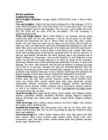
The content- where the word is placed in the sentence. Homonymy- words have same spelling, same pronounciation, but different meaning. Nt fair- laat ja õiglane. 16) Paradigmatic relations 17) synonyms A word that shares the same denotatiove, with another word, different spelling, pronaunciation but the same meaning. Nt male masculine Absolute synonyms- absolute aspects of meaning Near-synonym- nearly similar meaning Cognitive-nt I´m firm, you are subbourn 18) antonyms Opposite meaning. Contrary antonyms- gradable. Long-short Complementary- ungradable. Dead-alive Converse antonyms- relational by/sell, lend/ borrow 19) hypernyms and hyponyms Hyponym- a word phrase or lexeme of narrower or mre specific meaning that comes under another- a wider or more general meaning. A rose is a hyponym but a flower is a hypernym. 20) Meronym Semantic realtion used in linguistic. Meronymy means a part of a whole. Tree/forest, finger/hand 21) syntagmatic relation
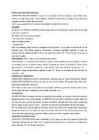
Near synonymy o Non-denotational differences (connotational register, style) Cognitive Die, kick the bucket, pass away Firm, stubborn, pig-headed o Denotational differences – a matter of degree o Plesionyms - slight differences in denotational meaning, but fuzzy boundaries between degrees Misty/foggy 41. Opposites aka antonyms In a broad sense the opposite meaning/denotations to a word In a narrow sense the contrary adjectives There are four main types of opposites Contrary/gradable antonyms o Denote opposite poles on a property scale, which has a neutral middle ground Long/short, tall/short, fast/slow o Polarity – one term of a binary opposition is described as positive and the other negative
40. Homographs Similar spelling Minute (unit of time) vs minute (tiny). Lead (metal) vs lead (to guide) 41. Synonyms A word that shares the same denotation with another word. Enourmous is immense, male is masculine. There are absolute synonymy such as everybody and everyone, anyhow and anyway. There near-synonymy like die and kick the bucket and pass away. Here we observe a matter of degree. We use principle of contrast to know 42. Opposites (antonyms) 1) in the broad sense (= opposite) 2) in the narrow sense (= contrary adjective) Four main types of opposites (antonyms) 1) contrary antonyms (gradable antonyms) long / short; good / bad; fast / slow 2) complementary antonyms (either / or) dead / alive; male / female 3) converse (relational) antonyms (reciprocity) lend / borrow; buy / sell; wife / husband 4) reversives
Function 2. APOSIOPESIS repeating w-d or phrase at of sentence. - opposition of 2 contrasted ideas. Function to make - "silence" break in the narrative, the end of a clause, sent-e & (complete strengthen controversial nature of things. Use of an unfinished sent. as if speaker antonyms) reader more at the beginning of following subject is is unable or unwilling to proceed. one. active ("Who Function suggest strong emotions
Polysemy the meaning of the word depends on the sentence. The content- where the word is placed in the sentence. Homonyms words with the same spelling and pronunciation but a different meaning. Skate, mouth Homophones words that are pronounced the same. Rose, to-two-too Homographs words that are spelled the same. Lead, close, wind. Synonyms words that share the same denotative, different spelling and pronunciation but the same meaning. e.g. male masculine Opposites (antonyms) words with opposite meanings, e.g. long-short, dead-alive, buy- sell Hyponyms a word phrase or lexeme of narrower or more specific meaning that comes under another- a wider or more general meaning. A rose is a hyponym but a flower is a hypernym. Hypernyms (hyperonyms) a word phrase or lexeme of wider or less specific meaning. Meronyms Semantic relation used in linguistics. Meronymy means a part of a whole. Tree/forest, finger/hand
NT: Came fast, spoke slowly, wrote carelessly. Complete parallelism means absolute identity of several structures. NT: Nobody thinks; nobody cares; nobody bothers. Partial parallelism means that the pattern is repeated but some deviations are present. NT: Nobody thinks, nobody gives a damn, nobody bothers nowadays. ANTITHESIS ANTITHESIS means the opposition or the clash of two strongly contrasted ideas combined with syntactic parallels. Contrast is often created by antonyms. NT: A time to be born, and a time to die; a time to plant, and a time to pluck up that which is planted; a time to kill, and a time to heal; a time to break down, and a time to build up; a time to weep, and a time to laugh; a time to mourn, and a time to dance; NT: I am the poet of the body and the poet of the sole. NT: I was his family's devoted friend, and she was my family's secret enemy. CHIASMUS
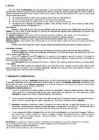
a) complete parallelism the word order is completely the same (e.g. "In the beginning, blankness. In the end, voidness.") b) partial parallelism some deviations from the pattern. 2. Antithesis is the opposition of 2 strongly contrasted ideas combined with syntactic parallelism (e.g. "I am the poet of the body / I am the poet of the soul."). The function of antithesis is to strengthen a controversial nature of things. Antonyms are used. 3. Chiasmus is reverse parallelism the word order of the second sentence is inverted compared to the first sentence. a) lexical chiasmus words change their places, but the word order remains the same (e.g. "I love my dog and my dog loves me."). b) grammatical chiasmus the word order of the second part is inverted (e.g. "Up went the curtain, the curtain went up."). 4
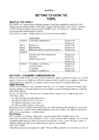
Unabridged dictionaries are the most comprehensive, but are not practical for second language learners because of their size and detail. These dictionaries are often found in the reference sections of libraries on special tables to accommodate their size and weight. An unabridged dictionary is an excellent source for determining the historical development of words , examples of sentences that demonstrate proper usage , antonyms, and synonyms. A bilingual dictionary, which contains words both in your native language and in English, should be avoided. Often these dictionaries are incomplete and give only basic native language equivalent words. These words are frequently out of date or inappropriate for the context of the sentence in which you want to use the unknown words; thus entries in bilingual dictionaries can be misleading and can actually cause you to make mistakes
g. "The cock is crowing,/ the spring is flowing."; "The small birds twitter, / the lake does glitter.") 2. Antithesis the opposition of two strongly contrasted ideas combined with syntactic parallelism (e.g. "I am the poet of the body / I am the poet of the soul."; "Crafty men condemn studies; simple men admire them."). The function of antithesis is to strengthen a controversial nature of things. Antonyms are used. FGI 1081 Stylistics (I. Ladusseva) 19 3. Chiasmus reverse parallelism the word order of the second sentence is inverted compared to the first sentence. a) lexical chiasmus words change their places, but the word order remains the same (e.g. "I love my dog and my dog loves me.").
This doesn't suggestthattheprintedwordisdying. 148fi) c. o Explainthe task.Allow Sstwo or three minutes to read the articleagain.Ss work in pairsand underlinethe phrasalverbsin the text' CheckSs' answers.Then,Ss explainthe words in bold by explainingthem in their own wordsor by giving synonyms or antonyms. AnswerKey thinkof:comeup with do:corryout ploceinside:put in moveot thesamesPeed: uP keeP remove:takeout takeoverfrom reploce: . Ss,in pairs,suggestsynonyms for the highlighted words.Alternatively,they can look the words up in theirdictionaries. AnswerKey lotest:mostu7-to-dote demand:call,need
This doesn't suggestthattheprintedwordisdying. 148fi) c. o Explainthe task.Allow Sstwo or three minutes to read the articleagain.Ss work in pairsand underlinethe phrasalverbsin the text' CheckSs' answers.Then,Ss explainthe words in bold by explainingthem in their own wordsor by giving synonyms or antonyms. AnswerKey thinkof:comeup with do:corryout ploceinside:put in moveot thesamesPeed: uP keeP remove:takeout takeoverfrom reploce: . Ss,in pairs,suggestsynonyms for the highlighted words.Alternatively,they can look the words up in theirdictionaries. AnswerKey lotest:mostu7-to-dote demand:call,need
This doesn't suggestthattheprintedwordisdying. 148fi) c. o Explainthe task.Allow Sstwo or three minutes to read the articleagain.Ss work in pairsand underlinethe phrasalverbsin the text' CheckSs' answers.Then,Ss explainthe words in bold by explainingthem in their own wordsor by giving synonyms or antonyms. AnswerKey thinkof:comeup with do:corryout ploceinside:put in moveot thesamesPeed: uP keeP remove:takeout takeoverfrom reploce: . Ss,in pairs,suggestsynonyms for the highlighted words.Alternatively,they can look the words up in theirdictionaries. AnswerKey lotest:mostu7-to-dote demand:call,need
This doesn't suggestthattheprintedwordisdying. 148fi) c. o Explainthe task.Allow Sstwo or three minutes to read the articleagain.Ss work in pairsand underlinethe phrasalverbsin the text' CheckSs' answers.Then,Ss explainthe words in bold by explainingthem in their own wordsor by giving synonyms or antonyms. AnswerKey thinkof:comeup with do:corryout ploceinside:put in moveot thesamesPeed: uP keeP remove:takeout takeoverfrom reploce: . Ss,in pairs,suggestsynonyms for the highlighted words.Alternatively,they can look the words up in theirdictionaries. AnswerKey lotest:mostu7-to-dote demand:call,need
 annaabi.ee