Miletus Underlying principle of the universe- H20 Milesian or Ionian School · Thales circa 624-546 BC - "All things come from water into water all things are resolved" - Nietzsche claimed that he deserved to be considered the first philosopher because he argued: o About the origin of things o Without image or story o Claimed that all things are unified · Anaximander 610-546 BC · Anaximenes 585-528 BC Lawgivers: - Seven Sages - Solon of Athens - Thales of Miletus The Presocratics- first Greece philosophers Anaximander · All things are apeiron (without border, either internal or external) · From Anaximander we have the earliest words from a philosopher's own writing: - Whence things have their origin, Thence also their destruction happens,
) ; more negative ; about will ; power ; domain of reality ; believes that knowledge is truth ; man is god 5. What was the problem that the first philosophers tried to solve? The problem of motion. (Intemporality) They tried to explain nature. 6. What was the “arché”? Greek word for the primary sense of origin or beggining Arche is the element and the first principle of existing things, the source of action. 7. What was the “arché” for Thales? And for Anaximander? Thales claimed that the first principle of all things is water For Anaximander arche did not exist. He proposed the existence of the apeiron, an indefinite substance from which all things are born and to which all things will return. It was completely indefinite. 8. What was the “arché” for Anaxímenes? And for Pythagoras? For Anaximenes it was air and for Pythagoras it was numbers. 9. Why are the Pre-Socratic giving real philosophical answers?
Herodotos jutustab, et peale türann Polykratese surma, kutsub Maiandros, kõik linnaelanikud kokku ja teatab oma otsusest türannia kaotada: "Ma ei kiida heaks," ütleb ta neile lühidalt, "Polykratese despootiat inimeste üle, kes on temaga võrdsed… Ma panen võimu keskele maha ja kuulutan teie seas välja võrdsuse. Kasutatud allikad: http://www.ut.ee/klassik/eelsokraatik/vernant.html http://www.iep.utm.edu/anaximan/ https://www.google.ee/search?rlz=1C1AVNG_enEE646EE646&espv=2&q=anaximander&oq=anaximand&gs_l=serp.3.1.35i39k1j0l4j0i30k1 l5.14482.15551.0.19025.3.3.0.0.0.0.163.409.0j3.3.0....0...1c.1.64.serp..0.3.408.lF2XCLJ8G6U https://annaabi.ee/Anaximandros-m83731.html https://et.wikipedia.org/wiki/Apeiron http://entsyklopeedia.ee/artikkel/anaximandros Tänan kuulamast! :)
Kasutatud allikad: · http://et.wikipedia.org/wiki/Joonia · http://et.wikipedia.org/wiki/Anaximenes · http://plato.stanford.edu/entries/anaxagoras/ · http://et.wikipedia.org/wiki/Archelaos_(filosoof) · http://en.wikipedia.org/wiki/Ionian_School_(philosophy) · http://lepo.it.da.ut.ee/~avramets/ioonia.htm · http://plato.stanford.edu/entries/presocratics/ · http://en.wikipedia.org/wiki/Thales · http://en.wikipedia.org/wiki/Anaximander · http://plato.stanford.edu/entries/heraclitus/ · ,,Pilk ideede maailma" William Raeper ja Linda Smith · ,,Antiik filosoofia" Indrek Meos
", ,,Kas vett saab muuta veiniks?" ning ,,Kuidas saab veest ja maast teha elusa konna?". Pruuni ümbriku sees olev kiri räägib ,,naturaalsetest filosoofidest", kes üritasid seletada loodust, nad panid aluse niimoodi teaduse arengule. Nad uurisid kõikeühendava aine olemasolu ja looduse muutumist. Räägitakse Thalesest, kes oli pärit Miletusest. Ta arvutas Giza püramiidi täpse pikkuse ja arvas, et kõik elav on pärit veest. Anaximander arvas, et meie maailm on osa ühest suurest maailmast, mis on piiritu. Anaximenes arvas, et kõik asjad on pärit õhust. 500 a. eKr elas Parmenides, kes arvas, et kõik on igavene, sest muutust ei eksisteeri. Ta oli ratsionalist, kes usaldas oma põhjendusi rohkem kui meeli. Tema kaasaegne Herakleitos arvas, et maailm on kogu aeg muutumas. Ta arvas ka, et maailm koosneb vastanditest, mis on vajalikud eluks. Ei ole head ilma halvata. Empedokles oli mees, kes üritas neid kahte meest lepitada
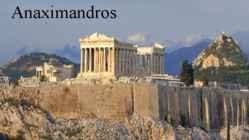
-2980 Egiptlane Imhotep ehitab Sakkarasse astmikpüramiidi, talle omistatakse ka palju teisi saavutusi. -1650 Egiptuse kirjutaja Ahmose kirjutab teksti pealkirjaga "Juhised saavutamaks teadmisi kõigist tumedatest asjadest", kus käsitletakse paljude lihtsate võrrandite lahendusi, näiteks pindalade ja ruumalade leidmist. -600 Anaximander tutvustab kreeklastele päikesekella, ta on ka esimene inimene, kes üritab joonistada maailma kaarti. Tema arvates on maailm tehtud apeironist(see sõna tähendas lõpmatust). -600 Thales ennustab ette kuuvarjutust, üldistab Egiptuse geomeetriat, uurib magnetismi ja väidab, et universumi algaine on vesi. -535 Anaximenes väidab, et algelement on õhk.
inundated by the numerous inquiries they received. (A) Agitated (B) Overwhelm (C) Astonished (D) Delighted 3. Nowadays coins lack intrinsic value and bills can no longer be converted to gold. (A) Inherent (B) Nominal (C) Documented (D) Inordinate 4. Because their presence can upset normal markets, some products with commercial potential are intentionally kept off the market-place. (A) Confidentially (B) Constantly (C) Arbitrarily (D) Deliberately 5. Anaximander argued that human beings are so helpless at birth that they would almost instantly die if put into the world on their own. (A) Gradually (B) Presumably (C) Immediately (D) Discreetly LESSON 18 absurd abuse allocation balanced conservation fallacious feasible lack limber means narrow preconception robust steady swift absurd adj. clearly false, without reason adv. absurdly Syn. ridiculous n
 annaabi.ee