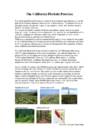
The hotspot is also heavily threatened by the expansion of urban areas, pollution, and road construction. The California Floristic Province hotspot extend over 293.800 square kilometers. 108.715 square kilometers of this area are protected and, with the higher level of protection are 30.002 square kilometers. Hotspot vegetation is remaining about 73.451 square kilometers.There are 2.124 endemic plant species, 4 endemic threatened bird kinds, 5 endemic threatened mammals, 8 endemic threatened amphibians and 2 extinct species.There lives 121 persons per 1 square kilometers. As one of only five areas with a Mediterranean type climate in the world, all of which are on the hotspot list, the California Floristic Province is characterized by hot, dry summers and cool, wet winters. The region contains a wide variety of ecosystems, including sagebrush steppe, coastal sage scrub, chaparral, juniper-pine woodland, upper montane-subalpine forest, alpine forest, riparian forest, cypress forests, mixed
breeding season. Dall sheep. White, wooly coat. Age can be counted. Predators: wolves, eagles and bears. Males and females live separately. Lives up to 10 years. Orca. Fastest marine mammal. Apex predators. Intelligent and higly social. Secondheaviest brain after humans. Females go through menopause. Fish. Salmon boat 37 ft. long. State fish: King salmon. State Marine Mammal: Bowhead whale. Birds. State Bird: Willow Ptarmigan. Swans, eagles, owles, ducks, e.g. Amphibians and reptiles. Extreme temperatures. Two species of frogs. Three species of salamanders. Two species of turtles. Endangered species. One of the smallest endangered species lists. 11 endangered species. Threats to the wildlife of Alaska. Hunting. Global warming. Diseases. Used sources. http://en.wikipedia.org/wiki/Wildlife_of_Alaska http://animals.nationalgeographic.com/animals/mammals/brownbear/ http://www.americanbear.org/blackbearfacts.htm http://www.bearlife
Many tend to discharge wastewater directly into rivers, wastewater treatment is expensive.” Kathryn Arnold, at the University of York, who has been researching reasons of wildlife decline said: “With thousands of antibiotics in use globally, they have the potential to have potent effects on wildlife and ecosystems.” Research published in 2014 revealed that in the last 40 years, in freshwater habitats, where drug residues are most commonly found, the research found 75% of fish and amphibians had been lost. That shows clearly the harmful effect of the antibiotics to aquatic animals. In my opinion, the authors have succeeded with their articles. Firstly, I really liked that all of the articles had specific statistics and I appreciate it. Secondly, all the examples were apposite and points were clear. I personally find the topic very actual and the problems need even more attention. Articles: Cherie Chan http://sinosphere.blogs.nytimes.com/2015/06/21/study-maps-concentrations-of-
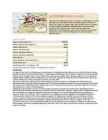
Hotspot Vegetation Remaining (km 2) 98,009 Endemic Plant Species 11,700 Endemic Threatened Birds 9 Endemic Threatened Mammals 11 Endemic Threatened Amphibians 14 Extinct Species 5 Human Population Density (people/km 2) 111 Area Protected (km 2) 90,242 2
Mammals that can be found include bears, raccoons, squirrels, skunks, wood mice, and deer. Animals like bobcats, elk, bison, mountain lions, timberwolves, and coyotes used to be found in the deciduous forests, but have been hunted down by humans and almost wiped out. Melting snow in spring and rain during summer provide water for streams and ponds. Many water birds, insects, and fishes are found in this biome, along with amphibians such as frogs and salamanders, and reptiles such as lizards and small snakes. The platypus lives in the temperate forests of Australia. Animal Adaptations: The animals have developed different ways of surviving in this biome. Many of them migrate to warmer places to escape the cold winter months, while others hibernate (sleep) through the winter when food is scarce. Some animals such as squirrels, chipmunks and jays store food when it is plentiful, using hollows of trees as
dominating. The natural eel have been caught in some years. The total yearly fish catch averages over 400 tons in Lake Võrtsjärv, with the share of valuable fish 60-70%. Pic: eels The coastal area of Lake Võrtsjärv is covered with woods,fields,hayfields,wil low plots and reed beds,witch make it a perfect habitat for many animal species.Like amphibians,reptiles and mammals. Thanks for your attention !
........................................................14 KOKKUVÕTE......................................................................................................................................................15 KASUTATUD KIRJANDUS...............................................................................................................................16 Sissejuhatus Konnade ja kahepaiksete väljasuremisest sain ma teada paari kuu eest lugedes National Geographicut (april, 2009"Amphibians"). See teema tundus väga huvitava, ja ma leidsin, et seda võiks edasi uurida. Oma töö jaotasin vastavalt pealkirjas esitatud küsimustele. Kõigepealt tutvustan kõiki konni ja selles tutvustuses mainin ära ka nende hävimise probleemid. Samuti toon välja selle konna liigi isendite arvu. Järgmisena räägin ma konnade kaitse vajadusest, konni varitsevatest ohtudest ja konnade kaitse meetoditest. Viimaks mainin ära ka konni kaitsvad organisatsioonid.
ut.ee (II) http://et.wikipedia.org/wiki/Eesti_kalade_s %C3%BCstemaatiline_nimestik#Karpkalalised_.28Cypriniformes.29(III) Rene Martin http://www.fishing24.ee/catalog/article_info.php?articles_id=10(IV) Aet Truu http://www.keskkonnaamet.ee/uudised-ja-artiklid/eesti-siseveekogudesse- asustatakse-angerjat-karpkala-ja-vahki/(V) Kaire Kauts http://kalala.emu.ee/userfiles/KALALA/Mageveekalad/TOUGJAS.pdf (VI) Gunrs Andrusaitis (2003.)"Latvian Red Data Book" Volume 5(Fishes, reptiles and amphibians) (VII) http://en.wikipedia.org/wiki/List_of_extinct_and_endangered_species_of_Lithuania#Fish (VIII)
There are no deep root systems in the vegetation of the tundra; however, there are a wide variety of plants that are able to resist the cold climate. The fauna is also diverse. Animals such as mammals and birds also have additional insulation from fat. Many animals hibernate during the winter because food is not abundant. Another alternative is to migrate south in the winter, like birds do. Reptiles and amphibians are few or absent because of the extremely cold temperatures. Because of constant migration, the population continually oscillates. Alpine tundra is located on mountains throughout the world at high altitude where trees cannot grow. The growing season is approximately 180 days. The nighttime temperature is usually below freezing. Unlike the arctic tundra, the soil in the alpine is well drained. The plants are very similar to those of the arctic ones.
cooler. In semiarid deserts many animals find protection in underground burrows where they are insulated from both heat and aridity. These animals include mammals such as the kangaroo rats, rabbits, and skunks; insects like grasshoppers and ants; reptiles are represented by lizards and snakes; and birds such as burrowing owls and the California thrasher. The animals living in coastal deserts are: insects, mammals (coyote and badger), amphibians (toads), birds (great horned owl, golden eagle and the bald eagle), and reptiles (lizards and snakes). Widely distributed animals in cold deserts are jack rabbits, kangaroo rats, kangaroo mice, pocket mice, grasshopper mice, and antelope ground squirrels. The burrowing habit also applies to carnivores like the badger, kit fox, and coyote. Several lizards do some burrowing and moving of soil. Deer are found only in the winter. Something characteristic
There are arctic birds, which come in the winter, and birds such as the swallow, which come from Africa in the summer to breed. Ireland has a very rich marine avifauna, with many large seabird colonies dotted around its coastline such as those on the Saltee Islands and Skellig Michael. Also of note are golden eagles, only recently reintroduced after decades of extinction. There are no snakes and only one reptile native to Ireland, the common lizard. There are three amphibians, the common frog, the smooth newt and the natterjack toad. Certain marine turtle species appear regularly off the south west coast but do not come ashore. Flags of Ireland The state flag applying to Northern Ireland is the Union Flag of the United Kingdom of Great Britain and Northern Ireland. The state flag of the Republic of Ireland is the Tricolour. The history of the Irish Tricolour bearing the
8. Animals and plantlife Canada has wide variety of animals that can be found in the mountains, plains, in rivers and lakes and even in people's back-yards. Some of the biggest and widespread are bears. Cougars are the largest cats in Canada. Wolves can be heard but not as easily seen as their cousin the coyote. Bison are now exclusively farmed but goats and sheep can still be seen in the wild. Moose, deer and caribou are also widespread as are the otter and beaver. Reptiles, amphibians and a large selection of snakes also call Canada home. Squirrels, chipmunks, racoons and skunks often found in and around cities. Some of the most common animals to spot in Canada are birds, including Canada Geese, Bald Eagles and the Great Blue Heron. Canada's varied climates allow for a large selection of spiders, bugs and insect while the countless rivers, lakes and 3 oceans are home to dolphins, whales, salmon, sharks and many other species of fish and sealife.
10.2011) 2. "Arusisalik" - http://bio.edu.ee/loomad/Roomajad/roindex.htm - (07.10.2011) 3. Vilju Lilleleht - ,,Eesti Punane Raamat" 1998, Tartu 4. ,,Eesti roomajad" - http://bio.edu.ee/loomad/Roomajad/roomajalist11.htm - (07.10.2011) 5. ,, Eesti roomajad" - http://et.wikipedia.org/wiki/Eesti_roomajad - (07.10.2011) 6. "Harilik rästik" - http://et.wikipedia.org/wiki/R%C3%A4stik - (07.10.2011) 7. Jaanus Kiili ,,Kahepaiksed ja roomajad = Amphibians and reptiles" 1996, Tallinna Tehnikaülikool 8. "Kivisisalik "- http://et.wikipedia.org/wiki/Kivisisalik - (07.10.2011) 9. "Kivisisalik" - http://bio.edu.ee/loomad/Roomajad/roindex.htm - (07.10.2011) 10. "List of reptiles of Finland" -http://en.wikipedia.org/wiki/List_of_reptiles_of_Finland - (07.10.2011) 11. "Nastik" - http://bio.edu.ee/loomad/Roomajad/roindex.htm - (07.10.2011) 12. "Nastik" - http://et.wikipedia.org/wiki/Nastik - (07.10.2011)
 annaabi.ee