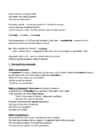
Üld- ja sotsiaalpsühholoogia kordamisküsimused (0)
1. First social psychology experiment
1897 the first published social psychology experiment:
● by Norman Triplett
● Better results in cycling than when cycling alone
Social facilitation effect: presence of others acts as a stimulation to the performer
2. Social identity theory; differences between personal, social and collective identities
Stems from in-group/out-group categorization, tires to explain intergroup behaviour based on
social identities. People are motivated to have a positive concept of selves. To increase self-
esteem we enhancing the status of in-group status.
Personal identity - personal ideas are self-designated and self-attributed
Social identity - based on social roles, status and groups, always present (ex. culture, i’m a
student at TLU)
Collective identity - identity action-oriented groups as a whole (going to a song festival, i’m
a festival goer)
3. Causal attribution: dispositional vs situational; attribution bias
Causal attributions:
Situational attributions (external) - we attribute causes to external factos (the road was icy
so the car crashed)
Dispositional attributions (internal) - we attribute causes to internal factors (he is a bad
driver so he crashed)
Attribution errors (biases) :
Fundamental attribution errors - tendency to emphasize internal dispositions and minimize
external factors
-
focusing on behaviour
-
we want behaviours to be predictable
-
we lack time to analyse the situation
-
ex. we are most like to blame the driver of being stupid for crashing, not because the
road was icy
The actor-observer bias - we are more likely to infer external causes to our own behaviour
(the actor) and internal to the behaviour of others (observer)
-
ex. car accident caused by others (they’re stupid), car accident caused ourselves (the
road was icy)
Self-serving bias - we tend to make dispositional attributions for our success and situational
for ourselves
-
ex. i pass the test (i’m smart), i fail the test (the test was stupid)
The ultimate attribution error - combination of all the attributions
-
ex. THEY do something good - external attr.
THEY do something bad - internal attr.
WE do something good - internal attr.
WE do something bad - external attr.
4. Mental heuristics
Mental shortcuts help us to cope with the complex world by simplifying it and making
judgements.
The availability heuristics - we assess probability of an event based on it’s availability in
memory
-
ex. i think my country will not succeed in the upcoming Olympics based on how they
did in the last Olympics
-
events that occur in mind more easily are considered to be more likely to occur
-
the more easily we recall smthg, the more likely it seems
Biases - we remember things based on how important or vivid the memories are
-
ex. dramatic accidents, traumas, the virus rn
-
ex. people are scared to fly because recently there was a plane crash, even tho
statistics show planes are way safers than cars
Attitude heuristic - responding either positively or negatively to others based on our
attitudes towards them
-
ex. i don’t like her because i think she’s rude
-
attitude directs our info processing
-
we process info differently based on our attitude towards someone
-
attitudes can be wrong
The representative heuristic - for quicker processing of info we judge particular case
matches a prototype or group
-
ex. racism, stereotypes
The anchoring and adjustment heuristic - info we use to establish a starting value (anchor)
tend to be more influential in our decision than any subsequent info that we use to adjust
value
-
ex. first impressions, on a job interview you try to look good to sent a standard
-
ex. employer doesn’t like old people because they think old people don’t work well,
on a job interview they ask you how old you are and if you’re 55+, they may get a bad
impression even if you do work well
The simulation heuristics - judging the probability of an event by the ease of difficulty of
mentally picturing it
-
events that we can picture happening seem more frequent and likely to happen
-
ex. we expect to get the job, we’re sure we’ll get it but then we don’t and we’re more
shocked because we were so sure
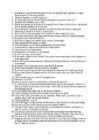
5. Social psychology classical experiments: Zimbardo, Milgram, Asch – what were they
about?
Zimbardo prison experiment
-
student participated in an prison experiment
-
half of the students were assigned a role as a guard, the other half were assigned to be
the prisoners
-
planned for 2 weeks but ended at day 6
-
the guards became sadistic and the prisoners had mental breakdowns
-
when people are given roles they can forget themselves
Milgram’s obedience experiment
-
How much pain an ordinary person would inflict on another person simply because he
was ordered by an authority.
-
authority conformity
Asch experiment
-
Asch conformity experiments or the Asch paradigm were a series of studies
directed by Solomon Asch studying if and how individuals yielded to or defied a
majority group and the effect of such influences on beliefs and opinions.
-
Groups of eight male college students participated in a simple "perceptual" task. In
reality, all but one of the participants were actors, and the true focus of the study was
about how the remaining participant would react to the actors' behavior.
-
showed a line and asked which other 3 lines it matched.
-
group conformity
6. Conformity
Conformity (passive) is when people adjust themselves to fit a group norm
Conformity is generally regarded as a passive form of influence as groups do not actively
attempt to influence others.
-
Normative influence
- we conform to others behaviour because they expect us to, we
want to be liked
- ex. you don’t act up when you see someone being bullied because we don’t
want to be bullied, maybe the bullied are popular kids and we want to be liked by
them
-
Informational influence
- we conform to others behaviour because we believe it
provides information about reality, we don’t know
- ex. i didn’t know the answer in the test so i ask other and believe what they
think is the answer is correct
Why we conform?
● We don’t want to risk social disapproval, isolation.
● We want to be correct and right so we look up to what others do.
When will be conform? What determines how we confrom?
Strength - how important the group is to you
Immediacy - how close is the group to you in space and time
Number - how many people are in the group
7. Persuasion: ‘Weapons of influence’
➔ Reciprocation
➔ Commitment and consistency
➔ Social proof
➔ Liking
➔ Authority
➔ Scarcity
Reciprocation - we try to repay (you do something for me, i do something for you)
-
valid across culture, time and distance
-
it works, because you may feel responsible, satisfaction (a price is lowered)
-
when violated, sanctions are applied (you don’t invite me to your party, i don’t
invite you to mine)
-
there is an obligation to receive, an obligation to give, obligation to repay
ex. taste testing in supermarkets makes you feel, like now you need to buy something
ex. receiving compliments makes you feel like you need to compliment them too
-
it’s not always equal repayments
ex. you are given a small sampler but asked to buy the whole thing
-
direct route: give gift - ask for a favor - receive the favor
ex. you buy your friend a coffee, you ask them to drop you off at home, the drop you off at
home
-
concession: ask for favor - make a concession (GIFT) - as for a smaller favor
ex. ask to drop you off at home, they say they won’t, you ask if they could AT LEAST give 3
euros for a taxi
experiment by Denis Regan: subjects were asked to rate paintings, one was naive and one
confederate. A) during experiment confederate leaves the room and returns with Cokes,
saying ‘I asked experimenter if I could get a Coke for myself, he said it was Okay, so I
bought one for you too’. B) confederate leaves the room, but returns empty handed. After the
experiment is over, confederate asks for a favor to buy from lottery tickets him. result: the
ones who got Coke, bought twice as many tickets as the ones who did not. for those who
owned a favor to confederate, it made NO difference whether they liked him or not, they sell
felt sense of obligation to repay him, and they did!
Commitment and consistency - people have a general desire to appear consistent in their
behavior/attitudes/beliefs/promises/words
-
once we commit to someone then we feel the need to stay committed
-
inconsistency is seen as an undesirable trait
-
it’s an valuable and adaptable behaviour
-
help to predict behaviour, makes it easier to socially interact
-
foot in the door technique - start with a smaller request that is easy to agree to,
so later it is easier to gain acceptance with much larger requests
ex. as someone to put up a small sign and they do, later ask them to put up a huge poster and
they will probably agree
-
commitment is stronger when it is written down, it is made public, people put
effort into it, effected by the ,,inner voice’’
experiment by Thomas Moriarty: staged theft on a beach. no request - 4/20 tried to stop theft.
request to watch your things - 19/20 tried to stop the theft
ex. promising a child you will get them a specific toy so you will have to get it
Social proof - we tend to do what others do, it seems right
-
not inherently bad, it’s adaptive
-
uncertainty
(we don’t know what to do) and similarity (ex. our peers) makes
social proof stronger
ex. canned laughter in television
ex. you go to the club where you see a line by the door
ex. we follow what social media influencers do
ex. social proof can also mean copycat suicides
Liking - we tend to comply to people we like and know
-
a person we like has more influence over us
-
physical attractiveness
- we associate good looks with good humor,
intelligence, kindness etc
-
similarity
- we like people similar (age, looks, background, interests) to us,
makes us feel secure and comfortable
-
compliments
- getting compliments makes us like the person more
-
familiarity
- is something/someone is familiar we tend to like it more
-
cooperation
- we like people who cooperate with us
-
association
- we like others when we associate them with something we like
(ex. our idol promotes something so we like it and buy it)
ex. attractive people in sales departments
Authority - we tend to obey to authority (automatically)
-
Milgram experiment (the electric shock test, previously talked about)
-
Strip-search case (fake authority called, previously talked about)
-
obedience can be linked religion (god)
-
obedience can be beneficial (not always)
ex. in a dangerous public situation you have to listen to the police to act safely
-
symbols of authority can bring up obedience:
-
titles
-
physical size
-
clothes
-
trappings - expensive things and status
ex. a doctor wears a white goat and has the title ‘dr. - doctor’
-
to resist, ask if the authority truly is an expert and if they are actually real and
not fake
Scarcity - if we can get something, we want it more, scare of shortage
-
the opportunities seem more valuable to us if their availability is less likely to
us
-
we tend to think of potential losses
ex. ,,if it’s rare, it’s valuable’’
ex. products have ,limited edition’ on it
ex. marketing ,ONLY 2 ITEMS LEFT’
-
when free choice (to get smthg) is threatened, we tend to fight for it
-
small children fight over toys
experiment: 2 yo kids and toys, one of the toys is behind the barrier of plexiglas. condition 1:
the barrier is low and the kids can reach for the toy. condition 2: the barrier is high and the
kids can’t get it - they want it more
-
in teenagers, the more certain actions are prohibited - the more they want to do
it (drinking, doing drugs etc)
maybe r&j wasn’t about love but instead scarcity - romeo and juliet wanted to be together
because their families prohibited it
-
we value more things that become less available to us recently
-
competition is important - the more people compete for it, the more we want it
-
to resist, calm down and ask what do i really want from this item
8. Principles of initial attraction
Proximity - physically close, we tend to like people with whom we have frequent contact
Similarity - same interests, beliefs and values
Geographical vs Functional distance - we live close/far and we gross roads often/rarely
Physical appearance - evolution (good looks relate to good health) and stereotypes (good
looks means good personality qualities)
9. Matching phenomenon and equity theory
Matching phenomenon - tendency for people with similar levels of particular trait to
succeed, such as attractiveness
-
we may think this person is too pretty to date us
-
this may also apply in friendships
-
this may come from fear of being rejected
-
we substitute matching - old rich man and hot young girl, beauty and money may
balance eachother
-
also, if we start to like someone they become more physically attractive or if they start
to dislike them they become less attractive
Equity
-
equal distribution of resources and effort in relationships
-
cooking, housekeeping, parenting
10. Sternberg’s types of love
Components: intimacy, passion, commitment
7 types:
● Intimacy (Liking) - true friendships
● Passion (Infatuation) - love at first sight, you don’t know the person much
● Commitment (Empty) - arranged marriages
● Romantic love - emotional and physical bond
● Companionate love - passion is gone but emotional bond is strong (old people)
● Fatuous love - you don’t know them yet but there is commitment and passion
● Consummate love - complete form of love, all components
11. Aggression: hostile vs instrumental; frustration-aggression theory; influences on
aggression
Physical or verbal behaviour that intents to hurt another person.
➔ Hostile - aims to injure, intended to harm
➔ Instrumental - harming another person in order to accomplish a goal, something you
want to get
Frustration-aggression theory: frustration triggers aggression
-
displacement - the redirection of aggression to a target other than the source of the
frustration
ex. mom yells at child, child yells at dog
-
negative emotions trigger aggression
Influences:
Instinct theory - human nature, it’s an instinct (dismissed theory)
Adaptive aggression - evolutionary perspective: defending yourself, indimitating rivals
Biological roots - neural systems: brain damage
Genetic influence - aggressive parents > aggressive children
Biochemical influence - hormones
Environmental and cultural influence
Sarnased õppematerjalid
![Cialdini raamat]()
548
pdf
Cialdini raamat
��More praise for Influence: Science and Practice!
"We've known for years that people buy based on emotions and justify their buying decision based on logic.
Dr. Cialdini was able, in a lucid and cogent manner, to tell us why this happens."
--MARK BLACKBURN, Sr. Vice President, Director of Insurance Operations, State Auto Insurance Companies
"Dr. Cialdini's ability to relate his material directly to the specifics of what we do with our customers and how we
do it, enabled us to make significant changes. His work has enabled us to gain significant competitive
differentiation and advantage"
-LAURENCE HOF, Vice President, Relationship Consulting, Advanta Corporation
"This will help executives make better decisions and use their influence wisely ... Robert Cialdini has had a
greater impact on my thinking on this topic than any other scientist."
-CHARLES T. MUNGER, Vice Chairman, Berkshire Hathaway, Inc.
![Psühholoogia bioloogiline--kognitiivne- ja sotsiaalne vaade]()
26
doc
Psühholoogia bioloogiline-, kognitiivne- ja sotsiaalne vaade
PSYCHOLOGY PART 1: CORE
Biological level of analysis
Outline principles that define the biological level of analysis.
1) Behavior can be innate, because it is genetically based. Evolution may play a
key role in behavior.
2) Animals may be studied as a means of understanding human behavior.
3) There are biological correlates of behavior. Cognitions, emotions and
behaviors are products of the anatomy and physiology of our nervous and
endocrine system.
Explain how principles of the biological level of analysis may be demonstrated in
research.
1) Correlational studies: Study by Buss, who hypothesized that across cultures,
men will prefer to marry younger women because of greater reproductive
capacity and women will place greater value on a potential mate's earning
potential to provide survival advantages. This evolutionary hypothesis was
tested in 37 cultures by sending out questioners.
2) Twin studies (type of correlational stud
![Steve Krug-Dont Make Me Think 2014]()
215
docx
Steve Krug-Dont Make Me Think 2014
�Don’t Make Me Think, Revisited
A Common Sense Approach to Web Usability
Steve Krug
� Don’t Make Me Think, Revisited
A Common Sense Approach to Web Usability
Copyright © 2014 Steve Krug
New
Riderswww.newriders.com
To report errors, please send a note [email protected]
New Riders is an imprint of Peachpit, a division of Pearson Education.
Editor: Elisabeth Bayle
Project Editor: Nancy Davis
Production Editor: Lisa Brazieal
Copy Editor: Barbara Flanagan
Interior Design and Composition: Romney Lange
Illustrations by Mark Matcho and Mimi Heft
Farnham fonts provided by The Font Bureau, Inc. (www.fontbureau.com)
Notice of Rights
All rights reserved. No part of this book may be reproduced or transmitted in
any form by any means, electronic, mechanical, photocopying, recording, or
otherwise, without the prior written permission of the publisher. For
information on getting permission for reprints and excerpts,
[email protected].
Notice of Liability
Th
![CHANGE YOUR THINKING CHANGE YOUR LIFE]()
580
pdf
CHANGE YOUR THINKING CHANGE YOUR LIFE
ccc_tracy_fm_i-xviii.qxd 7/7/03 3:22 PM Page iii
CHANGE YOUR THINKING,
CHANGE YOUR LIFE
How to Unlock Your Full Potential
for Success and Achievement
B R I A N T R AC Y
JOHN WILEY & SONS, INC.
��ccc_tracy_fm_i-xviii.qxd 7/7/03 3:22 PM Page i
CHANGE YOUR THINKING,
CHANGE YOUR LIFE
�ccc_tracy_fm_i-xviii.qxd 7/7/03 3:22 PM Page ii
�ccc_tracy_fm_i-xviii.qxd 7/7/03 3:22 PM Page iii
CHANGE YOUR THINKING,
CHANGE YOUR LIFE
How to Unlock Your Full Potential
for Success and Achievement
B R I A N T R AC Y
JOHN WILEY & SONS, INC.
�ccc_tracy_fm_i-xviii.qxd 7/7/03 3:22 PM Page iv
Copyright © 2003 by Brian Tracy. All rights
![Aforismid tsitaadid]()
5
docx
Aforismid,tsitaadid
· And when you begin to miss me, dont forget it was you who let me go.
· There is an end to things no matter how much we want to hold into them.
· Otsisin keset seda pimedust, sind ja loodetud vabadust,kui mu käed su poole, tegid alguse loole,
printsessist ja printsist, ühest kaunist kandist, kus oleme meie kaks, kus lõbutseme, kuni otsas jaks.
Sa ei pea muinasmaad looma, sa ei pea tähti taevast tooma. Ole vaid minu kõrval, kui tõuseb
päike. Ole vaid mu kõrval kui mind piinab meeleheide. Ole mu kõrval, kui kumab kuu, kui su nime
hüüab mu suu, ära tõota mulle, et armastad mind, kui ei ole valmis ohverdama end. Luba, et
printsess jääb printsiga, kuni nad veel siin ilmas elavad. Unustame hetkeks kõik muu me,
tunnetame üksteise kiireid südamelööke, kas tunned, kuidas süda jätab lööke vahele, see kõik on
midagi uut, meile kahele.
· Women are stronger than men, because they can walk in a 12 cm stilettos without showing t
![Kaasaegne teaduslik mõtlemine ja filosoofilised meetodid]()
70
pdf
Kaasaegne teaduslik mõtlemine ja filosoofilised meetodid
What is the real meaning of life?
Why prefer one thing to another?
Can we trust observation?
It’s raining outside - how do you know it is? I can see it’s raining.
How to convince yourself its raining?
A good reason to doubt - 49 other peaople have the same opinion.
Falsifiable → possible; not falsified
World disappeared in 2012 and got recreated 3 secs later → unfalsifiable - cannot prove it’s
true/wrong, cannot provide any tests to prove it.
Or - one or another but not both → exclusive
- one or another (both) → inclusive (Invited those who are managers or specialists - both)
Arguments valid or not - logic is a science where to decide it
Different arguments lead to different methods.
1 - Recognizing arguments
What is an argument?
An argument is a group of statements, so that one or more of them (called the premises) is said to
provide support for one of the others (called the conclusion).
When the course sta
Kaasaegne teaduslik mõtlemine ja filosoofilised...
![A New Earth]()
378
pdf
A New Earth
ECKHART TOLLE
A NEW EARTH
Awakening to
Your Life's Purpose
� CONTENTS
Chapter One
The Flowering of Human Consciousness – 6
Evocation..................................................................................................6
The Purpose of This Book........................................................................8
Our Inherited Dysfunction........................................................................10
The Arising New consciousness..............................................................12
Spirituality and Religion..........................................................................14
The Urgency of Transformation...............................................................16
A New Heaven and a new Earth...............................................................18
Chapter Two
Ego: The
![Aforismid-inglise keeles]()
9
doc
Aforismid (inglise keeles)
1. A generalist is ignorant from the point of view of a specialist and a specialist is stupid
from the point of view of a generalist.
2. All great stupidity is created by geniuses.
3. All stereotypes are true; the fact that you recognize a slur proves that it isn't.
4. Anything you're afraid is true is true.
5. Before most people get to the point of being able to tell their ass from a hole in the ground
they're already assholes and it's too late.
6. Concentrating on something important can make you lose track of your soap opera.
7. Debunking the bunk is everyone's responsibility.
8. Don't ask me to pay for anyone else's mistakes. I make enough of my own.
9. Even those who possess real magic must beware of being misled by "magical thinking."
10. Everyone knows what shit tastes like.
11. Exclusive occupancy of a private room is a basic human right.
12. Fair compensation for genius is wealth.
13. God's not perfect, so it's a pretty good bet that you're not, either.
14. Good instit
Meedia
Kommentaarid (0)
 100 punkti
Autor soovib selle materjali allalaadimise eest saada 100 punkti.
100 punkti
Autor soovib selle materjali allalaadimise eest saada 100 punkti.
 ~ 9 lehte
Lehekülgede arv dokumendis
~ 9 lehte
Lehekülgede arv dokumendis
 2021-10-06
Kuupäev, millal dokument üles laeti
2021-10-06
Kuupäev, millal dokument üles laeti
 2 laadimist
Kokku alla laetud
2 laadimist
Kokku alla laetud
 0 arvamust
Teiste kasutajate poolt lisatud kommentaarid
0 arvamust
Teiste kasutajate poolt lisatud kommentaarid
 thesaara88
Õppematerjali autor
thesaara88
Õppematerjali autor
 annaabi.ee








Kõik kommentaarid