Exhibition of 1924. The stadium closed in October 2000 and was demolished in late 2002 for redevelopment. New Wemley broke ground in 2002. New Wembley opened in 2007. Wembley The T win T owers Location London, England Broke ground 1922 Opened 1923 Closed 2000 Demolished 2002 Surface Grass Construction cost £750,000 GBP (1924) Former names Empire Stadium, British Stadium Tenants England national football team Capacity 82,000 Olympic summer games stadium: London, 1944 • London, 1948 New Wemley Stadium Location London, England Broke ground 2002 Opened 2007 Owner The Football Association Operator Wembley National Stadium Limited Surface Grass Construction cost GBP£753 Million (2007) Architect Foster and Partners Tenants England national football team
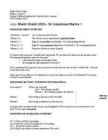
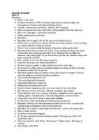
• Design • Construction • Buildings • Owners • Exploitation • Film and media • Accidents • Rebuilding the WTC • Pictures Design • Architects - Minoru Yamasaki, Emery Roth & Sons • Closely-spaced towers • The worlds tallest building • Height 417m, with antenna 526m • 110 floors Construction • Construction started in August 5, 1966 • Had to create 23 acers park next to center • Complited in 1970 • Opened for tenants in January 1972 • The ribbon cutting ceremony was on April 4, 1973 • Total cost reached to $900 million Buildings • "North Tower," a 110-story tower • "South Tower," a 110-story tower • 22-story Marriott World Trade Center Hotel • 2 office buildings • United States Customs House and a Federal office building • New York City government emergency response center and WTC office rooms Owners • Port Authority of New York and New Jersey
Irish Potato Famine During the 19th century, 2/3 of the Irish people lived in very poor conditions under the British rule they had to work for upper-class English landlords, who never set foot in Ireland. The work was to raise crop for a tiny piece of land (most of tenants had less than an acre) where they could grow food (potatoes) for their own families. Potatoes were grown because they have all the necessary vitamins in them and only the potatoes would suffice to feed a family when grown on such tiny holdings. In 1845 a fungus, called Phytophthora infestans (commonly known as potato blight) attacked the potato crop and destroyed half of it. Yet, this was not a catastrophe and
more organised. The word feudalism comes from the French word feu, which the Normans used to refer to land held in return for duty or service to a lord. The basis of feudal society was the holding of land, and its main purpose was economic. All land was divided into manors. Most manors contained a village. A baron was tenant-in-chief and had several manors. He passed on part of his military obligations to his tenants, who held manors from him. The tenants of each manor performed specific regular services for their lord. Under them were the peasants, tied by a strict system of mutual duties and obligations to the local lord, and forbidden to travel without his permission. The peasants were English speaking Saxons. The lords and the barons were French-speaking Normans. There were two basic principles to feudalism: every man had a lord, and every lord had land. The king was connected through this `chain' of people to the lowest man in the country
Margus Maasik G1a SANDRINGHAM HOUSE The Queen and other members of the Royal Family regularly spend Christmas at Sandringham and make it their official base until February each year. When The Queen or members of the Royal Family are not in residence, the house is open to the public. The Estate is run commercially by the Land Agent, on The Queen's behalf. Over half of the Estate is let to farm tenants, the remainder being farmed in hand or used for forestry (the Estate has its own sawmill). There are also two studs, a fruit farm and a country park. These, together with the house's gardens, employ over 100 full-time staff. Sandringham Country Park, open free all year since 1968, is an area of 250 hectares (over 600 acres) of carefully managed woodland and heath. It has two nature trails and camping and caravan club sites
Everything in this world is either matter or spirit or combination of both but both belong to the Supreme Lord. BG: Everything belongs to the Supreme Lord. Logically: I own the land but for how ling? What happens after I pass away? Who actually is the owner? Our ownership because it is transitory, is considered to be illusory, we have it only for short amount of time and despite of our best efforts it can be arbitrary taken away. We are secondary owners. We are tenants. Also in our body body can be take away at any moment. One may say, body comes from nature, but where nature comes from? What is it's source? Ultimately everything has to have source. Source is God. Atheists say that everything comes by chance. Things don't come by chance. This idea is based on misuse of the word "chance". Word "chance" is applicable when there is pattern of events which are likely and there is certain probability of each of them
buildings during the years and with the help of new technologies, that have been taken into use, the quality of the office buildings has increased as well. Based on the results of the conducted research, it can be said that financing office buildings is above all related to cash flow and when the incoming cash flow does not offer a sense of confidence, then banks do not offer external finance either. Cash flows are the indicators for banks to decide whether the object meets the needs of tenants. When it comes to Tallinn, it is very important to have sufficient parking spaces since it shows the success of office buildings. Every party understands the importance of parking spaces, especially when it comes to the suburbs, it is followed an international principle, according to which it is reasonable to establish one parking space per 30 m 2 of rentable space. When it comes to the city center, parking spaces are created in compliance with the capability
interchapters, which depict the economic situation of American agriculture. But these chapters do not stand separately, the emerge to one. They alternate. So the story of the family is the reasons of the ruins of the farmers and critisises the industriasation of the agriculture. The growing consentration of capital and the tendency towards monopolies in agriculture, huge corporations that reign over huge areas. The crops, farmers become pendent of banks. They turn into tenants, they share crops, in the end the bank dont give any more credit and take away the land. On the one hand the banks tried to help but at a very high price, the farmers don't understand at first, who is to blame at first. At the same time like a true naturalist, steinberg shows that banks and landovwners are also actually caught into system, so they dont have any choice, these are just the rules of the game. And ofcourse the whole pursuit of money and profit, men and banks become inhuman
Why, he had none. First Clown What, art a heathen? How dost thou understand the Scripture? The Scripture says 'Adam digged:' could he dig without arms? I'll put another question to thee: if thou answerest me not to the purpose, confess thyself— Second Clown Go to. First Clown What is he that builds stronger than either the mason, the shipwright, or the carpenter? Second Clown The gallows-maker; for that frame outlives a thousand tenants. First Clown I like thy wit well, in good faith: the gallows does well; but how does it well? it does well to those that do in: now thou dost ill to say the gallows is built stronger than the church: argal, the gallows may do well to thee. To't again, come. Second Clown 'Who builds stronger than a mason, a shipwright, or a carpenter?' First Clown Ay, tell me that, and unyoke. 166 Second Clown Marry, now I can tell.
" "It is wonderful," replied Wickham, "for almost all his actions may be traced to pride; and pride had often been his best friend. It has connected him nearer with virtue than with any other feeling. But we are none of us consistent, and in his behaviour to me there were stronger impulses even than pride." "Can such abominable pride as his have ever done him good?" "Yes. It has often led him to be liberal and generous, to give his money freely, to display hospitality, to assist his tenants, and relieve the poor. Family pride, and filial pride--for he is very proud of what his father was--have done this. Not to appear to disgrace his family, to degenerate from the popular qualities, or lose the influence of the Pemberley House, is a powerful motive. He has also brotherly pride, which, with some brotherly affection, makes him a very kind and careful guardian of his sister, and you will hear him generally cried up as the most attentive and best of brothers."
hoarded gold and silver coins. The Spets-Otdel handled both cryptography and crypt-analysis. In 1933, the cryptographers worked in a big room on the fourth floor of a former insurance building that the O.G.P.U. occupied at 6 Lubyanka Street. The cryptanalysts were then on the top floor of a former Ministry of Foreign Affairs building at the corner of Lubyanka Street and Kuznetsky Bridge Street. The comings and goings of ordinary tenants on the lower floors and of the members of a diplomats' club disguised the presence of the office. In 1935, both cryptographers and cryptanalysts moved into the new building of what was now the N.K.V.D. at 2 Dzerzhinsky Street (named for the first head of the secret police, Felix Dzerzhinsky). The cryptographic division was subdivided into several sections. There were separate sections, for example, for the N.K.V.D. network inside Russia, for the border patrols (under N.K.V.D
 annaabi.ee