neurones. NEURONE (U.S. - NEURON) – A type of cell in the nervous system which is excitable, i.e. able to receive information in the form of a chemical neurotransmitter*, integrate it within the cell body and generate an action potential*, which in turn is ‘translated’ into a quantum of a chemical neurotransmitter released into the synaptic cleft. NEUROTRANSMITTER – A chemical substance, which acts as a messenger between neurones. It is produced (synthesised) inside a neurone and released at a synapse* in response to an action potential* (i.e. voltage-dependent release). Neurotransmitter binds to selective receptors at the postsynaptic membrane, leading to secondary events such as changes in the membrane potential. Inhibitory neurotransmitters act against generation of an action potential, while excitatory neurotransmitters facilitate it. NEUROTROPHIC FACTORS (NEUROTROPHINS) – Biologically active
The two factors bind to the sequence elements. A protein complex forms that contains additional cleavage factors and the enzymePolyadenylate Polymerase (PAP). This complex cleaves the RNA between the polyadenylation sequence and the GU-rich sequence at the cleavage site marked by the (5'- CA-3') sequences. Poly(A) polymerase then adds about 200 adenine units to the new 3' end of the RNA molecule using ATP as a precursor. As the poly(A) tail is synthesised, it binds multiple copies of poly(A) binding protein, which protects the 3'end from ribonuclease digestion.[4] [edit]Splicing Main article: RNA splicing RNA splicing is the process by which introns, regions of RNA that do not code for protein, are removed from the pre-mRNA and the remaining exons connected to re-form a single continuous molecule. Although most RNA splicing occurs after the
The two factors bind to the sequence elements. A protein complex forms that contains additional cleavage factors and the enzymePolyadenylate Polymerase (PAP). This complex cleaves the RNA between the polyadenylation sequence and the GU-rich sequence at the cleavage site marked by the (5'- CA-3') sequences. Poly(A) polymerase then adds about 200 adenine units to the new 3' end of the RNA molecule using ATP as a precursor. As the poly(A) tail is synthesised, it binds multiple copies of poly(A) binding protein, which protects the 3'end from ribonuclease digestion.[4] [edit]Splicing Main article: RNA splicing RNA splicing is the process by which introns, regions of RNA that do not code for protein, are removed from the pre-mRNA and the remaining exons connected to re-form a single continuous molecule. Although most RNA splicing occurs after the
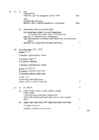
[3] 127. answers referring to insulin production can also be credited in mp 2,3,4 1 Escherichia coli ; A E. coli genetic engineering 3 max 2 amino acid sequence (of HGH), known / analysed ; 3 gene coding for HGH synthesised ; 4 using, triplet code / genetic code ; OR 5 mRNA (coding for insulin) from beta cells ; 6 use reverse transcriptase ; 7 synthesise cDNA ; 5 plasmid (vector) ; 6 cut using restriction (endonuclease) enzyme ; 7 ref to gene and plasmid mixed with (DNA) ligase ; 8 (recombinant) plasmid introduced into, bacterium / bacteria ; AW
given the previous and/or future frames by accounting for motion of the camera and/or objects in the video. It is employed in the encoding of video data for video compression, for example in the generation of MPEG-2 files. Motion compensation describes a picture in terms of the transformation of a reference picture to the current picture. The reference picture may be previous in time or even from the future. When images can be accurately synthesised from previously transmitted/stored images, the compression efficiency can be improved. 12. Koodeki, multimeedia konteineri ja metafaili mõisted. Koodek – tarkvara, mis võtab toored andmed ja surub selle kokku (filmil surub kokku heli, teksti ja pildi eraldi). Paneb kokku surutud andmed kokku multimeedia konteinerisse (AVI fail) – saab nt filmi vms. Teisel pool teeb koodek vastupidist ning lähevad andmed mahamängimisele.
 annaabi.ee