 50 punkti
Autor soovib selle materjali allalaadimise eest saada 50 punkti.
50 punkti
Autor soovib selle materjali allalaadimise eest saada 50 punkti.
 ~ 10 lehte
Lehekülgede arv dokumendis
~ 10 lehte
Lehekülgede arv dokumendis
 2012-10-24
Kuupäev, millal dokument üles laeti
2012-10-24
Kuupäev, millal dokument üles laeti
 17 laadimist
Kokku alla laetud
17 laadimist
Kokku alla laetud
 0 arvamust
Teiste kasutajate poolt lisatud kommentaarid
0 arvamust
Teiste kasutajate poolt lisatud kommentaarid
 muumitramm
Õppematerjali autor
muumitramm
Õppematerjali autor
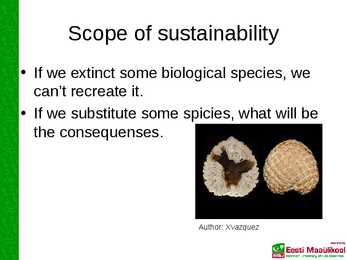
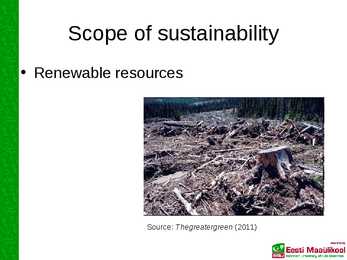
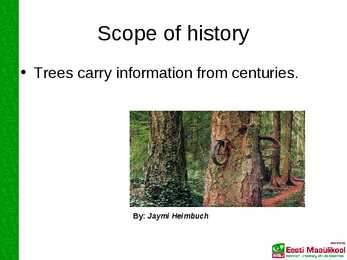
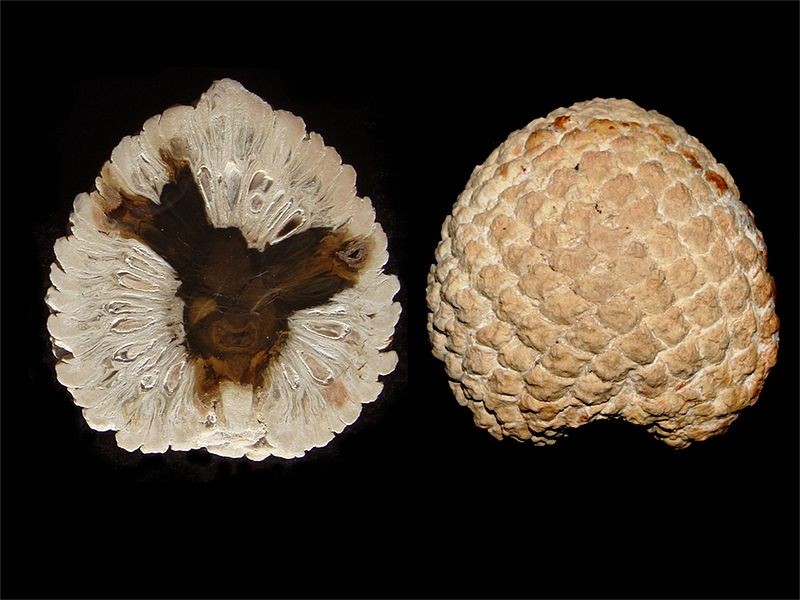
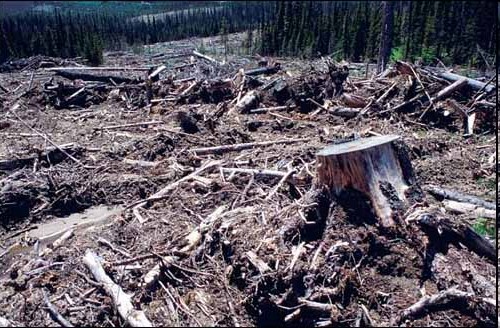
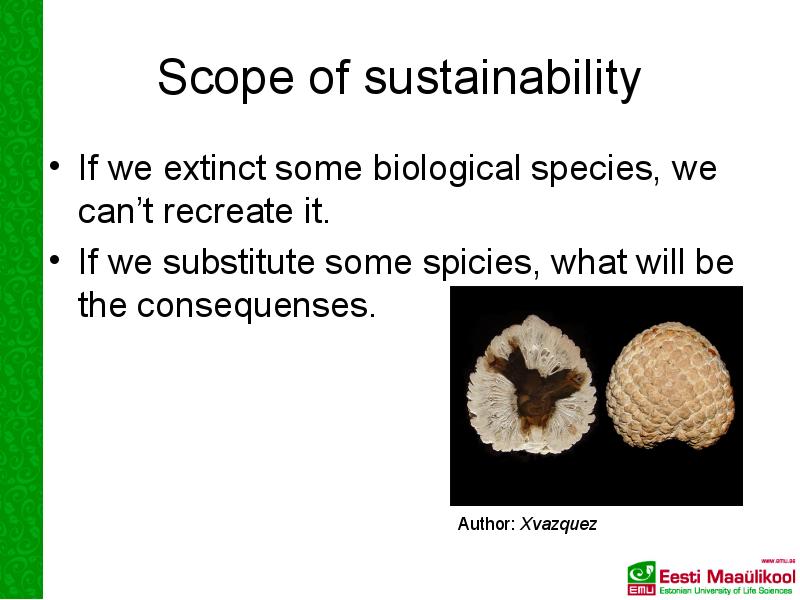
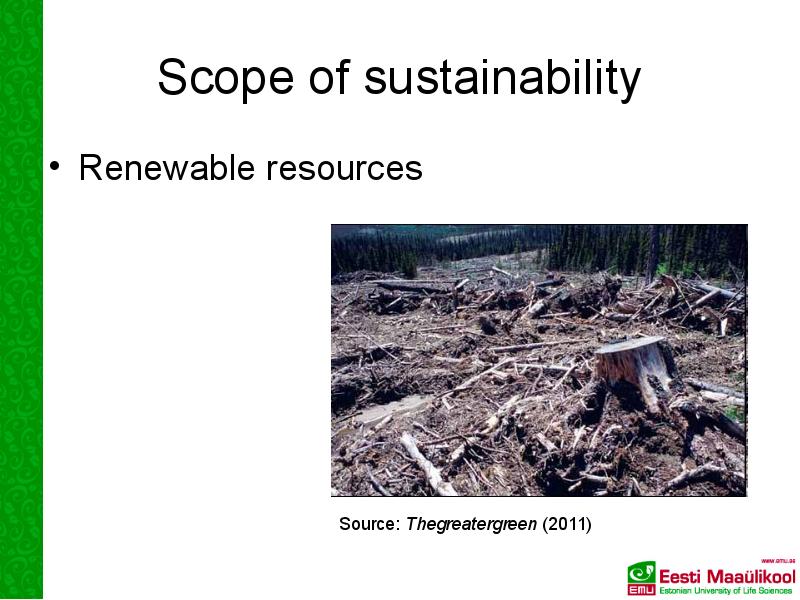
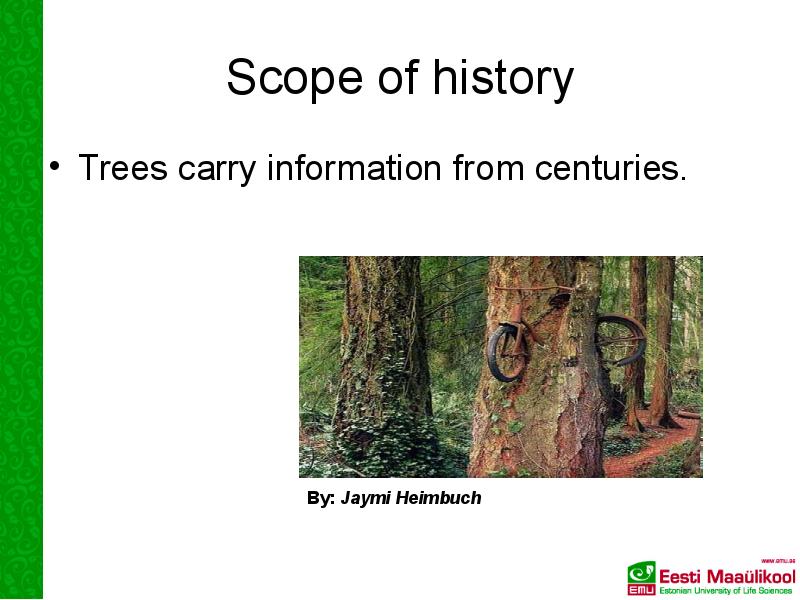
3. slaid If we destroy some kind of spiece, we cant recreate it. They carrie unique information which cant be restored. Maybe in the future, the technology will get so far that they can recreate some extincted spieces. Here is araucaria mirabilis which was living approximately 160 million years ago If we create some culture on the field or cut down some alder forest and replace it with spruces, will it have interaction to the whole world? It's extremely difficult to answer, because there are so many factors. 4. slaid Renewable resources have became metaphor with meaning that its easy way to produce energy. Its easy to destroy our forests but it changes our ecosystem. They cause blowdowns, erosions and so on. 5.slaid scope of history Forests sometimes need to be updated
It helps the student have an insight in to the subject; 4. Library, computer facilities ( e-mail, Internet), literature in the bookstore are available for everyone. There is an easy access to any information. 5. Business education is on a very good level and embraces all spheres of knowledge: English ( Technical Writing: Letters, reports, presentations, resume, academic papers etc needed for real life), Speech communication (Interviews, presentations ), Psychology in Management, International issues, cultural awareness., foreign languages. In methodology -case study: theory and real life together. The students of Business College know what they want and how to achieve that, how to present themselves ( in their terms "to sell themselves"). Both content and appearance matter. But: The students are overloaded with information. Team work ( derived from eastern cultures) is being
combustible in addition to having a strong smell which makes them stand out to the human nose. Methane leaks from landfills are an ongoing problem, as is the production of biogas in poorly maintained compost piles, manure lagoons, and outhouses. Spontaneous fires and explosions caused by build-ups of gas have been recorded in many regions of the world, illustrating a major problem which needs to be confronted by waste management companies. When this gas is trapped, however, it can be made useful, instead of just being a nuisance. Trapped biogas can be used to power stoves for cooking and heating, in addition to other applications. By trapping the gases, people can prevent methane from reaching the atmosphere, thereby reducing degradation caused by methane gas. The ability to turn waste products into something which can be utilized is also
future to consider. Although it’s true that we cannot physically stop our ozone layer from thinning there are still so many things we can do. Sustainability is the key to prevent or reduce the effect of environmental issues. There is now clear scientific evidence that humanity is living unsustainably, and that an unprecedented collective effort is needed to return human use of natural resources to within sustainable limits. For humans to live sustainably, the Earth's natural resources must be used at a rate at which they can be replenished. Concerns for the environment have prompted the formation of green parties, political parties that seek to address environmental issues. Initially these were formed in Australia, New Zealand and Germany but are now present in many other countries. By raising awareness about these issues, we can help contribute
• A non-trivial, nearly independent, and replaceable part of a system that fulfills a clear function in the context of a well-defined architecture • A component may be – A source code component – A run time components or – An executable component What is a Package? • A package is a general purpose mechanism for organizing elements into groups • A model element which can contain other model elements • Uses – Organize the model under development – A unit of configuration management What is a Subsystem? • A combination of a package (can contain other model elements) and a class (has behavior) • Realizes one or more interfaces which define its behavior Subsystems and Components • Components are the physical realization of an abstraction in the design • Subsystems can be used to represent the component in the design 6. WATERFALL MODEL The waterfall model is a sequential software development model (a process for the creation of software) in which
that they will have to use BIM to meet clients’ needs within the next two years; almost 80% said within the next five years. A survey of architects conducted from Dec. 3, 2005, to Jan. 6, 2006 by the American Institute of Architects showed that 74% of the respondents use some level of 3D digital modeling. Of the 74% using 3D/BIM, 98% use it for basic visualizations and design, 34% use it for conflict identification and 12% use it for post-occupancy facility management (Post, 2006a). A survey by Björk, B.C. in 2010 revealed that architecture firms are using BIM for design-related functions such as building design, visualization, and programming/massing studies. Contractors’ top three BIM use areas were clash detection, visualization, and creation of as-built models. Use of BIM in direct fabrication, where BIM replaces traditional shop drawings and drives fabrication equipment, is still limited; however,
Don’t Make Me Think, Revisited A Common Sense Approach to Web Usability Steve Krug Don’t Make Me Think, Revisited A Common Sense Approach to Web Usability Copyright © 2014 Steve Krug New Riderswww.newriders.com To report errors, please send a note [email protected] New Riders is an imprint of Peachpit, a division of Pearson Education. Editor: Elisabeth Bayle Project Editor: Nancy Davis Production Editor: Lisa Brazieal Copy Editor: Barbara Flanagan Interior Design and Composition: Romney Lange Illustrations by Mark Matcho and Mimi Heft Farnham fonts provided by The Font Bureau, Inc. (www.fontbureau.com) Notice of Rights All rights reserved. No part of this book may be reproduced or transmitted in any form by any means, electronic, mechanical, photocopying, recording, or otherwise, without the prior written permission of the publisher. For information on getting permission for reprints and excerpts, [email protected]. Notice of Liability Th
INTRODUCTION OF SUPPLY CHAIN MANAGEMENT (SCM) A supply chain is a network of facilities and distribution options that performs the functions of procurement of materials, transformation of these materials into intermediate and finished products, and the distribution of these finished products to customers. Supply chains exist in both service and manufacturing organizations, although the complexity of the chain may vary greatly from industry to industry and firm to firm.
 annaabi.ee







Kõik kommentaarid