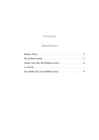
Degrees of Comparison Table of Contents Degrees of Comparison ......................................................... 2 Formation of comparatives and superlatives from adjectives and adverbs:......................................................................... 2 Adjectives ................................................................. 2 Adverbs .................................................................... 4 Types of comparisons ........................................................... 4 Degrees of Comparison Degrees of Comparison are used to compare things (living beings, actions, phenomena, etc).
g. the sun, the Prime Minister, the Pacific Ocean -before cinema/theatre/radio, e.g. We went to the cinema last night.(But you cannot say We watched the television.) -when reffering to a species or an invention, e.g. The whale is almost extinct. Alexander Bell invented the telephone. -in front of nationality words, e.g. the Canadians, the Japanese -with some adjectives when reffering to the group in general, e.g. the old, the rich, The poor, the sick, the unemployed. -with superlatives, e.g. It's the biggest cinema in London. -with names of newspapers, e.g. The Guardian, The Times, The Daily Mail -with countries, regions or groups of islands which are plural e.g. the USA, the Bahamas, the Middle East, The Netherlands -with names of oceans, seas, rivers and canals, e.g. the Atlantic Ocean, the River Danube, the Corinth Canal .(BUT NO LAKES). -with mountain ranges, e.g. the Andes, the Alps, the Himalayas, with areas e.g. the south
Used with just, already, yet, ever, never. I've just finished my work. I've already walked the dog. He hasn't done his homework yet. Have you ever seen a dragon? I've never hurt anybody. Used to talk about an action in the past when you can see the result now. Oh, you've had a haircut. Used with "It's the first/second/third/etc. time" It's the first time he has kissed a girl. Used with superlatives That's the ugliest frog I've ever seen. Present Perfect Continuous Used to talk about an action that began in the past and continues now when we are interested in how long. Usually we know when the action begun. She has been talking on the phone for three hours. Usually used with "for" or "since" She has been doing her homework for days since Friday. Used to talk about actions that have repeated over a period of time.
Homorganic means that the plosive and the following fricative must be made with the same articulators. Nasals in case of nasals, the air escapes through the nasal cavity, because oral cavity is completely closed at some point. M, n, Within a word containing letters ,,ng" in the spelling, occurs without the following g if it occurs at the end of the morpheme, if it occurs in the middle of a morpheme it has a following g (finger vs. sing/er). Exceptions are comparatives and superlatives. A lateral consonant l while producing it, the air escapes along the sides of the tongue. A post-alveolar approximant r. Approximant the articulators approach each other but do not get sufficiently close to each other to produce a ,,complete" consonant such as a plosive, nasal or fricative. J and W are phonetically like vowels but phonologically like consonants. J is a palatal and w is a bilabial approximant.
the police, the public, the army, the management, the government The government has raised the teachers’ salaries. • to turn an adjective into a noun to refer to a group of people in general: the poor, the rich, the young, the old, the unemployed, the homeless, the disabled, the British, the Spanish, the Dutch The rich can never understand the poor. • before superlatives and ordinals: the best, the most beautiful, the nicest the second, the fourth, the twenty-first My birthday is on the fourth of July. • when referring to a particular type of something in general: The giraffe is the tallest of all animals. (the giraffe refers to the species) When was the telephone invented? (the telephone as a certain type of device)
Tööstus: Tarbekaubad/toit. C&C (Pepsi,mineraalvesi jne.) Condensed Milk Company of Ireland (Iirimaa Kondenseeritud piima Kompanii) Dairygold Co-Op (Suurim põllumajandusettevõte) Donegal Creameries (Teie suurim toiduühing Iirimaal) EDUN (Moeühing) Fyffes (Banaani import) Glanbia (Piima-ja toiduühing) Greencore - (Toiduühing) Guinness - (Õlletööstus) Guinness Superlatives (,,Guinessi rekordite raamatu" kirjastaja) IAWS (Toiduühing Indias õppivatele naistele) Kerry Group (Suurim toiduühing Iirimaal) Barrys (Iiri teeühing) Reox - (Tarbetoidud) Ehitus. CRH - (Kaevandusühing) Grafton - (Ehitusfirma) Kingspan - (Ehitusfirma) Readymix (Ehitustarvikud) Elektroonika/tehnoloogia. Ashling Microsystems (Kasutuses olevate tööriistade kompanii)
· Note that hair is singular, and has no article. She's got dark hair. · The means 'you know which one(s) I mean' I bought a radio and a CD player, but the CD player didn't work. 33 The woman over there works with my sister. Please close the door. He's been to the North Pole. · We often use the with only and with superlatives. She is the only woman for me. It's the best restaurant in town. · We do not use the in generalisations with plural and uncountable nouns. I like music. Can you turn off the music? She is very interested in nature. What is the nature of his illness? · We do not normally use the in generalisations with plural and uncountable nouns, even if there is an adjective before the noun. She's studying Chinese history
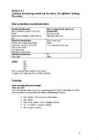
m ar H am Gr elp The word than is often used with comparative adjectives. For example, you might say: Jack is taller than John. A sports car is faster than a motorbike. 65 Use the superlative form of an adjective to compare three or more nouns. Lots of superlatives end in -est. dark darker darkest thick thicker thickest clean cleaner cleanest easy easier easiest fat fatter fattest flat flatter flattest heavy heavier heaviest hot hotter hottest narrow narrower narrowest noisy noisier noisiest
 annaabi.ee