Vincent van Gogh Biography • Was born in Netherlands in 1853 • His father was a church preacher and his mother was a housewife. Vincent was the eldest of six children • He became a painter at age of 27. Before that he tried many professions, such as teacher, preacher, art salesman, working in a bookstore etc • He struggled with a mental health disorder throughout his lifetime • He died in France in 1890 when he committed a suicide (while being only 37 years old) Art • Van Gogh's first paintings were mostly of poor people. The colors in his early paintings are dark and brown (muddy). The feelings portrayed were of sadness • In his later paintings Van Gogh started to lighten his colors and paint in short brushstrokes. His paintings started to look much happier, brighter and more colorful
Jackson Pollock Meri-Kris Jaama 2009 Life · 1912-1956 · The youngest of five brothers · met Peggy Guggenheim in New York · 1945 - married to Lee Krasner · Moved to Springs on Long Island, New York · Struggled with alcoholism all of his life · Died at the age of 44 in an alcohol-related, single-car crash Jackson Polloc and Lee Krasner Art · Abstract expressionist · Explored the subconcesness · Unique technique Pouring and dripping paint Canvas on the floor Unusual tools " When I am in my painting, I'm not aware of what I'm doing. It is only after a sort of 'get acquainted' period that I see what I have been about
" Baumgartner's most recent project was Red Bull Stratos, in which he jumped to Earth from a helium balloon in the stratosphere on 14 October 2012. As part of this project, he set the altitude record for a manned balloon flight, parachute jump from the highest altitude, and greatest free fall velocity. The training for the jumb started many years before and it was very accurate and time- consuming. Baumgartner initially struggled with claustrophobia after spending time in the pressurized suit required for the jump, but overcame it with help from asports psychologist and other specialists. Eugene Andreev, the former rercord holder for the longest-distance free fall jump, who was the only one who could talk to Felix during his filght. After the jump Felix sayd that now he want's to take Eugene's position and guide new jumpers who maybe one day beat his record.
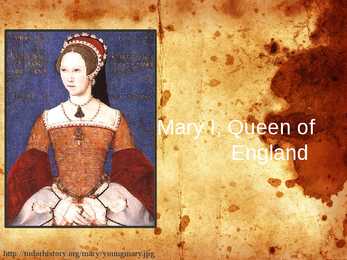
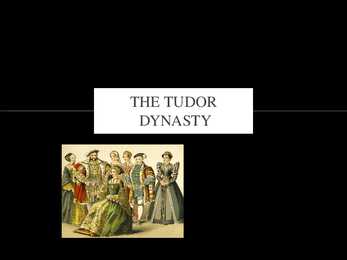
Anne of Cleves (Jan 1540- July 1540) Kathryn Howard (July 1540- Feb 1542) Katherine Parr (July 1543- Jan 1547) Anne Boleyn and Anne of http://tudorhistory.org/boleyn/ http://tudorhistory.org/cleves/ Cleves Edward VI's reign 9 yrs-old Supporter of the Protestant faith Edward (Prothestant) and Mary (Catholic) struggled with issues 1552- Edward shows signs of illness Throne goes to cousin Jane instead of Mary http://tudorhistory.org/edward/ "The nine days Queen" Jane Grey- daughter of Henry Grey (Duke of Suffolk); married to John Dudley's (Duke of
with Pirates of the Caribbean Curse of the Black Pearl. Main characters Will Turner (Orlando Bloom) blacksmith Jack Sparrow (Johnny Depp) pirate Captain Elizabeth Swann (Keira Knightley) the kidnapped Barbossa Geoffrey Rush Orlando Bloom Orlando Bloom is born in England 1977. He's father died when he was only 4 years old, so Orlando and his older sister were raised by their mother He attended school in Cantarbury but struggled in many courses because of dyslexia. At the age of 16, he moved to London and joined the National Youth Theatre. Johnny Depp *Johnny Depp is born in Kentucky, USA on June 9,1963. *He was rised in Florida. He dropped out of school at age 15 in the hopes of becoming a rock musician. *Depp got into acting after a visit to Los Angeles, California, with his former wife, who introduced him to Nicolas Cage. Keira Knightley Keira is born on march 26, 1985
C., then governed by congressional committee. Despite tensions, the march was a resounding success. More than a quarter of a million people of diverse ethnicities attended the event. King delivered a 17-minute speech, later known as "I Have a Dream". To conclude, I would like to tell, that Martin Luther King was one of activist, who changed the black peoples life for better. He was Christian, so his views based on Christian beliefs and he supported nonviolent movement, moreover, he struggled for the Afro-American civil rights. At the White House Rose Garden President Ronald Reagan signed a bill creating a federal holiday to honor King.
Nagu eespool mainitud, võivad samad vokaalid olla rõhulises silbis ja ka rõhuta silbis näiteks /i/ on sõnas ´piso piso ‘astun’ rõhulises silbis, aga sõnas pi´so pis´o ‘astub’ rõhuta silbis. Samamoodi vastavalt näiteks /e/ ´peso peso ‘kaalun’ ja pe´so pes´o ‘kaalub’; /a/ ´paso paso ‘läbin’ ja pa´so pas´o ‘läbib’; /o/ ´poso poso ‘poseerin’ ja po´so pos´o ‘poseeris’; ´puso puso ‘ta pani’ ja pu´χo puj´o ‘She struggled’. Näidetest võib märgata, et tihti võib sõltuda rõhust ka sõna tähendus. 2.1 Diftongid Hispaania keeles on nii kõrgenevaid kui madalduvaid diftonge, mille moodustavad kaks laadilt erinevat diftongi, mis kuuluvad ühte silpi. Kõrgenevad on moodustatud poolvokaalidega /j/ ja /w/ pluss silbi tuum, näiteks /je/ ´pjel piel ‘nahk’ või /wi/ ´fwimos fuimos ‘me läksime’. Madalduvad moodustatakse silbituumast, millele lisandub
Cotton agriculture revived the profitability of slavery and the political power of supporters of the South's "peculiar institution." American politics were driven by "King Cotton": maintaining the political balance between slave and free states and tariff protection for American industry. Cotton exports from the South boomed after the cotton gin's appearance (going from 180,000 pounds of total cotton production in 1793 to 93 million tons by 1810) while New England manufacturing companies struggled to compete against imported goods and clamored for tariff protection. The cotton interests led the country into war with Mexico. Cotton was a staple that could be stored for long periods and shipped long distances, unlike most agricultural food production. Paradoxically, the cotton gin, a labor-saving device, helped preserve the weakening arguments for slavery, since cheap (slave) labor was needed to pick cotton. Later, the 20th century invention
Klüft won again in Götzis, and in Arles but without showing good form. She managed to defend her title at the 2006 European Athletics Championships with a score of 6,740 points, despite having been hampered by injuries throughout her preparation. She performed well below her best but still won comfortably following the withdrawal of her rival Barber after the high jump. Klüft went on to compete in the individual long jump but again struggled for form, finishing 6th. Chances were good that Klüft would be able to make history at the World Championships in Osaka, becoming the only woman to win three world titles in the heptathlon. However, she faced strong competition from Lyudmila Blonska of Ukraine, who had, earlier in the year, set the world best heptathlon score of 2007. Klüft started the first day by equalling her Personal Best of 13.15 in the 100 m Hurdles and a new Personal Best of 1.95 in the High Jump
Most Tudor people lived in the countryside, but some people lived in towns or big Tudor cities like London, Bristol or Norwich. Tudor England was a farming society. Most of the population (over 90 %) lived in small villages and made their living from farming. Under Tudor rule England became a more peaceful and richer place. Towns grew larger and the mining of coal, tin and lead became very popular. The poor The poor had to work hard and struggled to survive. They worked six days a week and only had holy days and public holidays off work. They ate coarse grey bread made from rye and barley. Soups were made from vegetables and herbs. Meat was a luxury but poor people sometimes kept animals to provide milk, cheese and eggs. Life for the poor in Tudor times was harsh. When the harvest failed it was tempting for poor people to steal food. When people did break the law, they risked public flogging or being hanged.
The non-white colonies were not so fortunate. World War I started in 1914. It was between France, the UK and the British Empire, Russia and the US (known as "the Allies") on one side and Germany, Turkey and Austria- Hungary on the other. When the Allies won in 1918, more than 10 million men had been killed. The only positive outcome in Britain was that women got the right to vote in the 1919 elections. During the war, Britain also struggled to main control of Ireland, where demands for independence were increasing. Britain was unable to resist the rise of nationalistic movement. The Irish Free State was eventually created on 6 December 1921. In the mid-1920s life was getting harder for the lower classes. A slump in the mining industry in 1925 led Britain's miners to a nationwide strike. The General Strike started on 4 May 1926 and many people stopped work in support of the men who worked in the mines.
working in the automotive business. However, Cash soon after enlisted in the U.S. Air Force and was sent off to basic training in Te x a s . While in Texas Cash accidentally stumbled upon love and met his first wife Vivian Liberto, than was almost immediately shipped off to Landsberg, Germany. Cash started his first band in the military named The Landsberg Barbarians. Cash struggled while desperately trying to break into the music business. When Cash auditioned as solo artist for Sam Phillips' Sun Records, that following Spring he was in the Sun Studios to record with his new band; The Tennessee Three. Originally consisting of Luther Perkins,
At about the same time, the plague outbreak tapered off. Although, it is now thought that the Plague had died off before the Great Fire of London and also the majority of plague cases were found in the suburbs of the city and not in the centre of London that was affected by the Fire. (Wikipedia homepage: http://en.wikipedia.org/wiki/Great_Plague_of_London) 8 CONCLUSION During my research I had a taste of life in London during the plague. How people struggled when there was no hope left. How the city was packed with dead rotting bodies and people bulled the corpses of their family members onto carts. When there was no room left in the cemetery and lots of corpses were buried in one hole. I cannot imagine the pain that people felt during the plague, how much tears they shed and how many family members and friends they lost. The largest problem in making of my research was how to divide the information. I wrote
factory closings led the IMF to reduce estimates of economic growth in 2011 and to project negative real GDP growth in 2012. The two main pillars of the Syrian economy have been agriculture and oil. The government hoped to attract new investment in the tourism, natural gas, and service sectors to diversify its economy and reduce its dependence on oil and agriculture. Reform was slow and ad hoc as factions in the government struggled to agree on economic theory. The social market economy proposed by the regime generated argument over the balance between private sector growth and social protection. For ideological reasons, privatization of government enterprises is still not widespread, but it is in its initial stage for port operations, power generation, and air transport. Most sectors are now open for private investment, but neither domestic nor foreign investors are willing to commit funds in Syria at this time.
(McClenaghan, 2003). Stalin suffered bad losses in the World War II, but managed to conquer Berlin in 1945. The Soviet Union had gained more territory and was now ranked as one of the two great powers in the world, along with the United States. But life in the country was still suffering. Production was once again concentrated on heavy industry. Political freedoms were restricted even more, and another series of purges came out. The country also struggled with the Cold War ( " H i s t o r y of russia," ). After Stalin died the country did better again. Cultural life was slowly restored. In the 1970s when Brezhnev became the leader of the Soviet Union the country went through a long period of bad economy and there were many pessimistic and disappointed people. In 1985 Mikhail Gorbachev became the general secretary. He understood that the country needed some serious changes. Gorbachev used his new policies, perestroika and glasnost
Sequel (1865-66), which includes his famous elegy to Abraham Lincoln, `O Captain! My Captain!' Last years He spent the rest of his life working on the subsequent editions of Leaves of Grass, which grew to include 400 poems. His literary achievements were largely disregarded by the public of his day, which was shocked by his frankness in sexual matters and his rough working man image. He held a series of minor posts in Washington and struggled to survive on a meagre income. In 1873 he suffered a paralysing stroke. He continued to add to Leaves of Grass right up until his death in 1892. Works Farther of American poetry Whitman was the first distinctly Am voice in poetry. Like Mark Twain in prose, he broke with the British literary tradition which had influenced Am poetry up until that point. Style He was boldly experimental in his work. He believed that Am poetry should
bring them to Chelsea. Lady Dundas, a charitable fund raiser for war victims, arranged for Viscount Dalrymple, then a small boy, to parade around the grounds on a Shetland pony to collect money for the war. The RHS, which in 1911 refused to allow ladies banquets, now recognized that lady gardeners existed, and acknowledged the necessity to dig for victory. In 1915 it even organized a show of women's work at the Horticultural Halls. As the war deepened, the RHS struggled on. By November the Council had removed King Ferdinand of Bulgaria as an honorary fellow and, the following February, decided that tickets should remain at ten shillings for the first public-access day, with two shillings and sixpence on the second day, and one shilling on the third day of the show. By March 1916 the RHS were wondering whether to cancel the whole event because of the cost of the new entertainment taxes, but Lord Balfour said it would benefit trade
Indian bodies as food for their hunting dogs. Within four years of Columbus' arrival on Hispaniola, his men had killed or exported one-third of the original Indian population of 300,000. This was the great cultural encounter initiated by Christopher Columbus. This is the event we celebrate each year on Columbus Day. The United States honors only two men with federal holidays bearing their names. In January we commemorate the birth of Martin Luther King, Jr., who struggled to lift the blinders of racial prejudice and to cut the remaining bonds of slavery in America. In October, we honor Christopher Columbus, who opened the Atlantic slave trade and launched one of the greatest waves of genocide known in history. 7. Indian gifts to the world plants, household objects, etc. of Native American origin. *American Indian path to industrialization · People ate more potatoes and milled less flour · The energy could be used for making cloth
pieces with long, pale fingers. His mouth was moving very quickly, his perfect lips barely opening. The other three still looked away, and yet I felt he was speaking quietly to them. Strange, unpopular names, I thought. The kinds of names grandparents had. But maybe that was in vogue here -- small town names? I finally remembered that my neighbor was called Jessica, a perfectly common name. There were two girls named Jessica in my History class back home. "They are... very nice-looking." I struggled with the conspicuous understatement. "Yes!" Jessica agreed with another giggle. "They're all together though -- Emmett and Rosalie, and Jasper and Alice, I mean. And they live together." Her voice held all the shock and condemnation of the small town, I thought critically. But, if I was being honest, I had to admit that even in Phoenix, it would cause gossip. "Which ones are the Cullens?" I asked. "They don't look related..." "Oh, they're not. Dr
"I want to be with you." "You didn't seem like you did Saturday." My arms tightened around my middle. "I was...reeling." "So? I was, too." His hands went to his hips. Then his arms crossed like mine. "Christ, Eva." I watched him squirm and felt a flare of hope. "If that's all you've got, we're done." "The hell we are." "We've already hit a dead end if you're going to take a head trip every time we have sex." He visibly struggled with what to say. "I'm used to having control. I need it. And you blew it all to hell in the limousine. I didn't handle that well." "Ya think?" "Eva." He approached. "I've never experienced anything like that. I didn't think it was possible for me to. Now that I have...I've got to have it. I've got to have you ." "It's just sex, Gideon. Super awesome sex, but that can seriously screw with your head when the two people doing it aren't good for each other." "Bullshit
their cousin's appearance would not allow them to wait in the drawing-room, and whose shyness, as they had not seen her for a twelvemonth, prevented their coming lower. All was joy and kindness. The day passed most pleasantly away; the morning in bustle and shopping, and the evening at one of the theatres. Elizabeth then contrived to sit by her aunt. Their first object was her sister; and she was more grieved than astonished to hear, in reply to her minute inquiries, that though Jane always struggled to support her spirits, there were periods of dejection. It was reasonable, however, to hope that they would not continue long. Mrs. Gardiner gave her the particulars also of Miss Bingley's visit in Gracechurch Street, and repeated conversations occurring at different times between Jane and herself, which proved that the former had, from her heart, given up the acquaintance. Mrs. Gardiner then rallied her niece on Wickham's desertion, and complimented her on bearing it so well.
had achieved complete surprise that, at 7:53, two minutes before the first bomb even fell, he jubilantly radioed "TORA! TORA! TORA!" ("Tiger! Tiger! Tiger!")—the prearranged codeword that indicated surprise. On Akagi, Nagumo turned to a brother officer and grasped his hand in a long, silent handshake. At 7:55, the first bomb exploded at the foot of the seaplane ramp at the southern end of Ford Island in the middle of Pearl Harbor. Okumura was still typing. His fingers struggled with the keys as torpedoes capsized Oklahoma, as bombs sank West Virginia, as 1,000 men died in the searing inferno of Arizona. At 1:50 p.m. Washington time, 25 minutes after the attack had started, he reached the end of his typing marathon. The two ambassadors, who were waiting in the vestibule, started for the State Department as soon as it was handed to them. The Japanese envoys arrived at the Department at 2:05 and went to the diplomatic waiting room [Hull wrote]
Why the hell do a quest for fatness at all, you ask? Because I wanted to prove, once and for all, that the calories-in-calories-out model was plain wrong, or at least incomplete. The easiest way I could do this was by consuming a disgusting number of calories in a short period of time and documenting the aftereffects. This time, I had a different approach. At 11:43 P.M. that evening, with two minutes remaining, I struggled to choke down a nal package of Nutter Butters. I had polled my then 60,000 or so Twitter followers the previous night for their favorite calorically dense foods, and I had committed to consuming as many as possible. Everything I ate or drank would be photographed and either measured or weighed. Here's how it added up, with non-eating but important events indicated with an asterisk: 11:45 A.M. start · 1 cup steamed spinach (30 kcal)
D. in your field every year.You will become one of the smartest, best-informed, and most productive people in your business. ■ BEATING THE DRUM Some years ago, I had a good friend who read very little. He was not convinced that reading would make any difference to his life or income. He had gotten out of the habit of reading after he left school. He argued with me that reading wasn’t that important. Meanwhile, he struggled to make a living. He was continually frustrated. He was continually losing business to his better- informed competitors. For almost three years, I kept at him, encouraging him to begin daily reading. Finally, he gave in and began to read each morning, just for a few minutes. He was amazed at how helpful the reading was, and how much more knowledgeable he was when he spoke to his clients.
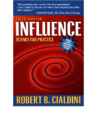
year-old son tremble through a night on the cold ground of the "yard of myster- ies," the college sophomore punctuating his Hell Night paddling of his fraternity "little brother" with bursts of nervous laughter, these are not acts of sadism. They are acts of group survival. They function, oddly enough, to spur future society members to find the group more attractive and worthwhile. As long as it is the case that people like and believe in what they have struggled to get, these groups will continue to arrange effortful and troublesome initiation rites. The loyalty and ded- ication of those who emerge will increase to a great degree the chances of group cohesiveness and survival. Indeed, one study of 54 tribal cultures found that those COMMITMENT IS THE KEY _ with the most dramatic and stringent initiation ceremonies were those with the greatest group solidarity (Young, 1965)
 annaabi.ee