My favorite tv program My favorite tv program is Gossip Girl . Gossip girl is based on the book series written by Cecily von Ziegesar. The series comprises the lives of socialite teenagers who live in New York City's Upper East Side. The serial have 8 main characters Serena van der Woodsen, Blair Waldorf, Chuck Bass, Nate Archibald, Jenny Humphrey, Dan Humphrey, Lily van der Woodsen and Rufus Humphrey. Serena is daughter of Lily, Rufus is Jenny's and Dan's father, Nate and Blair is a couple in the first season. They all have very scandalous lives. Every day ends with a mess.
Mostly she is everywhere because fans adore her soo mutch and the produsers are takind advantages of it She is young and pretty, as if she wants people to envy her How is she known She has her own show called "päikese poole" She performed at the 56. eurovision in Dysseldorf with a song called "Rocefeller street" and beacuse of her estonia became 24. th At a show called "tantsud tähtedega" she failed by getting kicked out of the show at the first level Something scandalous In Tallinn a fan called out Getter Jaanis name and cheered, but Getter told him to "buzz off" Her Show "Päikese poole" is a show for "babes" and other kind of "barby girls", say fans in a interesting forum http:// naistekas.delfi.ee/foorum/read.php?58,11194801 Thank you for watching!
taking the children with her, converted to a Jewish faith. Contemporary views Sand's reputation came into question when she began sporting men's clothing in public. In addition to being comfortable, Sand's male dress enabled her to circulate more freely in Paris than most of her female contemporaries could. It gave her increased access to venues (meeting places) from which women were often barred -- even women of her social standing. Also scandalous was Sand's smoking tobacco in public. These and other behaviors were exceptional for a woman of the early and mid-19th century, when social codes were of the utmost importance. As a consequence of many untraditional aspects of her lifestyle, Sand was obliged (kohustatud) to relinquish (loovutama) some of the privileges appertaining (juurde kuuludes) to a baroness. Poet Charles Baudelaire was a contemporary critic of George Sand: "She is stupid, heavy and garrulous (lobisev)
western, and in particular British, society. § For example her book "The Spa Decameron" tells a story about high-achieving ladies, at the remote and expensive Castle Spa, over the ten days of Christmas and New Year. None of them have met before. The ladies are wilful: they lounge around in the Jacuzzi, drinking champagne, eating permitted caviar and forbidden chocolate, and confessing the stories of their lives, startling and scandalous though these may be. Personal life § In 2000 Weldon became a member of the Church of England and was confirmed in St Paul's Cathedral, which was perhaps appropriate because she states that she likes to think that she was "converted by St Paul". § In 2006 Weldon was appointed Professor of Creative Writing at Brunel University in West London. She has said: "A great writer needs a certain personality and a natural talent for
He is still under the protection of the "Säkerhets polisen". Actually it was one organization inside "Säkerhets polisen" called the section, that dealed with Zalatchenko, and hardly anyone knew about this union. Roland Niedermann - Lisbeth's half-brother, who's existence Salander didn't know. He is really strong and has a disease that he isn't able to feel any ache. *Mikael Blomkvist Lisbeth's friend. He works in the newspaper "Millennium", which is known for publishing scandalous articles. Lisbeth and Mikael met in the first novel called "The Girl With a Dragon Tattoo". Lisbeth found Mikale trustful, and this was something new for her. She couldn't trust anyone before. So she tried to avoid Mikael, because he brought out feelings that Salander had never experienced before. Salander didn't like it because she liked to have everything under her own control. Blomkvist spends this novel trying hard to reveal the corrupt plot against Lisbeth Salander.
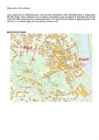
shops and caffees also. As you move towards Emajõgi you should see a skewed house, that is an Art Museum at the moment. What kinds of institutions are in Town Hall Building? What do you think, how many degrees is Art Museum Building askew? In the end of the Town Square ends you will see the last attraction on your trail, the River Emajõgi and Kaarsild. For what is this bridge famous for? A) For it's beautiful architecture. B) For it's scandalous happenings (a couple had an intercourse on top of this bridge) C) For it's age it is a very old bridge. This photo hunt will last approximately 2 hours. First place what you will see is the sight of Tartu, from the top of Toome Hill. Everybody can take pictures if they wish. After moving forward you will stop next to a tiny hill on the Toome hill, its called "The Kissing Hill" probably because of its tradition, many fresh married couples come here to make their second kiss after
sailors and citizens life. Thanks to her creation we can learn about Estonia's life and early years of urbanization a lot. Third writer I am going to talk about is Aino Kallas. She lived 1878-1902. Actually she was a Finnish-Estonian writer. She came from Finland and then started writing in Estonian. She has later said that her problem was that she was trying to fix Estonia's problems, although it wasn't something she should have done as she originally was Finnish. She was really scandalous because she published her diaries. In her diaries she wrote about really personal things that most people would never let anyone else read if it were their life. She is also important because she wrote a lot about Hiiumaa. In a matter of fact she also lived on our island, Hiiumaa. One of her stories that talks about Hiiumaa is Hundimõrsija (The Wolf's bride). It's a werewolf story about 17th century Hiiumaa. The story is rich with archaic, romantic, colourful prose
movement, he remains widely read and influential His bestknown works are the lengthy narrative poems ,,Don Juan" and ,,Childe Harold's Pilgrimage "and the short lyric "She Walks in Beauty". He travelled to fight the Ottomans in the Greek War of Independence, for which Greeks revere him as a national hero died at 36 years in Greece Lived as a true aristrocrat, had huge debts, numerous love affairs, there were rumors of a scandalous incestuous romance with his halfsister and selfimposed exile It has been speculated that he suffered from bipolar disorder and was bisexual The Byronic hero The Byronic hero is a variant of the Romantic hero as a type of character, named after Lord Byron. Both Byron's life and writings have been considered in different ways to exemplify the type. The Byronic hero first appears in Byron's semi autobiographical epic narrative poem Childe Harold's Pilgrimage
history, fame and passion. 32. The „Comedy of Manners” (Goldsmith, Sheridan) Witty form of dramatic comedy, depicts and often satirizes the manners and affectations (teesklus) of contemporary society. Concerned with social usage and whether or not characters meet certain social standards. Often governing standard morally trivial, but exacting. The plot, usually concerning illegal love affair or other scandalous matter, lust and greed, self-interested cynicism; witty dialogue, sharp commentary on human weaknesses. Satire upon social attitudes, most often attacking superficiality and materialism, society where appearances count more tha true character. Oliver Goldsmith: The Good-Natur’d Man – story of the testing and curing of a generously credulous (kergeusklik) hero by the devices of a sensible uncle, She Stoops to Conquer – its bashful and reversed
murders a white woman, he is then traced down by dogs. He is lynched, castrated and then shot. He is treated almost like a fugitive slave. Mixed blood is dangerous. Another theme that is essential of Faulkners books are tensions between sexes. In the south the tension between the sexes are hightend beacuse of race and class. According to the myth, southern society was the land of moonlight, magnolias and lovers. ,,Sanctuary". Faulkner's own favourite novel. It was a scandalous novel. One of the characters is young gentleman who likes to drink a lot. He gets acquainted with a young upperclass girl and because he is drunk he accidentally bootlegging gangsters. She is about to be raped with corn, plant. Another member of the gang Popeye shoots him infront of the girl and rapes her himself. Later popeye takes drake to whorehouse and arranges other man to have sex with the girl in front of him. Popeye enjoys this new kind of life. Camus and Sartres favourite book
He censures everything, this zealous carper. MADAME PERNELLE And all he censures is well censured, too. He wants to guide you on the way to heaven; My son should train you all to love him well. DAMIS No, madam, look you, nothing--not my father Nor anything--can make me tolerate him. I should belie my feelings not to say so. His actions rouse my wrath at every turn; And I foresee that there must come of it An open rupture with this sneaking scoundrel. DORINE Besides, 'tis downright scandalous to see This unknown upstart master of the house-- This vagabond, who hadn't, when he came, Shoes to his feet, or clothing worth six farthings, And who so far forgets his place, as now To censure everything, and rule the roost! MADAME PERNELLE Eh! Mercy sakes alive! Things would go better If all were governed by his pious orders. DORINE He passes for a saint in your opinion. In fact, he's nothing but a hypocrite. MADAME PERNELLE Just listen to her tongue! DORINE I wouldn't trust him,
I have no reason for avoiding him but what I might proclaim before all the world, a sense of very great ill-usage, and most painful regrets at his being what he is. His father, Miss Bennet, the late Mr. Darcy, was one of the best men that ever breathed, and the truest friend I ever had; and I can never be in company with this Mr. Darcy without being grieved to the soul by a thousand tender recollections. His behaviour to myself has been scandalous; but I verily believe I could forgive him anything and everything, rather than his disappointing the hopes and disgracing the memory of his father." Elizabeth found the interest of the subject increase, and listened with all her heart; but the delicacy of it prevented further inquiry. Mr. Wickham began to speak on more general topics, Meryton, the neighbourhood, the society, appearing highly pleased with all that he had yet seen, and speaking of the latter
 annaabi.ee