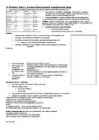
Bundestag · Four year fixed term Second Chamber (cf House of Lords) Represents German Länder (= devolved regions) in national politics · 656 members, half 16 Länder send delegations with voting weights in loose proportion elected from to population constituencies, half 69 members in total from regional party Can veto over 50% of laws (and require reconsideration of the rest) lists Extra check on government · `Working' parliament Esp. with tendency for `divided government', different party not `debating' majorities in Bundestag and Bundesrat parliament Separation of powers federalism · Germany divided into 16 Länder (11 before unification) · But why a federal system? Not ethnically diverse Not that big
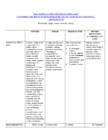
20. To award damages - to order one party in a dispute to compensate another party for a loss or injury. 21. Personal injury - physical injury inflicted to a person's body, as opposed to damage to property or reputation Classification of the court There are two different kind of courts: The court of first instance – the court, where a case is first heard The appellate court – the higher court, where to it is possible to appeal a case for reconsideration of the decision of the original court o Appeal to the higher court to reconsideration 1. Country, administer, 2. Circuit court (ringkonna kohus), 3. Supreme court (riigikohus) THERE IS NO COURT ABOVE IT – THE HIGHEST European court of justice – deals with the matters, where it is about the EU law Classifying courts according to their functions The courts of civil jurisdiction o Civil actions take place between two or more individuals in dispute, it is a
adjudicate on disputes between private individuals or companies, and courts of criminal jurisdiction, which determine whether the accused person has committed a crime and punish the wrongdoer. But that classification is not valid because many courts hear both civil and criminal cases. Courts of first instance, the courts where a case is first heard, and appellate courts, the higher courts to which it is possible to appeal for reconsideration of the decision of the original court. However many courts exercise both original and appellate jurisdiction. In Estonia, there are two types of courts of first instance: county courts and administrative courts, courts of second instance are called circuit courts and finally the supreme court. Classification by hierarchy. One way of classifying courts is according to their functions. There are civil courts (relating
Usually there are two ways to classify them. Courts can be classified as courts of civil and courts of criminal jurisdiction. Civil courts solve the disputes between individuals and in criminal courts the parties are a individual and state. Courts can also be divided into original and appellate jurisdictions. The court where case is first heard is called original court, also known as court of first instance. In almost all cases it is possible to appeal to a higher court for reconsideration of the decision of the original courts to appellate courts. It is important to remember that these two classifications are not always valid. There are courts which exercise jurisdiction in civil and criminal cases. Also not all the courts have appellate jurisdiction, like for example magistrate's jurisdiction. The European court itself is completely independent classification of courts. Jurisdiction - the power or authority to decide legal cases
tin/titin N2A region as a modulating scaffold for p94/ 469. calpain 3 activity in skeletal muscle. Journal of Ilian, M. A., J. D. Morton, M. P. Kent, C. E. Le Couteur, Biological Chemistry 283:14801–14814. J. Hickford, R. Cowley, and R. Bickerstaffe. 2001a. Herrera-Mendez, C. H., S. Becila, A. Boudjellal, and A. Intermuscular variation in tenderness: Association Ouali. 2006. Meat ageing: Reconsideration of the with the ubiquitous and muscle-specific calpains. current concept. Trends in Food Science & Technology Journal of Animal Science 79:122–132. 17:394–405. Ilian, M. A., A. E. Bekhit, and R. Bickerstaffe. 2001b. Herring, H. K., R. G. Cassens, and E. J. Briskey. 1965. Catalysis of meat tenderization during postmortem Further studies on bovine muscle tenderness as influ- aging by calpain 3 (p94)
 annaabi.ee