Paul Koechlin in a Peugeot, despiting arriving 11 hours after Émile Levassor in a Panhard et Levassor. There are two main forms: stage rallies and road rallies. Since the 1960s, stage rallies have been the professional branch of the sport. Drivers Most of the works drivers of the 1950s were amateurs, paid little or nothing, reimbursed their expenses and given bonuses for winning. Then in 1960 came arguably the first rallying superstar Sweden's Erik Carlsson, driving for Saab. Sébastien Loeb, the world's most successful rally driver in terms of WRC wins. Drivers in Estonia Ott Tänak Kuldar Sikk Georg Gross Raigo Mõlder Markko Märtin However, on Sunday, September 18, 2005, the final leg of the event, two kilometres from the start of Stage 15 at Margam Park, Märtin's Peugeot crashed heavily into a tree
start of Stage 15 at Margam Park, Märtin's Peugeot crashed heavily into a tree. Although the Estonian driver was left unhurt by the shunt, co-driver Park was immediately killed in the accident, the first fatality for a competitor at WRC-level for over a decade. As a result, Märtin announced that he would pull out of the last four events of the 2005 season. Understandably shaken by the passing of Park, Märtin effectively left the WRC stage. He went on to manage a junior rallying team in the Estonian rally scene, indicating that he would likely refuse any offers to drive at the top level again. He has since spoken out against the FIA's treatment of the WRC, claiming that the series had lost much of its luster and calling for a far-reaching rules overhaul. However, Märtin made a limited return to competitive rallying in March 2006 at the 2006 Rally of Portugal. The invitational event was held as a candidate for full WRC status. Markko
I made my presentation about infotechnology usage in motorsport. I chose this topic because I am an infotechnology student and also I have been rally driver since 2009. I believed this could be interesting topic for others to hear because you can’t really find much information about the technologies used in different motorsport disciplines from the Internet but you can learn about them usually when somebody tells you about those technologies. Because I’m a rally driver and I know most about rallying I focused on rally and in addition talked little bit about Formula One and also about simulators. Most of the information I used to make this presentation was based on my personal experience. In addition, I found some interesting technologies which are used in Formula One from the Internet. Most interesting hi-tech solutions used in rally are in my opinion ride height control with GPS and launch control which is synced with start clock. First means that the height of a car’s
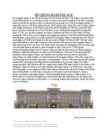
BUCKINGHAM PALACE Buckingham palace is the official residence of the British monarch. The Palace is located in the city of Westminster. It is a setting for state occasions and royal hospitality. It has been a rallying point for the British people at times of national rejoicing and crisis. The Buckingham palace is originally known as the Buckingham House. The building which forms the core of today's palace was a large townhouse. It was built for the Duke of Buckingham in 1703 on a site which had been in private ownership for at least 150 years. It was subsequently acquired by George the third in 1761 as a private residence for Queen Charlotte and known as The Queen's House.
Big Ben is the largest four-faced chiming clock and the third-tallest free-standing clock tower in the world. It celebrated its 150th anniversary in May 2009 (the clock itself first ticking on 31 May 1859), during which celebratory events took place. BUCKINGHAM PALACE: Buckingham Palace is the official London residence of the British monarch. Located in the City of Westminster, the palace is a setting for state occasions and royal hospitality. It has been a rallying point for the British people at times of national rejoicing and crisis. ST.PAUL'S CATHEDRAL: St Paul's Cathedral is the Anglican cathedral on Ludgate Hill in the City of London and the seat of the Bishop of London. The present building dates from the 17th century and is generally reckoned to be London's fifth St Paul's Cathedral, not counting every major medieval reconstruction as a new cathedral. The cathedral sits on the highest
6. Sights Hyde Park this park is one of the largest parks in central London and one of the Royal Parks of London, famous for its Speakers' Corner. The park is divided in two by the Serpentine Lake. The park was the site of The Great Exhibition of 1851, for which the Crystal Palace was built. Buckingham Palace is the official residence of the king or queen of England. The palace is a setting for state occasions and royal entertaining and a major tourist attraction. It has been a rallying point for the British people at times of national rejoicing and crisis. Originally known as Buckingham House, the building was built for the Duke of Buckingham in the 18 th century and acquired by King George III as a private residence. It was enlarged over the next 75 years, forming three wings around a central courtyard. Chinatown Located in between Leicester Square and Shaftesbury Avenue, it is a self-
It was besieged several times and controlling it has been important to controlling the country. The Tower has served variously as an armoury, a treasury, a menagerie, the home of the Royal Mint, a public records office, and the home of the Crown Jewels of the United Kingdom. Buckingham Palace - Buckingham Palace is the official London residence of the British monarch.[1] Located in the City of Westminster, the palace is a setting for state occasions and royal hospitality. It has been a rallying point for the British people at times of national rejoicing and crisis. The History of Buckingham Palace began in 1702 when the Duke of Buckingham had it built as his London home. The Duke's son sold the house in 1761 to George III, it was renamed "Queen's House" in 1774 as Queen Charlotte resided there. When it passed to George IV in 1820, Nash was commissioned to make alterations to the palace. The main block was retained
published months after Harriet Beecher Stowe's classic Uncle Tom's Cabin, sought to shame the United States by unfavorably comparing the social hierarchy in America to that in Britain. After slavery in North America was made illegal in 1863, English abolitionist literature all but came to an end. Although this genre of writing has sometimes been criticized today for its own brand of racism and imperialism, it certainly had great influence in expressing and rallying popular support for the end of slavery in the Western world. The strength of Uncle Tom's Cabin is its ability to illustrate slavery's effect on families, and to help readers empathize with enslaved characters. Stowe's characters freely debated the causes of slavery, the Fugitive Slave Law, the future of freed people, what an individual could do, and racism. Writing in the 1950s, poet Langston Hughes called the book a "moral battle cry for freedom
Like the Boddhisattvas of Buddhist belief, they have seen the eternal plan but return to the world of the living to tell others about it and share the elixir they have won. MOTIVATION T h e Road Back marks a time when heroes rededicate themselves to the adventure. A plateau of comfort has been reached and heroes must be pried off that plateau, either by their own inner resolve or by an external force. Inner resolve might be represented by a scene of a tired commander rallying dispirited troops after a battle, or a parent pulling a family together after a death or tragedy. An external force might be an alarm going off, a clock ticking, or a renewed threat by a villain. T h e heroes may be reminded of the ultimate goal of the adventure. T h e Road Back is a turning point, another threshold crossing which marks the passage from Act Two to Act Three. Like crossing the First Threshold, it may cause a change in the aim of the story
 annaabi.ee