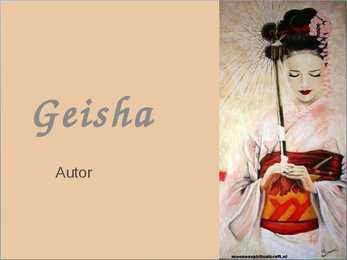
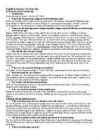
Geisha Autor Vocabulary Becoming a Geisha Appearance Geisha and prostitution Personal relationships and danna Vocabulary Geisha Maiko Okiya Ozashiki Onee-san Minarai Becoming a Geisha Apprenticeship: Strict Learning traditional arts Minarai Onee-san Ozashiki sit and observe ->potential clients Erikae White collar Hairstyle changes Maiko Minarai Appearance Makeup Most recognisable characteristics White base, red lipstick, red or black eyes and eyebrows Dress: kimono with obi and zoris and tabis Hair Hair-combs and hairpins No pillow
More about victims · Whitecapel(USA band) · Builtup inner city district · Location: London,Borough of Tower Hamlets, London, England. · Name is derived from the church of St. Mary Matfelon. · First buildings built on 13.century. · Bengali area. · Best known for unsolved murders. Whitecapel murders · Jack the Ripper · 5+ victims · Very gruesome killer · Never caught · Had medical background · Killed females occupated in Prostitution Canonical five · Mary Ann Nichols first confirmed victim · Annie Chapman · Elizabeth Stride · Catherine Eddowes · Mary Jane Kelly last confirmed victim ·The gruesomely mutilated body of Mary Jane Kelly ·Victim No.5 ·Missing a heart ·Youngest of victims Whitechapel(USA band) · From USA · Deathcore artists · "Somatic defilement" · Audio/lyrics sample Do you have any questions? I am delighted to answer them right away.
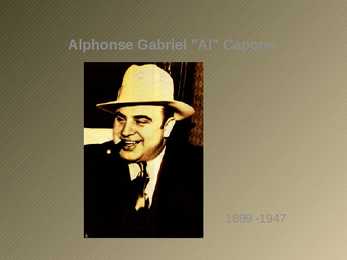
Alphonse Gabriel "Al" Capone 1899 -1947 Early Life in New York Born in Brooklyn, New York Cabriele Capone was a barber 6 brothers and 2 sisters Immigrated to USA in 1893 Dropped out of school at age 14 Small-time gangs Frankie Yale as a mentor 1921 moved to Cicero, Chicago Capone's wealth and power grows in Cicero Took power at Cicero town covernment Become notorious during the Prohibition Era Gambling, prostitution, liquor The Chicagos Outfit earned abuot US $100 million per year Trough organized corruption could operate freely in Chicago Capone had become a celebrity Gang wars North Side gang Capone's murder attemption (1926) Saint Valentine's Day Massacre (1929) Conviction and prison Eliot Ness Capone arranged to have himself jailed for nine months In 1932 Capone was convicted on tax crimes Alcatraz Al Capone had no more power
her long-lost son Toby (Kevin Zegers). The movie is marked by an Academy Award-nominated and Golden Globe-winning performance by Huffman, who is also known for her performance in Desperate Housewives. The character's name is Bree - which turns out to be short for Sabrina. One day Bree receives a phone call from someone asking for Stanley - her old male name. It is from a New York police station, asking if Bree will stand bail for a young man called Toby (Kevin Zegers) - taken in for prostitution - who is a son she fathered by a one-night stand 17 years ago. Bree's therapist says the surgery consents cannot be signed until she gets "closure" on this, so Bree is forced to travel to New York - posing as a Christian saver of lost souls - to get Toby out of jail, and travel with him cross-country to Los Angeles where her surgeon is waiting, all the time wondering if or when she should tell Toby the truth
Women’s rights were extremely limited in this era, losing ownership of their wages, all of their physical property, excluding land property, and all other cash they generated once married. 1857: violence recognized as grounds for divorce 1870: women could keep money they earned 1878: entitlement to spousal and child support recognized 6. The opinion of the 19th century feminists on prostitution. Authors, who wrote about women’s issues. People wanted to “cure” prostitutes by torturing them. Some feminists thought that prostitution showed male dominance over women, others thought that as long as prostitution is not forced on women it’s okay. 7. Women’s access to employment during the late 19th/early 20thcentury. Education system. Women had basic education but wanted access to it on a larger scale
faire economy new type, where government has no control over economy; booming economy- needed new markets and endless supply of raw materials; 1845- potato famine in Ireland, 1846- Corn Laws (import of cheap corn to feed hungry people); Social life: religious doubts (Darwin's The Origin of Species 1859)- question raised: is there a God at all?; sexual liberation- changed people thoughts about sex (before men & women had different bedrooms); problems: alcoholism, prostitution, child workforce, primitive technology. · How did the class structure change? Highest class was aristocracy (the Church and the nobility); the middle class/the bourgeoisie (shopkeepers, merchants, lawyers, businessmen etc.) was the biggest class; and the lowest class "the working class" and "the poor"; new change was the upward mobility people could become richer and move upward in social
more associated with the group. Highly romantic, sometimes didactic (intended to teach or instruct) and moralistic (teach morals/call to morality); subjects: romantic and tragic love, medieval and literary themes, conscious of social evils, controversial themes: Victorian woman, forced immigration, prostitution, etc. Rossetti family was at the heart of the Pre-‐Raphaelite Brotherhood; Christina Rossetti. Writes about the limiting and limited choices of Victorian women; strict Anglican but had many involvements with men – inner contradictions. Her brothers revised her work
C and 20 C The movement for women´s emancipation started in 18 C claiming legal and civil equality for women. In 19 C II half women were given the right to retain separate income after marriage and to possess tjeir own property. They as well could not be treated as chattels of their husbands, women were leagl guardians of thier children after divorce or death of a husband. 19 c also focused on wife beating, physical cruelty, white slavery of prostitution, relation between the sexes The campiagn for female suffrage dated from 1860´s. More active involvement in politics, right to vote- In 20 C after the WW II women over 30 ratepayers, got the right to vote, later all over 21 The House of Windsor George V 20 C Edward VIII 20 C George VI 20C Elizabeth II 20-21 C World War I 1914-1918 Antanta- England, France, Russia; triple alliance- Germany, Italy, Austria
o Also, Sudan, Yugoslavia. Crimes against humanity following acts when committed as part of a widespread or systematic attack directed against any civilian population, with knowledge of the attack: Murder; Extermination; Enslavement; Deportation or forcible transfer of population; Imprisonment or other severe deprivation of physical liberty in violation of fundamental rules of international law; Torture; Rape, sexual slavery, enforced prostitution, forced pregnancy, enforced sterilization, or any other form of sexual violence of comparable gravity; Persecution against any identifiable group or collectivity on political, racial, national, ethnic, cultural, religious, gender or other grounds that are universally recognized as impermissible under international law; Enforced disappearance of persons; The crime of apartheid; Other inhumane acts of a similar character intentionally causing great suffering, or serious injury to
use of children in the illicit production and trafficking of such substances. Article 34 States Parties undertake to protect the child from all forms of sexual exploitation and sexual abuse. For these purposes, States Parties shall in particular take all appropriate national, bilateral and multilateral measures to prevent: (a) The inducement or coercion of a child to engage in any unlawful sexual activity; (b) The exploitative use of children in prostitution or other unlawful sexual practices; (c) The exploitative use of children in pornographic performances and materials. Article 35 States Parties shall take all appropriate national, bilateral and multilateral measures to prevent the abduction of, the sale of or traffic in children for any purpose or in any form. Article 36 States Parties shall protect the child against all other forms of exploitation prejudicial to any aspects of the child’s welfare. Article 37
Christopher Vogler such as the ability to love or trust. Heroes may have to overcome some problem such as lack of patience or decisiveness. Audiences love watching Heroes grapple with personality problems and overcome them. W i l l Edward, the rich but cold-hearted businessman of Pretty Woman, warm up under the influence of the life-loving Vivian and become her Prince Charming? W i l l Vivian gain some self-respect and escape her life of prostitution? W i l l Conrad, the guilt-ridden teenager in Ordinary People, regain his lost ability to accept love and intimacy? VARIETIES OF HERO Heroes come in many varieties, including willing and unwilling Heroes, group- oriented and loner Heroes, Anti-heroes, tragic Heroes, and catalyst Heroes. Like all the other archetypes, the Hero is a flexible concept that can express many kinds of energy. Heroes m a y combine with other archetypes to produce hybrids like
 annaabi.ee