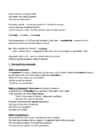
who ever lived · Physicist · Mathematican · Astronomer · Natural philosopher · Alchemist · Theologian Early life · He was more interested in making mechanical devices than in studying. · Sundial · Educated at The King's School, Grantham. · In June 1661, he was admitted to Trinity College, Cambridge As a students, we know him because.. · He was the first person who invent the 3 laws of motion · Theory of gravitation · Newtonian fluid, nonNewtonian fluid · Newton's theory of color · He invented the early telescope in 1671 Newtons laws in latin Newton's First Law · An object at rest tends to stay at rest and an object in motion tends to stay in motion unless acted upon by an unbalanced force. Newton's First Law · Newton's First Law is a reason why we have to wear seatbelt http://teachertech.rice.edu/Participants/louviere/ Newton/carandwall.gif Newton's Second Law
ASME B31.3 Chemical & Refinery Piping Code ISO 15493 Plastics piping systems for industrial applications -- Acrylonitrile-butadiene styrene (ABS), unplasticised poly (vinyl chloride) (PVC-U) and chlorinated poly (vinyl chloride) (PVC-C) -- Specifications for components and the system Metric series Hydraulic Analysis Darcy Weisbach friction Losses in Pipe factor Losses in fittings Hazen Williams formula Newtonian Fluids Bends and Elbows Non Newtonian Fluids Tees straight through Determine friction factor Tees branch Surface Roughness Pipe Class Reducers Valves Entrances and Exits Velocity Selection of Pipe Class Design Pressure Support distances for Steady State deflection
the "lowest" forms of life to "higher" living beings (lion), through the various classes of human beings from peasants to nobles to Popes, and upwards through the hierarchy of angles to God. This concept, in and of itself, has nothing to do with evolution, in fact it seems to be anti-evolutionary, since every member is fixed in its own place. This chain was created in a time when the world was considered to be more static rather than a diverse collection of dynamic ideas. But the Newtonian revolution of the seventeenth century replaced the old static world with a new world view in which everything was naturally in motion. In the course of the eighteenth century the notion of progress, of gradual but relentless pursuit of betterment, began to take hold in western thought. It was only natural that the ideas of change and of progress should eventually be applied to the Great Chain of Being. The natural implication of a "dynamic" chain of being was
Kasutatakse rattakiivrite välimise kattekihina (paksus 1-2 mm). kasutatavad pabermassist kiivrid. Kiivrid muutuvad mitmefunktsionaalseteks, näiteks lisaks kaitsmisele puhastab D3O - Newtonian fluid (löögi korral tugevnev geel). Uued materjalid ja tehnoloogiad võimaldavad
"great" work in the western intellectual tradition to be published in Latin. He wanted to explain why the planets were held in their orbits he wanted to know why an apple fell to the earth. His answer was, of course, gravity. Newton not only described the laws which explained gravity, he also invented the calculus to explain the laws of gravity. Even for those people who could not understand Newtonian physics or mathematics, Newton had an amazing impact, since he had offered irrefutable proof mathematical proof that Nature had order and meaning, an order and meaning that was not based on faith but on human Reason. With Newton, we find the important combination of two important concepts Nature and Reason. His scientific discoveries and his spirit (together with the ideas of Francis Bacon and John Locke) dominated the thought of the 18th century
Galileo used throroughly his telescope and made important discoveries (new pieces to the puzzle): Description of the moon, The moon of Jupiter Sunspots The phases of Venus. Galileo’s discoveries gave strong evidence for the heliocentric view of the world. His discoveries led him to troubles with the Church (‘Yet it turns…’) Later, Newton (1687) introduced his laws of motion to explain the movement of the planets. A New (Newtonian) Worldview (and its variations) will dominate until around 1900. Scientific Revolutions Thomas Kuhn, The Structure of Scientific Revolutions (1962) Science is not a linear accumulation of accepted facts. Periods of accumulation (Normal Science) are interrupted by Revolutions (Revolutionary Science). In normal science, scientists work within a paradigm, i.e. a set of shared practices, accepted facts, methods, problems and modes of interpretation.
Poe's heroes try to escape their inhuman surroundings. His contempt for business civilization that drives into the world of pure art. He was the first one to do that. Art itself can become a way of life. Aspects of his thought that can be deduced from his work: 1. Scientific rationalism essay called "Eureka"(I have found, discovered). Poe attempts to explain the universe based on Newtonian principles. The origin of the universe, might be hinting at the big bang theory. Philosophical binary oppositions: attraction and repulsion, variety and unity, gravitation and diffusion. According to Poe the universe has a mathematical beauty and precision in which one can see the hand of God. Art is man's instrument for making some order out of the chaos of existence. Opposite side of Poe's art is his aestheticism. The purpose of art is pleasure not the truth
 annaabi.ee