Chapter Thirteen Newborn Once Bella realizes that Jasper's arms are covered in scars from vampire bites, he tells her his history. He explains that vampires live differently in the south, only coming out at night and fighting each other for control of territories with larger human populations so that they won't have any competition in feeding. He tells the story of a young vampire named Benito that began using armies of wild, uncontrolled newborns to dispatch rival covens. These newborns destroyed each other as often as their targets, and had to be replaced. The other covens had to form their own newborn armies to counter Benito. The human population was also drastically reduced during the fighting, and eventually, the Volturi stepped in. The entire Volturi guard came from Italy and annihilated all the vampires found with newborns, virtually emptying the region of vampires for a time. The ones that survived began to stake claims again and the fighting resumed,
Chapter Fourteen Declaration Bella, Edward, and Alice are in the school cafeteria discussing their upcoming graduation party. Bella thinks the planned assault on the newborns makes a party inappropriate. Alice counters that they need time to get a few things in order before the battle, and commemorating Bella's first (and only human) high-school graduation is entirely appropriate. Edward informs Bella of Jasper's concern that they get help in their fight against the newborns. Jasper and Carlisle are trying to track down old friends to join the fight including Maria, but nobody wants to involve the southerners. Edward is convinced that someone will help them: no one wants a visit from the Volturi. Bella feels physically ill at the thought of the Cullens putting themselves in harm's way, and can't even consider the possibility that Edward might be hurt, or worse. Edward's confidence does nothing to quell the terror building inside her at the thought of
Chapter Seventeen Alliance As Bella arrives at his house, Edward rushes out to kiss her in a tense, uneasy way that makes her nervous. He promises that nothing will happen to her and leads her into the house for the party. Alice has transformed the house into an amazing nightclub, which Bella finds a bit over whelming. In the moments before the party, the Cullens discuss their plan for attacking the newborns in Seattle while Bella listens on. Everyone invited to the party arrives. The normalcy of the event keeps Bella somewhat distracted as she goes from guest to guest to guest with Edward glued to her side. When he did leave her side, it left Bella suspicious. Bella follows him to find that Alice has seen something and no one is telling Bella about it. At the same time, Jacob and a few others from La Push have arrived, much to Alice and Edward displeasure
Even through the rest of the graduates are celebrating, Bella is left feeling awkward. Edward questions her about it and she passes it off as being nervous about the party. He knows Alice is hiding something from him due to the way her thoughts were filled with foreign languages, and now Edward is suspicious that Bella knows exactly what is bother Alice. With the hope that the news would make Edward cancel the party, Bella tells him what she figured out about the thief and the newborns. Edward does not take the information well and he does not go with Charlie and Bella out for dinner. After a long, dragging dinner, Edward appears to follow Charlie and Bella back to his house. In the car Charlie expresses his feelings about not being able to do for Bella everything that he should do for her. Bella assures him that he is a great dad and tells him how happy she is that she chose to move to Forks to live with him. They arrive at the Cullen home to find the trees
Chapter Eighteen Instruction As Alice's graduation party ends, Bella is anxious that Jacob's pack has aligned themselves with the Cullens against the newborns. Everyone reassures Bella there is no danger but she remains worried, agonizing over why her bad luck continually puts other people in harm's way. The wolves and the vampires intend to meet for a training session at 3:00 AM. Bella tells Edward she wants to accompany him. Edward notes that she is tired and says he doesn't want her present for any tensions between the two groups if the training experiment does not go well, but she insists
1. Describe Jonas' family Jonas' family, like all other families in the community, includes a caring mother and father and two children -- one male child and one female child. Jonas' mother has an important job with the Department of Justice, and his father has a job as a Nurturer, taking care of newborns. Jonas has one younger sister, Lily. His family seems ideal. Each morning, they discuss their dreams that they had the previous night; during the evening meal, they share feelings about the events of the day, comforting and supporting each other according to the rules of the community. 2. What is the family's nightly ritual? It is a required ritual in which all family members have to tell how they were feeling that day. 3. Why had Lily been angry?
Males are often loners, until its time to mate. They will migrate more than 650-800 kilometres to reach winter or summer feeding grounds, and can travel up to 80 kilometres a day. Their leg tendons make crackling sounds while walking, which would make a migrating herd a noisy bunch indeed. Females will give birth to a single calf. Most females don't breed until they are 28 months old, and will give birth every year. Newborns can walk within an hour and in a few days can run with the herd. Still, wolves, grizzly bears, and golden eagles kill a large number of newborn calves. Although some people are moving into their habitat, they seem to have adapted. Reindeer is not endangered, thanks to its ability to tolerate climates people would rather not deal with. Snowshoe rabbit It is larger than other rabbits. It has large rear feet and the toes can spread out to act like snowshoes.
lower IQ and a number of behavioral disorders. Children with FAS and FAE are often described as hyperactive, disstactible, or impulsive. they often have short attention spans similar to attention deficit dirorder, but with lower IQ's particularly in the FAS child. In addition to attention deficits, problems with judgement, comprehension, and abstract think are common. Some new research says that kids with FAS and FAE are more vulerable to alcohol exposure. Another thing is newborns exposed to alcohol before birth may have a weak sucking responce and irregular sucking patterns early in life. Some describe them as easily distracted and fatigued when sucking. Sleep disturbance, and jitteriness have also been reported in infants exposed to alcohol before birth. Some studies also show that a higher incidence of impaired vision and hearing, motor incoordination, and problem with balance are possible attibuted to alcohol use by the mother before birth of the infant.
approach to the care of infants in neonatal intensive care unit (NICU) and special care nurseries (SCN). It is a relationship-based, family-centered approach that promotes the idea that infants and their families are collaborators in developing an individualized program of support to maximize physical, mental, and emotional growth and health and to improve long-term outcomes for preterm and high medical risk newborns.) Mis on ja milles seisneb “Känguru” meetodi olemus? Areneva närvisüsteemi stimuleerimiseks on oluline vastsündinuile pakkuda positiivseid aistinguid: tõstes vastsündinut ema rinnale, et ta tunneks emaihu lõhna, soojust ja südametukseid (kängurumeetod), ema silitusi ja häält. Millised on sagedasemad EA probleemid? · Kehatemperatuuri hoidmine · Toitmine · Osteopeenia · Nägemine · Kuulmine · EA aneemia ja hüprbilirubineemia · Respiratoorsed
doi: 10.1093/tropej/fmv022 https://academic.oup.com/tropej/article-lookup/doi/10.1093/tropej/fmv022 (15.03.2017) Bikowski, J. (2011). Update on Prevention and Treatment of Diaper Dermatitis. Practical Dermatology for Pediatrics 2011 http://bmctoday.net/practicaldermatologypeds/pdfs/Peds0811_Ftr_DiaperDermatitis.pdf(11 .01.2017) Blume-Peytavi, U., Hauser, M., Stamatas, G. N., Pathirana, D, Bartels, N. G. (2011). Skin Care Practices for Newborns and Infants: Review of the Clinical Evidence for Best Practices. Pediatric Dermatology 29 (1). doi:10.1111/j.1525-1470.2011.01594.x https://www.researchgate.net/publication/51729940_Skin_Care_Practices_for_Newborns_ and_Infants_Review_of_the_Clinical_Evidence_for_Best_Practices(03.02.2017) 24 Blume-Peytavi, U., Lavender, T., Jenerowicz, D., Ryumina, I., Stalder, J. F., Torrelo, A., Cork, M. J. (2016)
respiration rate and heart rate from 4 to 16 years. American Journal of Diseases of Children 90 (11), 1117-1121 Weilitz, P. B. 1991. Pocket Guide to Respiratory Care. St. Louis: Mosby Year Book Inc., 106- 109 Weiss, M., Gerber, A. C. (2006.) Cuffed tracheal tubes in children things have changed.// Pediatric Anaesthesia, 16, 1005-1007 Veldman, A., Trautschold, T., Weiss, K., Fischer, D., Bauer, K. (2006.) Characteristics and outcome of unplanned extubation in ventilated preterm and term newborns on a neonatal intensive care unit.// Pediatric Anaesthesia, 16, 968-973 Whitwam, J. G.(toim.)(1994.) Day-Case Anaesthesia and Sedation. Oxford: Blackwell Scientific Publications, 63 Wyllie, J. P. (2008). Neonatal endotracheal intubation. Archives and Disease in Childhood: Education and Practice 93 (2): 44-49 Xue, F. S., Liao, X., Liu, K. P., Liu, Y., Xu, Y. C., Yang, Q. Y., Li, P., Li, C. W., Sun, H. T. (2007.)
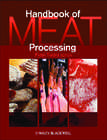
Plant Cleaning and Sanitation 295 water, silage, and many other environmental the dicing machine, L. monocytogenes origi- sources. Listeriosis may develop in birds, nally found in plant A was soon also found animals, and humans. L. monocytogenes is in plants B and C, and was frequently iso- especially pathogenic to high-risk popula- lated from the diced products. This particular tions, including newborns, pregnant women, strain of L. monocytogenes proved to have elderly, and immunocompromized persons. a high level of adherence to stainless steel The symptoms of the disease include fever, surfaces and a significant resistance to chills, headache, abdominal pain, and QUAT. diarrhea. Research and experience indicates that L. Epidemiological studies have confirmed monocytogenes tolerates well various stress
 annaabi.ee