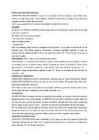
11. Auxiliary (adjective) aitav 12. Swearword (noun)- needus 13. Columnist (noun) publitsist 14. Publisher (noun) kirjastaja 15. Business manager (noun) ärijuht 16. Office manager (noun) büroojuhataja 17. Persuade (verb) keelitama 18. Express (verb) avaldama 19. Group (verb) rühmitama 20. Censorship (noun) tsensuur 21. Periodicals (noun) perioodikaväljaanded 22. Courage (noun) julgus 23. Common (adjective) üldine 24. Prosperity (noun) heaolu 25. Monotonous (adjective) monotoonne 26. Abroad (adverb) võõrsil 27. Broadcast (verb) levitama 28. Allowance (noun) mööndus 29. Gather (verb) koguma 30. Rhythm (noun) - rütm
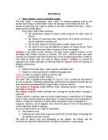
The management process: - policy function (setting targets/goals, planning, decision making); - organizational (execution, monitoring, communication/information). The best managers select people on talent, not on intelligence, education or experience. And do not try to improve their staff's weak points but rather strengthen their strong points. Taylorism: rational model. Goal - productivity maximization. Monotonous, management by control, no personal initiatives. Human relations approach: goal employee satisfaction, participation, conflict solving, manager is MOTIVATOR, work still monotonous. Revisionism: integration between social system and technological system, appreciation and interesting work are important motivators. McGregor X/Y theory X: people are lazy, will avoid responsibility, avoid work, they desire only money.
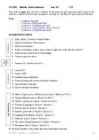
3.dead-end perspektiivne 4.demanding nõudlik, paljunõudev 5.dirty räpane,must 6.essential hädavajalik, oluline 7.exciting põnev 8.exhilarating meeliülendav, vaimustav 9.fascinating kütkestav, paeluv 10.glamorous suurilmalik 11.hectic pöörane, palavikuline 12.indispensable asendamatu (hädavajalik) 13.intense pingeline 14.intensive intensiivne 15.low-paid madalapalgaline 16.manual käsitsi, füüsiline 17.mind-numbing meelinüristav 18.monotonous üksluine 19.never-ending lakkamatu,lõputu 20.repetitive korduv 21.rewarding tulutoov, rahuldust pakkuv 22.soul-destroying hingesööv 23.stressful pingeline 24.tedious tüütu, igav 25.thankless tänamatu 26.unenviable vastik, kadestamatu 27.unglamorous mitte-glamuurne 28.unpleasant ebameeldib 29.unpredictable ettearvamatu, ootamatu 30.varied - mitmekesine
limbs. 11. What were many of the British officers like? The officers were still teenagers and had responsibilities far beyond their years. They were responsible for their men’s lives. 12. Where did the Tommies spend most of their time? The Tommies spent most of their time in the trenches. 13. What was life like there? The life in trenches meant cold and mud, wet clothes and rats, the smell of death and the sight of mutilated flesh as well as long monotonous hours interrupted by terror. 14. What was one of the ways to destroy the enemy’s soldiers in the trenches? One of the ways to destroy the enemy’s soldiers was to tunnel a way under the their trenches and plant mines. 15. What did many Tommies suffer from as a result of spending their days and nights amid grenade explosions and heavy bombing? As a result of spending their days and nights amid explosions and heavy bombing, the
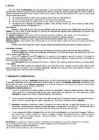
EPIPHORA EPIPHORA means repeating a word, phase or sentence at the end of clause, sentence or passages. NT: She likes the bottle. She is found of the bottle. She will never give up the bottle. NT: I know he run away from the battle. He was an ordinary human being who didn't want to kill, so he run away from the battle. POLYSYNDETON POLYSYNDETON means intentional repetition of a conjunction in close succession in order to slow down the utterance (becomes monotonous). The two conjunctions are normally "and" which suggest energetic activity or the conjunction "or" stresses equal importance any numerated things listed. NT: And the coachman, and the horses rattled and jangled and whipped and cursed and swore and tumbled on together.NT: ? TAUTOLOGY TAUTOLOGY is such a construction that makes information redundant and this is objectionable in literary speech. GRAMMATICAL TAUTOLOGY means that in one sentence a double subject or a double predicate or both are
out their hidden or specific meaning. (I told you, he is unwell--meaning drunk or high). Emphatic stress is suggested graphically by the Italics, exclamation marks, dots and dashes. · Accompanying means of emphasis can be the prolongation of vowels. Vowels are prolonged to express positive emotions (glad). Consonants are prolonged to express negative feelings (lousy, monotonous) Pauses: · Logical pauses divide the utterance into meaningful parts--sense groups--and are marked by punctuation. (I didn't know him then, but I do now.) · Emotional pauses are introduced to draw attention to the words or phrases that follow, and thus, emphasize this word or phrase. (She is so gentle, so / gently cruel (pause is acted). Pauses may be marked in a text and may be introduced by the speaker.
Genuine Exclamation Hexameter Sustained Graphical Means, SD Heptameter Metonymy Under / overstopping Octometer Synecdoche Indented line Antonomasia Graphon Phrasing Irony Common Lit. Voc. Syntagm Epithet: Special Lit. Voc. Monotonous rhythm Syntactic Terms Jerky rhythm Phrase Barbarisms / Alternating rhythm Sentence foreign w. Rambling rhythm Metaphorical Archaic w. Grading rhythm Transferred Poetic diction Oxymoron Neologisms Functional styles / registers
In fiction paragraph division influences the reader, it adds connotations (). If the writer presents his description as one unbroken paragraph it means he attaches equal importance to every sentence. If a separate sentence is patterned as a paragraph it stands out as emotionally very prominent. From the rhythmical point of view alternation of long and short paragraphs adds to the rhythmical effect of the text. Long paragraphs in succession create a monotonous rhythmical effect. A sequence of very short paragraphs creates a jerky rhythm. 6. Capital letters are involved in antonomasia and personification. Words may contain capital letters only for emphasis or to suggest that they are pronounced loudly. In poetry it is a tradition to start every line with the capital letter. 7. The arrangement of lines on a page is a significant feature of modern poetry. The, so called, figure poems have appeared (e.g.
v. solidify Syn. steady n. solidification The lawyer for the defense portrayed his client as a man of solid integrity. The union attempted to solidify its position in the workplace. somewhat adj. a little Syn. slight They feel somewhat tired after the mile run. Buying food at a convenience store can be somewhat expensive. tedious adj. long and tiring adv. tediously Syn. monotonous n. tedium The tedious lecture bored most of the audience. Some people become frustrated by the tedium of daily living. MATCHING Choose the synonym. 1. discernible 6 similar (A) exceptional (A) prophetic (B) detectable (B) substantial (C) solid (C) parallel (D) negligent (D) varied 2. average 7. strange (A) ample (A) peculiar (B) approximate (B) vanishing (C) slight (C) somewhat
The middle section (development) is based on the subsidiary theme, the composer is offering several of its variants in delicate colours and harmonies. The initial rhythmical “drumming” (as with Tubin) is met almost through all the work creating high tension (an exception is a wide singing episode in the development). The recapitulation is hard and massive summing up all into a tragic end. The ancient Estonian folk song has been considered as rather static and monotonous, there is one sign of this in the Overture, this “theatrical” work demonstrates remarkable temperament and fantasy. This work was the first Estonian symphonic piece performed abroad after the war, in Warsaw in the autumn of 1961. The score was published in the same year and the music found its way to many concert halls. 1 Eesti Ekspress 10 Aug 1990: 4. 2 First performance in Tallinn, 27 Nov. 1959, ERSO conducted by Roman Matsov.
to the ladies. Mr. Collins readily assented, and a book was produced; but, on beholding it (for everything announced it to be from a circulating library), he started back, and begging pardon, protested that he never read novels. Kitty stared at him, and Lydia exclaimed. Other books were produced, and after some deliberation he chose Fordyce's Sermons. Lydia gaped as he opened the volume, and before he had, with very monotonous solemnity, read three pages, she interrupted him with: "Do you know, mamma, that my uncle Phillips talks of turning away Richard; and if he does, Colonel Forster will hire him. My aunt told me so herself on Saturday. I shall walk to Meryton to-morrow to hear more about it, and to ask when Mr. Denny comes back from town." Lydia was bid by her two eldest sisters to hold her tongue; but Mr. Collins, much offended, laid aside his book, and said:
you build to a still higher level. T h e Ordeal is one of the deepest "depressions" in a story and therefore leads to one of its highest peaks. In an amusement park ride you are hurled around in darkness or on the edge of space until you think you're going to die, but somehow you come out elated that you have survived. A story without some hint of this experience is missing its heart. Screenwriters sometimes have a lot of trouble with the length of Act Two. It can seem monotonous, episodic, or aimless. T h i s may be because they've conceived of it as simply a series of obstacles to the hero's final goal, rather than as a dynamic series of events leading up to and trailing away from a central moment of death and rebirth. Even in the silliest comedy or most light-hearted romance, Act Two needs a central life—or—death crisis, a moment when the hero is experiencing death or maximum danger to the enterprise. HERO APPEARS T O DIE
 annaabi.ee