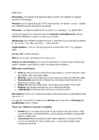
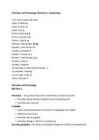
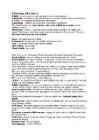
[p] oclusiva bilabial sorda [b] oclusiva bilabial sonora [t] oclusiva dental sorda [d] oclusiva dental sonora [k] oclusiva velar sorda [g] oclusiva velar sonora Fricativas - Durante su emisión se produce un estrechamiento del canal bucal sin que se llegue nunca al cierre completo de los órganos articulatorios. [β] fricativa bilabial sonora [ð] fricativa interdental sonora [γ] fricativa velar sonora [f] fricativa labiodental sorda [θ] fricativa interdental sorda [s] fricativa alveolar sorda [ss] fricativa alveolar sonorizada [ǰ] fricativa palatal sonora [x] fricativa velar sorda Africada - En su articulación intervienen un momento oclusivo seguido de otro momento fricativo. Tanto la oclusión como la fricción se producen en el mismo lugar articulatorio. [c] africada palatal sorda [ɟ] africada palatal sonora Nasales - Se produce un cierre de los órganos articulatorios bucales y un pasaje rinofaríngeo abierto
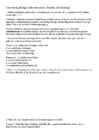
Different sound types: Velar sounds are produced by the tongue being in contact with the lower side of the velum aka soft palate. Alveolar sounds are produced by the tongue touching the alveolar ridge. Post-alveolar sounds are produced by the tongue touching the area before the alveolar ridge. Dental sounds are produced by the tongue touching the front teeth. Bilabial sounds are produced by the contact of both lips. Labiodental sounds are produced by lip-to-teeth contact. Distribution is the act of looking sounds in different contexts and positions they can occur in. Any speech sounds must always have air flow and some kind of blockage or modification to the air flow. There are 2 kinds of sounds in English: Vowels that are produced do that the airstream is not obstructed – they can stand alone meaning that they can be produced without consonants before or after them
Mellan tungans främre och bakre läge finns naturligtvis mellanlägen, så kallade centralvokaler[6], exempelvis [ɘ], som i ordet i svenska ordet "beslag" [bɘslɑ:ɡ]. 7. Identifierade understrukna konsonanterna och placera dem i schemat: 8. Vilka är (de sex vanligaste) artikulationsställena för konsonanter? Artikulationsställe- pltsen för förtränging, ställen, som inte är rörliga läpparna (labial) p, b, m tänderna och underläpp (labiodental) v, f tänder (dental) t, s, d, n, s tandvallen (alveolar) tandvallen och hårda gommen (palatal) j mjuka gommen (velar) k g palatoalveolar stämläpparna (laryngal) h 9. Vilket artikulationsställe har: /p/ (labial), /g/ (mjuka gommen), /h/ (laryngal), /b/ (labial), /q/, /n/ (dental), /b/ (labial), /z/, /x/, /m /(labial) , /p/ (labial), 10. Skriv ett svensk ord där det första ljudet är en tonlös dental frikativ. stor, sal 11. Skriv det fonetiska tecknet för: a) en laryngal frikativ
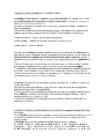
gasa [gása] guiso [gíso] Congo [kóŋgo] ALÓFONOS Las consonantes oclusivas sonoras [b, d, g] se realizan de este modo en unas posiciones determinadas. En otras posiciones ya no aparecen como oclusivas, sino como fricativas. Fricativas (frikatiivid) Durante su emisión se produce un estrechamiento del canal bucal sin que se llegue nunca al cierre completo de los órganos articulatorios. Fonemas fricativos: labiodental sorda /f/ interdental sorda /θ/ alveolar sorda /s/ palatal sonora /ǰ/ velar sorda /x/ [β] fricativa bilabial sonora Es una mera variante, un alófono del fonema /b/ Posición: fonema /b/ → todas las posiciones, excepto _/b/ ; [m] + /b/ Grafemas: b, v lobo [lóβo] cabo [cáβo] alba [álβa] ese barco [ése βárko] [ð] fricativa interdental sonora es un alófono del fonema /d/ Posición:
consonants. These unvoiced stops are completely unaspirated (spy, sty, sky), because stop is immediately following word-initial s. Fricatives, Affricates, Nasals. Fricatives - narrowing the distance between two articulators so that the airstream is partially obstructed and a turbulent airflow is produced (i.e. friction). Fricatives may be voiced or voiceless. Consonants can be classified by: place of articulation( bilabial /p/; /b/; /m/ ; labiodental /f/; /v/; alveolar /t/; /d/; /n/; velar /k/; /g/ manner of articulation refers to variation in the way the airstream is affected (blocked vs.partially blocked; vocal folds are vibrating or no vibration). Affricate a stop followed by a homorganic fricative (phonological)/ a stop plus a fricative (phonetics). These are the only sequences that can occur at both the beginning and the end of words in English.
E.g. light blue, that thing · Progressive assimilation the word final morpheme affects the initial one of the following word (progressive assimilation of manner). E.g. in the, read these Assimilation also happens within words, not only across word boundaries. E.g. tenth, bank. Assimilation happens because it is more comfortable to go from one certain place of articulation to a similar place of articulation (from bilabial to labiodental etc.not bilabial to nasal). Elision in certain circumstances a phoneme maybe realised as zero or be deleted. (E.g. loss of final v in 'of' before consonants - ,,lots of them" Linking linking r ,,here are" and intrusive r ,,media event". A falling tone descends from a higher to a lower pitch A rising tone a movement from a lower pitch to a higher one NB! In tone languages pitch is a phonemic feature. In intonation languages the intonation of the phrase or sentence is contrasted.
· l-vocalization, milk miwk · glottalling, using a glottal stop · happY-tensing; happy, coffee, valley · yod coalescence; Tuesday, tune, attitude, duke, reduce · diphthong shift, FACE, PRICE and GOAT vowels (wotshor nime?) (Wells 1997) perhaps to a phonemic split (wholly holy) (Wells 1994) The features that Wells excludes from EE's phonetic make-up that are typical of Cockney are: · h-dropping, so that Cockney hand on heart becomes ('and on 'eart). · th-fronting, using labiodental fricatives instead of dental fricatives This turns I think into /a fink/ and mother into /move/ (Wells 1997) However, Coggle (1993) claims that TH fronting in word-medial and word-final positions is becoming widespread at the Cockney end of the EE spectrum. 4. Difficulties in defining phonological boundaries between Received Pronunciation, Estuary English and Cockney Rosewarne (1984 onwards) places Estuary English speakers on an accent continuum
 annaabi.ee