USA-sse ega Suurbritanniasse ei õnnestunud tal pääseda. Haige ema ja teised sugulased jäid Viini. Natsistid tapsid 16 Popperi lähedast sugulast. Uus-Meremaal tundis Popper end üksildasena ja maailmast äralõigatuna. Sellegipoolest jätkas ta oma uurimistulemuste avaldamist. Üks tema tolleaegne teos on "What is Dialectic" (Mis on dialektika), milles ta kritiseerib Marxi ja Hegeli dialektikat. Teos "Historitsismi viletsus" (The Poverty of Historicism), mis ilmus raamatuna alles 1957, ründab jälle eelkõige Marxi ja Hegeli meetodit. Avalikkuses tuntuim Popperi teos on paljutõlgitud "Avatud ühiskond ja selle vaenlased" (1945). Selles õiendab ta üksikasjalikult arved Platoni ja Hegeli mõttemallidega, mis on tema meelest totalitaristlikud. Ta kritiseerib selles raamatus leebemalt ka Marxi. Enamiku asjatundjate arvates teeb Popper Platonit 20. sajandi vaatevinklist kritiseerides talle liiga. Hegeli-kriitikale
Teooria, mis sellel paremini vastu peab, on arvatavasti tõele lähemal, mis ei tähenda aga veel lähedal olemist. Teosed · 1934 "Logik der Forschung" (Teadusliku uurimistöö loogika) · 1946 The Open Society and its Enemies (Avatud ühiskond ja selle vaenlased) · 1959 The Logic of Scientific Discovery (Teadusliku avastuse loogika; 1934. aasta raamatu ümbertöötatud ingliskeelne väljaanne) · 1961 The Poverty of Historicism (eesti keeles "Historitsismi viletsus" 2000 Hillar Tali tõlkes) · 1963 "Conjectures and Refutations: The Growth of Scientific Knowledge" (Oletused ja ümberlükkamised; teaduslike teadmiste kasv) · 1972 "Objective Knowledge: An Evolutionary Approach" (Objektiivne teadmine: evolutsiooniline lähenemine) · 1976 "Unended Quest; An Intellectual Autobiography" (Lõppematu otsing: intellektuaalne autobiograafia)
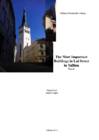
(first mentioned 1359). Lai Street is very wide considering that it was laid out in the Middle Ages. This is because it sprang up on both sides of former city wall. Lai is quite a peaceful street with few shops. However, it has three museums and two theatres. The main entrance into St Olaf´s Church also faces the street. Several Lai Street houses have kept their Gothic appearance and even interiors, although we can also notice moderate Nordic Baroque, Neoclassicicm, Historicism and even Art Nouveau. The origin of the name "Lai" Lai Street belongs among the oldest streets of Tallinn. Despite its length and width its share in the city's inner traffic is fairly modest. The extraordinary width of the street is likely due to the fact that the town wall used to be there and the street then sprang up on both sides of the city wall. But that city wall was eliminated in the construction of a new wall to the west. The
the meanings of his poems. Political readings are always possible, but they are not always interesting and stimulating. Although Regan’s monograph has generated debates, his emphasis on “the fundamental assumption that writing and reading take place in history” and that the “horizon of possible meanings is determined by the conjuncture of two historical moments, the moment of writing and the moment of reading”, can surely be accepted. Another monograph applying the method of historicism, published fourteen years after Regan’s is Stephen Cooper’s Philip Larkin: Subversive Writer (2004). 1.2. LARKIN STYLISTIC MAP When approaching the poems of Larkin as if were compressed stories, John Bayley emphasizes his value of epiphanies. When describes (referring to territory of poem anecdotal that is almost story) about what entirely consists his “new way of exploring that territory” (1988, 272), Bayley does not do more than reform the poetic
Uurija liigub üksikuid seiku ja vihjeid mööda mõistete hierarhiasse, madalamalt meeleliselt tasandilt kõrgemale, teoreetilisele. (vgl. Toomas Muru: Paabeli torn ja gooti katedraal; http://www.kirmus.ee/nypli/koolid/1996/muru.html, 10.09.07) Meetodid (Eagleton) Autorist lähtuv Tekstist lähtuv Lugejast lähtuv Kultuurilisest kontekstist lähtuv meetod (kirjandusteadus kui kultuuriteadus). Teadmised (Umberto Eco ,,entsüklopeedia") New Historicism (kirjanduslikku teksti vaadeldakse selle loomise hetkel valitsenud kultuuriliste ja ajalooliste protsesside valguses) Interpreteerimise viisid Üksikult üldisele ära ära ärarootsi rootsi rootsipaat paat paatmeri meri merirand rand randlaager laager laagertöökoht töökoht töökohtauto auto autovilla villa villakuradi rumalad rootslased(Kalju Lepik)
• Thomas Hodgskin, 1787-1869. • John Gray, 1799-1850. • John Francis Bray, 1809-1895. Kontinentaalsed (Euroopa) klassikud (Continental Classicals) • Count Antoine-Louis-Claude Destutt de Tracy, 1754-1836. • Jean-Baptiste Say, 1767-1832. • Jean-Claude-Leonard Simonde de Sismondi, 1773- 1842. • The French Liberal School • Karl Heinrich Rau, 1792-1870. o Textbook on Political Economy , 3 volumes, 1826-37. o German Classical economist, with flavor of Historicism. Closer to Say, Rau did not completely eliminate the role of demand. • Friedrich B.W. Hermann, 1795-1868. Hilisrikardistid (The Late Ricardians) • John Elliot Cairnes, 1824-1875 • Henry Fawcett, 1833-1884. • Millicent Garrett Fawcett, 1847-1929. • Henry Sidgwick, 1838-1900. • John Shield Nicholson , 1850- 1927. • Charles Francis Bastable Klassikalise koolkonna 20 sajandi harud (The 20th Century Affiliates of the Classical School) • The
Interior or psychological realism a variant form. In literature, regionalism or local color refers to fiction or poetry that focuses on specific features including characters, dialects, customs, history, and landscape of a particular region. American Literary Regionalism has been the subject of scholarship for the past several decades and has been a central site for scholarly debate on a variety of methodologies including Feminism and New Historicism. This subfield of American literary studies has been traditionally located in the latenineteenth century. Local Colorism or Regionalism as first appeared in the late 1860s and early seventies in America. Hamlin Garland defined local colorism as having "such quality of texture and background that it could not have been written in any other place or by anyone else than a native." The ultimate aim of the local colorists is, as Garland indicates, to create the illusion of an
 annaabi.ee