 Tasuta
Faili alla laadimine on tasuta
Tasuta
Faili alla laadimine on tasuta
 ~ 4 lehte
Lehekülgede arv dokumendis
~ 4 lehte
Lehekülgede arv dokumendis
 2019-01-26
Kuupäev, millal dokument üles laeti
2019-01-26
Kuupäev, millal dokument üles laeti
 1 laadimist
Kokku alla laetud
1 laadimist
Kokku alla laetud
 0 arvamust
Teiste kasutajate poolt lisatud kommentaarid
0 arvamust
Teiste kasutajate poolt lisatud kommentaarid
 Alar-Allan Siimon
Õppematerjali autor
Alar-Allan Siimon
Õppematerjali autor
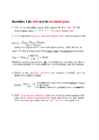
Week 4 homework. Question 1: 1. SNR – Ratio of root mean square signal to root mean square. 2. SINAD – Ratio of the RMS signal amplitude to the mean of value of the root sum square. 3. ENOB – The effective number of bits and relates to SINAD. 4. THD – Ratio of the rms value of the fundamental signal to the mean value of RSS of its harmonics. 5. SFDR – Ratio of the RMS value of the signal to the RMS value of the worst spurious signal. 6. Channels – multiple analog signal inputs to the ADC that can be individually selected or selected through a multiplexor. 7. Linearity – Describes how an ADC conveter follows a linear function. 8. Operating temperature – A temperature at which the ADC functions optimally, usually given by the manufacturer. 9. Power dissipation – The proportion of power dissipated (through heat) when the ADC is working. Question 2: An 8 bit ADC has a reference voltage of 5V. What is the digital output code word for an input of 1.2V? 0011
Question 1 Define the following ADC terms: 1. SNR – (Signal to Noise Ratio) SNR is a calculated value that represents the ratio of RMS signal to RMS noise. 2. SINAD - (signal-to-noise-and-distortion ratio) Ratio of the RMS signal amplitude to the mean value of the root-sum-square (RSS) 3. ENOB – (effective number of bits) The effective number-of-bits and relates to SINAD 4. THD - (total harmonic distortion) Ratio of the rms value of the fundamental signal to the mean value of the RSS of its harmonics. 5. SFDR - (spurious free dynamic range) Ratio of the RMS value of the signal to the RMS value of the worst spurious signal. 6. Channels - related to the inputs of the ADC can either be multiplexed or individually selected. 7. Linearity - relates to how a ADC follows a linear function. All ADCs are to a certain extend nonlinearity. 8. Operating temperature - measurement, which i
1.Summaator: järjestik, paralleel ja kiire ülekanne Summaatorid - , . : , . - () , . , , , : , -- ( ); . . , - 1, . 0, , . «» «» , , . : 1 + 0 = 1. , , , . : 1+1=0 . . . . - , . 1, 2, 3, 4 ... : , . : 01
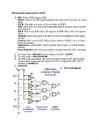
Microcontroller homework for week 04 1. SNR - Ratio of RMS signal to RMS SINAD - Ratio of the RMS signal amplitude to the mean value of the root-sum-square (RSS) ENOB - The effective number-of-bits and relates to SINAD THD - Ratio of the rms value of the fundamental signal to the mean value of the RSS of its harmonics. SFDR - Ratio of the RMS value of the signal to the RMS value of the worst spurious signal. Channels related to the inputs of the ADC can either be multiplexed or individually selected. Linearity relates to how a ADC follows a linear function. All ADCs are to a certain extend non-linearity. Temperature is measurement, which in optimal state for ADC-s, lets them function correctly. Power dissipation refers to the amount power dissipated when the ADC is operating. 2. The output code is 001111012 and the voltage of the LSB is 0,0195V 3. The output code is 101011101101100 4. The
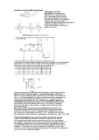
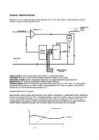
Analoog- digitaal muundur alltoodud skeemil on näidatud analoog digitaal muundur (ADM, eesti; ADC, inglise). antud muundur on ehitatud loenduri ja digitaal-analoog muunduri baasil. analoogsisendisse antakse analoogsignaal mida tahetakse viia digitaalsele kujule stardi pulss: muundamise protsessi (konversiooni) alustamiseks antakse vastav signaal taktsageduse sisendisse antakse mingisuguse sagedusega clock signaal loenduri sisu seerendamiseks digitaalväärtus mis vastab analoogsignaalile saadakse loenduri väljundist võrdluselemendiks sobib hästi komparaator operatsioonivõimendi baasil, annab märku sellest kas analoogsignaal (analoogsisendist) on suurem või väiksem digitaal analoogmuundurist (DAC) tulevast signaalist. vaikimisi, kui loenduri sisu on 0 siis võrdluselemendi väljundis on "1". muunduri tööpõhimõte on järgmine: mingil ajahetkel saabub impulss stardi sisendile. sellega nullitakse loenduri sisu. ja katkestatakse hetkeks loenduri töö. loendur on ühendat
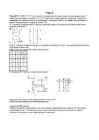
Trigerid Trigerid (RS,JK,MS,D,T) - - . . : "0" "1" . . . . - ., S R. RS RS- 1 R - 0, S - 1. . S R Qt-1 0 0 Qt 0 1 0 1 0 1 1 1 _ RS- . 0. . RS- , S R, . 1 . 1. - -. - . 1 , . R Qt+1 0 Qt 1 Qt - C T Qt+1 0 x Qt 1 0 Qt 1 1 Qt - D- ( ) - , . C D Qt+1 0 x Qt 1 0 0 1 1 1 JK- , RS-, 1,2,3,4. RS- J K. RS- . , RS- . RS-. JK- D, T RS-. Konveier protsessoris ja mälus PROTSESSOR: : 1. (. Instruction Fetch); 2. (. Instruction Decode) (. Register fetch); 3. (. Execute); 4. (. Memory access); 5. (. Register write back); 1 , 4 . : IF
Question 1 (in wiki and in terminologies) 1. SNR is a calculated value that represents the ratio of root- mean-square (rms ) signal to rms noise. 2. SINAD stands for Signal-to-noise and distortion ratio. It is a measure of the quality of a signal from a communications device, often defined as: where is the average power of the signal, noise and distortion components. SINAD is usually expressed in dB. For examples to calculate the ratio of 1 kW (one kilowatt, or 1000 watts) to 1 W in decibels, use the formula 3. ENOB is the effective number-of-bits related to SINAD and the quality of a digitized signal. The 6.02 term in the divisor converts decibels (a log10) to bits (a log2) The 1.76 term comes from quantization error in an ideal ADC 4. THD - Total harmonic distortion is the ratio of the root-mean-square (rms) value of the fundamental signal to the mean value
Analog Interfacing to Embedded Microprocessors Real World Design Analog Interfacing to Embedded Microprocessors Real World Design Stuart Ball Boston Oxford Auckland Johannesburg Melbourne New Delhi Newnes is an imprint of Butterworth–Heinemann. Copyright © 2001 by Butterworth–Heinemann A member of the Reed Elsevier group All rights reserved. No part of this publication may be reproduced, stored in a retrieval system, or transmitted in any form or by any means, electronic, mechanical, photocopying, recording, or otherwise, without the prior written permission of the publisher. Recognizing the importance of preserving what has been written, Butterworth–Heinemann prints its books on acid-free paper whenever possible. Library of Congress Cataloging-in-Publication Data Ball, Stuart R., 1956– Analog interfacing to embedded microprocessors : real world design / Stuart Ball. p. cm. ISBN 0-7506-7339-7 (pbk. : alk. paper) 1. Embedded computer
 annaabi.ee









Kõik kommentaarid