Canada borders the Atlantic Ocean, the Pacific Ocean, the Arctic Ocean and the USA. The capital of Canada is Ottawa and other main cities are Toronto, Montreal and Vancouver. It is a very developed country. Montreal is the largest city and it is called the Paris of North America because most of the people there speak French. The population of Canada is 28 million people. It is a very multicultural country. People from many different countries have come to live there. The natives are Eskimos and Indians. Eskimos have their own self-governing homeland called Nunavut. In Canada there are also 2 official languages English and French. One third of the population speaks French and the other two speak English. Many more languages are spoken in that country. 75% of the population lives within 300 km of the USA border. Political Structure. Canada is a constitutional monarchy and a Commonwealth Realm that formally recognizes Elizabeth II as Queen of Canada.
. There is no summer; it's always cold and snowy Everyone watches/liked/plays hockey. We're polite. They hate Americans. It snows non stop in canada Canada beer is better than American beer Canadians pronounce the word "about" ..."aboot They wear funny hats They eat blubber Canada hokey players are mullets Canadians are fat They don't have water toilets They are all monarchists All Canadians snowboard They all are jealous of Americans Canada is where Avril Lavigne and Eskimos come from Peaceful hippies They put maple syrup on EVERYTHING They don't have roads Canadians drive dog sleds everywhere They have monopoly money They have no army They have beavers everywhere They have police horses They are afraid of dark They are all lumberjacks They have a lot of geese They don't lock their front door when they are at home They have a lot of mooses Canadians are polite and respectful. Canadians are passive and boring.
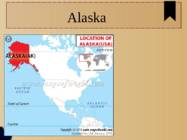
Alaska General information Area 1,717,854 km² (1st) Capital Juneau Population - 731,449 (47th) Native people Numerous tribes The Inuit people (eskimos) The Aleut people The Alutiiq people Colonisation Russians - 17th century Name origin Alaska (Russian) Alakshak (Aleutan) Peninsula Nicknames The Last Frontier Land of the Midnight Sun State of Alaska 1959 Symbols Flag - Seal - Symbols 2 Bird - Willow Ptarmigan Dog - Alaskan Malamute Sport Dog Mushing Head of state Governor
- What is the capital of Australia? a. Sydney b. Melbourne c. Canberra - Which city is the oldest and largest? a. Canberra b. Sydney c. Darwin - Which is a popular Australian animal? a. bear b. kangaroo c. fox - Who are the Australian natives a. Eskimos b. Aborigines c. Indians - Who discovered Australia? a. Columbus b. Captain Cook c. Lewis and Clark - What is the official Language in Australia? a. English b. German c. Spain Australia is situated south of Asia, between the Pacific and the Indian Oceans. Australia is a continent, a country and an island at the same time. Australia is located in the southern hemisphere. OFFITIAL NAME : Commonwealth of Australia
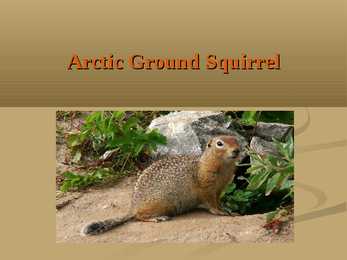
The colony has couple of dominant males that control the territory. Arctic ground squirrels are usually active between four in the afternoon and nine or ten at night. On rainy and cloudy days, they will stay in their burrows. Colony is made up of burrows that are dug about three feet under the ground. The burrows are connected with a series of tunnels. Arctic ground squirrels are very vocal. They are called "sik-sik" by the Inupiat Eskimos in Alaska because of the sounds they make. Threats Unsustainable hunting for skins for local trade. Habitat degradation through grazing by increasing numbers of livestock. Drying of water sources and droughts. Bigger animals like arctic foxes and wolves, grizzly bears, lynxes, eagles and wolverines. Melting ice, which is caused by global warming. Thank you for listening !
Canada is slightly larger than the United States, but has only about a tenth as many people. About 28 million of people live in Canada. About 80% of the population live within 320 km of the southern border. Much of the rest of Canada is uninhabited or thinly populated because of severe natural conditions. Canada's people are varied. About 57% of all Canadians have some English ancestry and about 32% have some French ancestry. Native people American Indians and Eskimos make up about 2% of the country's population. 77% of Canada's people live in cites or towns. The Capital of Canada Ottawa is the capital of Canada. One third of its people are French- speaking. Ottawa is the capital of Canada and is located on the banks of the Ottawa, Rideau and Gatineau rivers. Canada's fourth-largest city is a complementary blend of urban and
domesticated, bred and cultivated a large array of plant species. These species now constitute 5060% of all crops in cultivation worldwide. The Inuit (Eskimos) and some Indian tribes of the far north relied almost entirely on hunting and fishing to survive. Some Native Americans were primarily big game hunters, migrating frequently to follow herds of bison or caribou. The Blackfoot and Sioux are two examples of
parts of Asia about 15,000 years ago. They crossed the Bering Strait from Siberia to Alaska. Some of those people followed the Yukon River and found their way south. Others followed the MacKenzie River which opened the way to the plains of the interior, and then travelled on to the Great Lakes and the St. Lawrence River. The third group of people inhabited the Arctic regions. The first two groups were called Indians, the group that settled in the north were called Eskimos. These people are the only true native Canadians, the rest are new Canadians who have been transplanted from other parts of the world, especially from Europe. The first European visitors to North America were Norsemen who settled briefly in the 11th century. John Cabot, a Venetian seeking riches for England, made the next known voyage in 1497. He took back word that the sea was full of fish which could be taken not only with a net but in baskets let down into the water.
About 27 million people live in Canada. About 80% of them live within 300 kilometres of Canada's southern border. Much of the rest of Canada is uninhabited or thinly populated because the country has rugged terrain and a severe climate. Canada's people are varied. About 38% of all Canadian's are of British descent and 32% are of French descent. About 15% of Canada's people speak both English and French, the two official languages. There are also people of German, Italian, and descent. Eskimos and American Indians together make up about 2% of the population. Over three-quarters of Canada's people live in cities or towns. Provinces/territories Canada is divided into provinces and territories. There are 10 provinces and 3 territories. The provinces are Newfoundland, New Brunswick, Prince Edward Island, Nova Scotia, Quebec, Ontario, Alberta, Saskatchewan, Manitoba and British Columbia. Quebec Quebec differs greatly from the rest of Canada because of its French language and culture.
snow. Inuit invented tools, gear, and methods to help them survive in this environment. Read on to learn more about traditional Inuit ways of life, and how Inuit culture has been changed over the past century. Geography Inuit communities are found in the Arctic, in the Northwest Territories, Labrador and Quebec in Canada, above tree line in Alaska (where people are called the Inupiat and Yupik), and in Russia (where people are called the Yupik people). In some areas, Inuit people are called "Eskimos" however many Inuit find this term offensive. The word "Inuit" means "the people" in the Inuktitut language. Inuit Homes In the tundra, where Inuit communities are found, there are not many building materials. No trees grow in the tundra so houses can not be made from wood unless it is transported from elsewhere. However, during a large part of the year, the cold part, there is a lot of snow in the tundra. And it turns out that snow can be a very good construction material
The two biggest ethnic groups are those of British and French extraction, and in fact the country is officially bilingual. Canada has the population of about 34 million. Only 44 % are of British descent; 32 % of French ancestry; 15 % of foreign origin. About 67 % of the people speak English, 26 % speak French and about 7 % some other tongue. There are many people of German, Italian, Ukrainian, Polish or of Scandinavian origin. The native people Indians and Inuits (Eskimos) , proud and free have been retreated, live in the North West territories, in the remote and lonely areas, which except a few settlements, and a few mines, is as God made it. Here the Indian is a nomadic hunter still. Here the Eskimo, in a Stone Age of his own. The number of Indians and Eskimos are about 380, 000 and 25,000 accordingly. Thanks to their rapid birth rate their number has increased during the 20th and 21st century.
physical and cultural environment in which the language is spoken. A people unfamiliar with, say, horses is unlikely to have a word for `horse'; similarly with ploughs, printing presses, and internet porn sites. For the most part this is trivial it's hard to imagine how it could be otherwise, given the general nature of human language. People tend to make a great deal of the alleged fact (see Pullum 1989) that "the Eskimos have lots of words for snow", but it doesn't take much thought to realise that any language spoken in a given physical and cultural environment is likely to have efficient ways of referring to distinctions that are important in that environment. That doesn't mean that you can read very much into individual words and individual facts about the lexicon of a given language (this topic has already come up in connection with debates about the location of the Indo-European
spoken too (26 % of the canadians). Canada is based on recognizing the cultural diversity of different nations living in Canada. All the communities living on the country are encouraged to remember their origins and hold their own ethnic events and national festivals. Cultural diversity makes Canada even more interesting. There are many native peoples throughout Canadalike the Crees, Mohawks, Iroquis and Sioux. In the north of the Country, the Inuit (Eskimos) now have a selfgoverning homeland called Nunavut (meaning "our land"). It is over two million sq km and is inhabited by 17,500 Inuits. Canada is one of the most tolerant societies in the world. For example only 13 % of canadians say that they would object their children marrying someone from another race (compared with 32 % in the USA). Canada's political structure is independent constitutional monarhcy. And head of state is Elizabeth II, who is also the Queen of Great Britain
All the communities living in the country are encouraged to remember their origins and hold their own ethnic events and national festivals. Cultural diversity makes Canada even more interesting. In spite of this, in recent years there is a strong movement in French-speaking Quebec to become an independent country. There are many different native people throughout Canada like the Crees, Mohawks, Troquois and Sioux. In the north of the country, the Inuit (Eskimos) now have a self-governing homeland called Nunavut, meaning our land. It is over two million square kilometers and it is inhabited by 17,500 Inuits. The national symbol of Canada is the maple leaf. The national tree is the maple. Canada is also the most tolerant societies in the world because only 13% of Canadians say that they would object their children marrying somebody of a different race, compared with 32% in the USA.
Mountains, and Coast Mountains). Longest coastline. Huge area of forest and tundra. 3. There is a great contrast between the size of the land and the number of people. South- East (Ontario, Quebec) densely populated South and South-West less densely, rest of the country sparsely. 4. The native peoples of Canada are: - Indians (The First Nations) - Metis (North American Indian and European descent) - Inuit (Formerly called Eskimos) 5. Discovery by the Europeans: - St. Brendan known as the Navigator; discovered in the 6th century; was an Irish monk - Scandinavians - 10th century, first by accident, then Leif Eriksson sighted the land. They attempted to colonize it but were driven out by the locals. - John Cabot Italian; wanted to reach China; sighted land in 1497; the exact place is not known; received sponsorship from King Henry VII
means that they are entitled to free medical care, education and training. Some of them, whose ancestors signed treaties also receive a small amount of money. Metis are the people who are half indigenous and half other race, the came from the marriages between different races. They have good traditions and a dance called the jig. They live in communities in the rural areas. The Inuit, who don't want to be called Eskimos because of its meaning ,,meat- eaters", are the founded people, and over the years their life has changed dramatically and they feel that the modern people don't respect nature and that modern cultures had neglected and abused it. 10. Sports A wide variety of sports are played in Canada. Ice hockey, referred to as simply hockey in the country, is Canada's official winter sport and continues to be the most popular sport and one in which teams representing the country have had the most
The Arctic is no longer an inaccessible frontier. Inuvik, in the Mackenzie delta, can be reached by road, and every community is served by air. Most have electricity, stores and health services. North of the mainland is a maze of islands separated by convoluted straits and sounds, the most famous of which link together to form the fabled Northwest Passage, the route to the Orient sought by so many early explorers. Reflecting a growing autonomy, the Inuit (formerly known as Eskimos) are gradually changing place names into their language, Inuktitut. For example, the people of Frobisher Bay on Baffin Island, Nunavut, decided to rename their community Iqualuit, which means "place of fish." Used materials: http://www.nationsencyclopedia.com/economies/Americas/Canada.html http://www.google.ee/#hl=et&q=Canada+relief&lr=&aq=f&oq=Canada+relief&fp=9d88 a292ff611cf4 http://www.members.shaw.ca/kcic1/geographic.html http://www.nationsencyclopedia
Mountains; Canadian Cordillera and the dozens of volcanoes along the Pacific Ring of Fire. 3.How is the population distributed on the territory of Canada? Population density: 4 residents/km2 Densely and sparsely populated areas. Canada is one of the least densely populated countries in the world. 4. Who are the native peoples of Canada? Métis (mixed-race decendants of the indigenous peoples) Inuit (also referred to as Eskimos) The First Nations (various indigenous peoples who are neither of the above) 5. The discovery of Canada by Europeans (St Brendan, Scandinavians, John Cabot, Jacques Cartier). St Brendan the Navigator (C6) was an Irish monk. Tradition holds that he reached North America on one of his voyages. Leif Eriksson (C11) was a Norseman who likely landed in North America around 1000 AD. John Cabot was an Italian explorer who reached North America in 1497.
 annaabi.ee