o Richard I, Philip II, Frederick Barbarossa set out. o Along the way Frederick drowned. o Phillip went back home. o Richard won several victories but couldn't retake Jerusalem. o The English had to give up and head home. o Richard was taken prisoner . Richard Lionheart (1157-1199) Richard was a king of England son of Henry II 4 Crusade th Other Crusades Decided to take over Five other crusades Constantinople instead were all also failures. Another failure. By 1291, the Muslims had driven the Christians out of the Holy Land. Thank you for your attention!! 2. slide During the middle ages, (tekst) Christian soldiers launched a series of Holy wars called Crusades. · The purpose of these wars
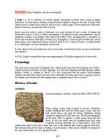
the Seville Cathedral in 1520. The current building was originally constructed as a church between 532 and 537 A.D. on the orders of the Byzantine Emperor Justinian, and was in fact the third Church of the Holy Wisdom to occupy the site. It was designed by two architects. Church contained a large collection of holy relics and featured, among other things, a 50 foot (15 m) silver iconostasis. It was the patriarchal church of the Patriarch of Constantinople and the religious focal point of the Eastern Orthodox Church for nearly 1000 years. In 1453 Sultan Mehmed II ordered the building to be converted into a mosque. The bells, altar, iconostasis, and sacrificial vessels were removed, and many of the mosaics were eventually plastered over. The Islamic features -- such as the mihrab, the minbar, and the four minarets outside -- were added over the course of its history under the Ottomans. It
,,Inimene, Ühiskond, Kultuur" Mait Kõiv http://et.wikipedia.org/wiki/P%C3%A4rsia_ajalugu http://www.energyenhancement.org/Zarathustra/zarathustra2.jpg http://www.tpl.edu.ee/yelekoolilised/vana-testamendi-lood-mis-on-paelunud- kunstnikke/rembrandtester.jpg http://indiest.onepagefree.com/files/Agra%20vaip%202.jpg http://images.travelpod.com/users/ambough/bellaitalia2007.1182085200.persian-gate.jpg http://lifegoesonintehran.com/images/10_2008/persians.jpg http://chestofbooks.com/travel/turkey/constantinople/John-Stoddard-Lectures/images/The-Persian- Embassy-Pera.png http://www.atlantisbolivia.org/atlantisboliviapart4_files/persian.jpg 11
stands today, and the Zlícani built theirs upstream at what is now Vysehrad. They had barely dug in when nomadic Avars thundered in, to rule until the Frankish trader Samo united the Slav tribes and drove the Avars out. Samo held on for 35 years before the Slavs reverted to squabbling. In the 9th century Prague was part of the short-lived Great Moravian Empire. Under its second ruler, Rastislav (r 846-70), emissaries were invited to come from Constantinople, and Christianity took root in the region. The Moravians (the ancient lands of Moravia now form 7 the eastern part of the Czech Republic) were ultimately undone by internal conflicts, especially with the Czechs, who finally broke away from the empire. Prague Castle (Prazsk hrad, or just hrad to the Czechs) was built in the 870s by Prince Boivoj as the main seat of the Pemysl dynasty
This invention gradually made books less expensive to produce, and more widely available. A 15th century incunabulum. Notice the blind-tooled cover, corner bosses and clasps. Early printed books, single sheets and images which were created before the year 1501 in Europe are known as incunabula. A man born in 1453, the year of the fall of Constantinople, could look back from his fiftieth year on a lifetime in which about eight million books had been printed, more perhaps than all the scribes of Europe had produced since Constantine founded his city in A.D. 330. 6/15 Modern world Steam-powered printing presses became popular in the early 19th century. These machines could
Manzikert, thereby precipitating the call for Crusades. They however fell apart rapidly in the second half of the 12th century giving rise to various semiautonomous Turkic dynasties. In the 13th and 14th centuries the Ottoman empire (named after Osman I) emerged from among these "Ghazi emirates" and established itself after a string of conquests that included the Balkans, parts of Greece, and western Anatolia. In 1453 under Mehmed II the Ottomans laid siege to Constantinople, the capital of Byzantium. The Byzantine fortress succumbed shortly thereafter, having been battered by superior Ottoman cannonry. Beginning in the 13th century, Sufism underwent a transformation, largely as a result of the efforts of alGhazzali to legitimize and reorganize the movement. He developed the model of the Sufi order--a community of spiritual teachers and students. Also of importance to Sufism
names like Chester, Lancaster and Gloucester which include variants of the Roman word castra (a military camp). 23 Notes 1. In the 1st с. BC – the 4th c. AD Rome founded the greatest ancient empire whose provinces extended from the Caucasus in the east and Egypt in the south to Spain and Gaul in the west and Britain in the north-west. In 395 the empire was divided into two parts – the Western (Rome) and the Eastern (Constantinople, Byzantium) empires. The former collapsed in the 5th century (476). Byzantium lasted for another thousand years and fell to the Turks in 1453. Gaius Julius Caesar ['si:zə] (100 – 44 BC), the Roman statesman, general and author. He conquered Gaul, Egypt, defeated his political opponents and became an absolute dictator (49 BC). Killed by Republican conspirators (M.J. Brutus and G. Cassius). His Commentaries on the Gallic War contain important information about the Celts
The War resulted in the collapse of the Empires of Austria-Hungary, Russia, and the Ottoman Turks. The Treaty of Versailles, which Germany was kept under blockade until she signed, ended the war. It declared Germany responsible for the war and required Germany to pay enormous war reparations and award territory to the victors. *The Gallipoli campaign It took place in Turkey during the First World War. A joined British Empire and French operation had to capture the Ottoman capital of Constantinople and secure a sea route to Russia. The attempt failed, with heavy casualties on both sides. In Turkey, the battle is thought at as a defining moment in the history of the Turkish people--a final surge in the defense of the motherland as the centuries-old Ottoman Empire was crumbling. In Australia and New Zealand, the campaign was the first major battle undertaken by a joined military formation, the Australian and New Zealand Army Corps and is often
sweating process. The Viennese enjoyed remarkable success in this work. The French ambassador, who was apprised of its successes from papers sold him by a masked man on a bridge, remarked in astonishment that "our ciphers of 1200 [groups] hold out only a little while against the ability of the Austrian decipherers." He added that though he suggested new ways of ciphering and continual changes of ciphers, "I still find myself without secure means for the secrets I have to transmit to Constantinople, Stockholm, and St. Petersburg." The Viennese owed at least some of their success to their progressive personnel policies. Except in emergencies, the cryptanalysts worked one week and took off one week— apparently to keep them from cracking under the intense mental strain of the work. Though the pay was not high, substantial bonuses were given for solutions. For example, bonuses totalling 3,730 florins were disbursed between March 1, 1780, and
 annaabi.ee