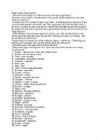
42) Orchard viljapuuaed 43) Detour ringsõit, ümbersõit 44) Nocturnal öine 45) Sentinel vahimees 46) Obscure selgusetu 47) Chieftain sugukonnapealik 48) Exultant juubeldav 49) Vessel - nõu, anum, alus 50) Ravine jäärak, kuristik, org 51) Seer ennustaja, prohvet 52) Twig oks 53) Dungeon vangikoobas 54) Falcon pistrik 55) Kerchief pearätt 56) To flee põgenema 57) Grove salu 58) Echoing kaikuv 59) Steed ratsu 60) To embrace embama 61) Chariot tõld, sõjavanker 62) Beetle - mardikas 63) Sacristy käärkamber
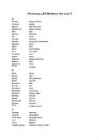
Boisterous tormakas, rahutu Bothering tüütamine Bouquet lillekimp Breakthrough läbimurre Breathing hingamine Bustle askeldama, sagima C Campaign kampaania Capitalists kapitalistlikud Catchy slogan meeldejääv loosung Cause põhjustama Ceased lõppenud Celebrity-endorsed kuulsuse poolt heaks kiidetud Challenge väljakutse Chariot sõjavanker Claim nõue, taotlema Cohesive sidus Collar krae, arest Commercial reklaam Commodity kaup, toode, vara Compelling mõjuv, kaasakiskuv Competitors võistleja, konkurent Complex keeruline, kompleks Complic kaassüü Conceit upsakus, eneseimetlus Consistent terviklik Consumer tarbija Consumer sales tarbija käive Contradict vastu rääkima, eitama
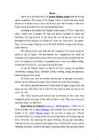
performance genre have appeared on its stage. Each year it hosts more than 350 performances including classical concerts, rock and pop, ballet and opera, tennis, award ceremonies, school and community events, charity performances and lavish banquets. · Statue of Boudicca - this massive bronze statue of the legendary Queen Boudicca in her chariot looks as if it's about to take the City of London. The statue was made by the English artist Thomas Thornycroft from 1856 until 1885, but it wasn't erected in its current position near Westminster Bridge until 1902. Queen Boudicca was queen of a Celtic tribe who
14 Kasutatud materjal http://en.wikipedia.org/wiki/Weapon http://en.wikipedia.org/wiki/Prehistoric_warfare http://en.wikipedia.org/wiki/Ancient_warfare http://en.wikipedia.org/wiki/Medieval_warfare http://en.wikipedia.org/wiki/Early_Modern_warfare http://en.wikipedia.org/wiki/Industrial_warfare http://en.wikipedia.org/wiki/Modern_warfare http://en.wikipedia.org/wiki/Artillery http://en.wikipedia.org/wiki/Aerial_warfare http://en.wikipedia.org/wiki/Chariot http://www.miksike.ee/documents/main/lisa/2klass/2joostes/relvad.htm http://www.miksike.ee/documents/main/lisa/5klass/5eestim/skandinaaviapronksiaeg17.ht m http://en.wikipedia.org/wiki/Siege_engine http://en.wikipedia.org/wiki/Catapult http://en.wikipedia.org/wiki/Gunpowder http://en.wikipedia.org/wiki/Breech-loading http://en.wikipedia.org/wiki/Mechanized_infantry http://en.wikipedia.org/wiki/Asymmetric_warfare 15
month of July or August. The time between two competitions was called the Olympiad. In the beginning the games lasted for only one day and comprised only one event, the running of one Stadion, but gradually more events were added resulting, towards the 5th century B.C., in the games lasting for 5 days. In total the Olympic Games consisted of 10 events: running, the pentathlon (viievõistlus), jumping, discus, "ekebolon" javelin, wrestling, boxing, the pancration, chariot racing and horse racing. All Greeks who were not criminals had the right to take part in the games. Women were not allowed to compete, they could not even watch the competition. The athletes presented themselves 1 moth before the games began at Elis, the organising town. The athletes had to swear that they would compete with honour and respect the rules. The victors enjoyed great honours and on returning to their cities their
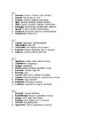
Lk 1 1. Intention- kavatsus, tahtmine, tahe, eesmärk 2. Instead- selle asemel, see- eest 3. Forsake- loobuma, hülgama, maha jätma 4. Spin- heietama, keerlema, tiirlema, ketrama 5. Shift- muutma, nihutama, vahetama, ümberlülitus 6. Paradigm- musternäidids, aluspõhimõte, raamistik 7. Spread- levitama, laotama, laiali asetama 8. Irrelevant- ebaoluline, tähtsusetu, mitteasjakohane 9. Infomercial- reklaamuudis Lk 2 1. Chariot- sõjavanker, võidusõidukaarik 2. Superstitious- ebausklik 3. Overwhelm- üle kuhjama, üle koormama 4. Function- toimima, tegutsema, tegevus, ülesanne 5. Embrace- omama, embama, hõlmama Lk 3 1. Significant- oluline, tähtis, märkimisväärne 2. Glassblower- klaasipuhuja 3. Artisan- käsitööline 4. Pursue- järgima, jälitama, püüdlema, otsima 5. Fervently- innukalt, kirglikult 6. Beverage- jook 7. Convey- edasi andma, vedama, üle kandma 8
ceremonies for important people. Later games became part of religious festivals of honouring the gods but mostly they honoured the king of the gods Zeus. The ancient stadium in Olympia could accommodate more than 40,000 spectators. The only event in the first 13 games was the stadion which is a running-race of 192 metres. As the years passed, longer running races and other types of competition became a part of the games wrestling, the pentathlon, boxing and chariot-racing. The pentathlon was a combination of long jump, running, discus, and javelin throwing and wrestling. The games were so important that truce was called out between the fighting city-states. Olympic winners were greatly honoured. They were given olive wreaths as prizes and were treated like true heroes. 3. The modern Olympic Games The Olympic Games are the most important international athletic competition in the world.
SOSE.01.139 27.01.2006 Lisa 1 Immortal Aphrodite, beautiful-throned, wiles-weaving child of Zeus, I beg you, Queen, do not torment my heart with sorrow and pain but come and help me again as you did before when having heard my pleadings from far away you left your father's golden palace and yoked to your shining chariot swift, lovely sparrows that brought you over the dark earth, moving their thick-feathered wings through the sky's bright ether. Quickly they arrived; and then you, Goddess, with a smile on your unaging face you asked me what is wrong with me this time and why I am calling you again and what my wild heart wishes again. "Again whom must I persuade into the harness of your love? Who isn't treating you well, Sappho? For if now runs away from you, soon will pursue
hockey (football, figure-skating etc.). I try to watch every hockey match (championship) on TV. The Olympic Games 1)The Olympic Games have a very long history. They began in ancient Greece. The games were held in honour of Zeus, the principal god of the Greeks. They lasted for five days and became a symbol of peace and friendship, because in keeping with the decree of that time no wars could be waged during the Games. The athletes competed in running, boxing, wrestling, horse and chariot racing and the like. The winners were presented with laurel wreaths in the temple of Zeus. There is a list of Winners dating from 776 EC. 2)The Games took place every four years and were so important in the life of the Greeks that they culculated time by them. The Olympic Games were held for nearly twelve centuries until they were abolished in 394 AD by the Christian Emperor Theodosius I. 3)The Olympic Games were revived only at the end of the 19th century thanks to Baron Pierre de Coubertin
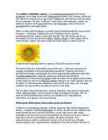
Additionally, the stem of a dead sunflower can dry out open wounds.[citation needed] For farmers not intending to grow it, the sunflower is considered a noxious weed. The wild variety will grow unwanted in corn and soybean fields which can have a negative impact on yields. Diseases Main article: List of sunflower diseases Greek myth In Greek mythology, a girl named Clytie fell in love with the sun god Apollo, and would do nothing but watch his chariot move across the sky. After nine days, she was transformed into a sunflower. However, the word "sunflower" and its cognates existed long before Helianthus annuus was brought to Europe, and it is thought that the myth (which is mentioned in Ovid's poem Metamorphoses) actually refers to heliotrope or marigold. Trivia · The sunflower is the state flower of the U.S. state of Kansas, and one of the city flowers of Kitakyushu, Japan.
He called it the Forschungsamt ("Research Office"), but its research was highly specialized. Apparently attached to the minister's office, it bore no relation either to the research division of the Luftwaffe's technical office or to the Luftwaffe's own military intercept and cryptologic unit. Goring installed the Forschungsamt in a requisitioned building on the Behrendstrasse, Berlin, but moved it at the end of 1933 to the Hotel am Knie in the suburb of Chariot- tenberg. He named as its first chief an old friend and loyal party member named Hans Schimpf, a former naval lieutenant who had once served as liaison between the Army and the Navy cryptologic organizations. In 1934 the unit did exactly what Goring expected it to do when it supplied him with information that helped him win Hitler to his side in the first great power struggle of the Third Reich— that between Hitler's oldest friend and closest associate in the Nazi movement, the
 annaabi.ee