Book Report Graham Greene ,, Our Man in Havana" Liis Mägi, 12c I chose a book by Graham Greene titled ,,Our man in Havana". The reason why I decided to read exactly this book was that I found the plot introductory quite interesting and as I started reading I realised I was right. I found it quite humorous book, written in the third person and set in Havana, Cuba. The story is quite easy to follow. The novel was written right before the American embargo and the Cuba missile crisis of the 1960's, so the author was quite surely influenced by the political events at that time and created his own vision of the future. The main character of this book is Jim Wormlod, who is a vacuum cleaner salesman, but is offered a job in the British secret service by Hawthorne. He has to spy on Cuba for England. Jim lives with his daughter Milly, because his wife had left them for another man. Milly is quite demanding, having many wishes and because eb...
INTRODUCTION(pärast I videoklippi) I've decided to talk about Rowan Atkinson because he recently celebrated his 56th birthday and I haven't met a person who didn't like him. BIOGRAPHY Rowan Sebastian Atkinson, whose nickname is Row, was born on the 6th January 1955. He is a British actor, comedian and screenwriter. His trademark(kaubamärk) character is Mr Bean which most people probably know him by. Rowan grew up with his two older brothers in Newcastle, UK, where his father owned a farm. He attended Newcastle University and Oxford University where he earned degrees in electrical engineering. During that time, he met screenwriter Richard Curtis, with whom he wrote and performed comedy revues. CAREER Rowan Atkinson has written sketch comedies like Blackadder and Not the Nine o'Clock News. His acting career began in 1983 when he got a small roll in the James Bond movie 'Never Say Never Again'. Since then, he has gained further recognition...
Themes, Motifs, and Symbols Themes Themes are the fundamental and often universal ideas explored in a literary work. The Grim Reality of War - As the title of the novel makes clear, A Farewell to Arms concerns itself primarily with war, namely the process by which Frederic Henry removes himself from it and leaves it behind. The few characters in the novel who actually support the effort--Ettore Moretti and Gino--come across as a dull braggart and a naïve youth, respectively. The majority of the characters remain ambivalent about the war, resentful of the terrible destruction it causes, doubtful of the glory it supposedly brings. The novel offers masterful descriptions of the conflict's senseless brutality and violent chaos: the scene of the Italian army's retreat remains one of the most profound evocations of war in American literature. As the neat columns of men begin to crumble, so too do the soldiers' nerves, minds, and cap...
Old Mr. Dashwood is the owner of a large estate in Sussex called Norland Park. Following the death of his sister, Mr. Dashwood invites his nephew Mr. Henry Dashwood to come live with him at Norland. The younger Mr. Dashwood brings John Dashwood, his son from a previous marriage, as well as the three daughters born to his present wife. John Dashwood is grown and married, and has a four-year-old son, Harry. When Old Mr. Dashwood dies, he leaves his estate to John and little Harry, who had much endeared himself to the old man. But now John's father, Henry Dashwood, is left with no way of supporting his wife and three daughters, and he too dies one year later, leaving only ten thousand pounds for his family. Just before his death, he makes his son John promise to care for his stepmother and three half-sisters. Mr. John Dashwood initially intends to keep his promise and treat his female relatives generously, but his wife Fanny, a narrow-min...
Charles Dickens Charles John Huffam Dickens was the foremost English novelist of the Victorian era, as well as a vigorous social campaigner. Considered one of the English language's greatest writers, he was acclaimed for his rich storytelling and memorable characters, and achieved massive worldwide popularity in his lifetime. Charles Dickens was born in Landport, Portsmouth in Hampshire, the second of eight children to John Dickens n 7 February 1812. The 12-year-old Dickens began working ten hour days in a Warren's boot-blacking factory. In May 1827, Dickens began work in the office of Ellis and Blackmore as a law clerk. At the age of seventeen, he became a court stenographer and, in 1830, met his first love, Maria Beadnell. Maria's parents disapproved of the courtship and effectively ended the relationship when they sent her to school in Paris. In 1834, Dickens became a political journalist, reporting on pa...
KUBISM Kubism on 20. sajandi kunstivool, mis hakkas kujunema Pariisis 1907. aastal Pablo Picasso ja Georges Braque'i töödes. Kubistide eelkäijaks oli Paul Cézanne. Mõiste "kubism" võttis kasutusele prantsuse kriitik Louis Vauxcelles ja see vihjab kuubist lähtuvale kujutamisele. Kriitik kirjeldas Braque'i töid 1908. aastal väljendiga bizarreries cubiques (kuubilised veidrused). Kubistide eesmärk oli vabastada teos jutustavast sisust ja kujutada asju (muusikainstrumendid, natüürmordid, maastikud jne) geomeetrilistena (kuup, silinder jne), tükeldatud pindadena või stereomeetrilistena (kujutada esemeid ühekorraga mitmest vaatevinklist). Algset kubismi, perioodi, mis algas 1909. aastal, nimetatakse analüütiliseks kubismiks. Seda perioodi iseloomustab motiivide (majad, puud ja natüürmordid) lahutamine justkui algosadeks (geomeetrilisteks kujunditeks) ning nendest uue pildi ülesehitamine. Teine, hilise...
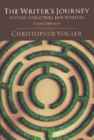
THE W R I T E R ' S JOURNEY M Y T H I C STRUCTURE FOR W R I T E R S THIRD EDITION CHRISTOPHER VOGLER S C R E E N W R I T I N G / W R I T I N G Christopher Vogler explores the powerful relationship between mythology and storytelling in his clear, concise style that's made i this book required reading for movie executives, screenwriters, playwrights, fiction and non-fiction writers, scholars, and fans of pop culture all over the world. Discover a set of useful myth-inspired storytelling paradigms like "The Hero's Journey," and step-by-step guidelines to plot and • character development. Based on the work of Joseph Campbell, The Writers Jour...
The making of a new nation. The Enlightenment in America. The emergence of the notion of the American Dream. The great Enlighteners: Crèvecoeur, Jefferson, Paine, Franklin. The American Enlightenment is the intellectual thriving period in the United States in the midtolate 18th century (17151789), especially as it relates to American Revolution on the one hand and the European Enlightenment on the other. Influenced by the scientific revolution of the 17th century and the humanist period during the Renaissance, the Enlightenment took scientific reasoning and applied it to human nature, society, and religion. American Enlightenment a gradual but powerful awakening that established the ideals of democracy, liberty, and religious tolerance in the people of America. If there were just one development that directly caused the American Revolution and uplifted the intellectual culture of the continent while it was only a British colony,...
English literature is one of the oldest literatures in Europe; dates back to the 6th century AD. Oral literature, i.e. not written down, spread from person to person. In 449 AD Anglo-‐Saxon tribes invaded England – beginning of the Anglo-‐Saxon period in English literature. The first form of literature was folklore, carried by scops and gleemen, who sang in alliterative verse (a kind of simple poetry). Prose developed much later. The first form of recorded English literature was the epic Beowulf, which was produced sometime near the end of the 7th and beginning of the 8th century. It has no ...
American Art Revision Materials Colonial Period Portraiture. The first typically American paintings were illustrated maps but painting remained scarce during C17. There were 4 reasons: settlers came from backgrounds where art was unusual, Protestant attitudes was averse to imagery and painting, the English were not yet distinguished in visual arts and religious art was non-existent. The colonial period is almost entirely limited to portraiture (deemed as `useful' by settlers). These first paintings were made by limners and artisans without formal training and were based on what was popular in England during the Tudors. The paintings are technically unskilled, strongly patterned, flat and linear. Spanish painting in America was mostly religious. In C18, painting was a luxury and necessitated wealth that had by then become available. Portraitures remained at the forefront because the rich could thusly display their status and becaus...
American Art Revision Materials Colonial Period Portraiture. The first typically American paintings were illustrated maps but painting remained scarce during C17. There were 4 reasons: settlers came from backgrounds where art was unusual, Protestant attitudes was averse to imagery and painting, the English were not yet distinguished in visual arts and religious art was non-existent. The colonial period is almost entirely limited to portraiture (deemed as `useful' by settlers). These first paintings were made by limners and artisans without formal training and were based on what was popular in England during the Tudors. The paintings are technically unskilled, strongly patterned, flat and linear. Spanish painting in America was mostly religious. In C18, painting was a luxury and necessitated wealth that had by then become available. Portraitures remained at the forefront because the rich could thusly display their status and becaus...
UNO SOOMERE ESTONIAN SYMPHONIC MUSIC. THE FIRST CENTURY 1896-1996. AN OVERVIEW With a Historical and Cultural Summary IN MEMORY OF THE GREAT ESTONIAN COMPOSERS CONTENTS ESTONIA AND THE ESTONIANS FOREWORD IN THE FOLD OF TSARIST RUSSIA. EMERGENCE AND FIRST STEPS ON THE CLASSICAL-ROMANTIC PATH. HISTORICAL INTRODUCTION I. MUSICAL LIFE IN TARTU AT THE TURN OF THE CENTURY. TRAILBLAZERS: ALEKSANDER LÄTE, RUDOLF TOBIAS, ARTUR KAPP. II. THE FIRST DECADE OF THE 20TH CENTURY. ARTUR LEMBA: THE BEGINNING OF ESTONIAN SYMPHONY AND OPERA. III. NEW DEVELOPMENTS IN CULTURAL AND MUSICAL LIFE: THE END OF THE TSARIST PERIOD. THE INDEPENDENT REPUBLIC OF ESTONIA: THE INTRODUCTION OF INNOVATIONS FROM WESTERN ART AND THE EVOLUTION OF NATIONALLY ORIENTED MUSICAL TRENDS. IV. THE TWENTIES. ARTUR KAPP: ROMANTICIST AND DRAMATIST. V. THE INFLUENCE OF NEW WESTERN MUSIC...
Philosophy of Language Philosophy of Language: a Contemporary Introduction introduces the student to the main issues and theories in twentieth and twenty-first-century phi- losophy of language, focusing specifically on linguistic phenomena. Topics are structured in four parts in the book. Part I, Reference and Referring, includes topics such as Russell's Theory of Descriptions, Donnellan's distinction, problems of anaphora, the description theory of proper names, Searle's cluster theory, and the causalhistorical theory. Part II, Theories of Meaning, surveys the competing theories of linguistic mean- ing and compares their various advantages and liabilities. Part III, Pragmatics and Speech Acts, introduces the basic concepts of linguistic pragmatics, includes a detailed discussion of the problem of indirect force and surveys approaches to metaphor. Part IV, new to this edition, examines the four theories of metaphor. Features...
Some of the things you will learn in THE CODEBREAKERS • How secret Japanese messages were decoded in Washington hours before Pearl Harbor. • How German codebreakers helped usher in the Russian Revolution. • How John F. Kennedy escaped capture in the Pacific because the Japanese failed to solve a simple cipher. • How codebreaking determined a presidential election, convicted an underworld syndicate head, won the battle of Midway, led to cruel Allied defeats in North Africa, and broke up a vast Nazi spy ring. • How one American became the world's most famous codebreaker, and another became the world's greatest. • How codes and codebreakers operate today within the secret agencies of the U.S. and Russia. • And incredibly much more. "For many evenings of gripping reading, no better choice can be made than this book." —Christian Science Monitor THE ...
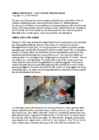
AMBER AND RUSSET - LATE COLOUR CHANGE GENES Copyright 2014, Sarah Hartwell The ancestors of the domestic cat were nondescript black/brown striped tabbies. Over the centuries, mutation produced a wide array of colours based on 2 different pigments. Eumelanin gives the blacks, browns and blues while phaeomelanin gives the reds, fawns and creams. A few other genes give further variations on those colours such silvers, colourpoints and solids/selfs. Mutations continue to occur and unexpected colours also turn up due to inbreeding where recessive genes, hidden for generations, start showing up. AMBER AND LIGHT AMBER During the 1990s, some purebred Norwegian Forest Cats in Sweden produced chocolate/lilac and cinnamon/fawn offspring. However, those colours are not found in the purebred Norwegian Forest Cat gene pool. Had the gene pool become polluted by someone, perhaps generations ago, breeding their Norwegian Forest Cat to another breed? ...
 annaabi.ee