Chaucer joined the twenty nine of them in a tavern and started to talk to them. They quickly became friends and then there were thirty. All of the stories and very different characters create a body to the story, which depicts the picture of the English society at that time. Chaucer depicts the knight as a typical hero. In my opinion he is making fun of him because he exaggerates describing his very polite manners and love for chivalry. He says that the knight had fought bravely for their country, was honest, polite and wise and had never in his life lost a battle. Chaucer also writes that the hero was a perfect gentleman and everyone thought only good things about him. But then he says that the clothes the knight wore were dull and beneath the shiny armour he was a simple man like everyone else. I think because at the time of writing chivalry was becoming less and less popular, Chaucer made fun of the knights and how they were honoured and he thought
7 do they have 8 hasn’t 9 have 6 2 ’s 3 has 4 ’s 5 ’s New P r e – I n t e r m e d i a t e FOURTH EDITION © Oxford University Press 2012 Unit 3 Test A 7 2 fluently 1 3 carefully 2 left 4 badly 3 arrived 5 bravely 4 walked 6 patiently 5 met 6 took 8 7 decided 2 badly 8 wanted 3 clearly 4 fast 2 5 late 2 Why did he leave England? 6 hard 3 When did you arrive at the camp
Jack is a very fast runner. Jack can run very fast. Ann is a hard worker. Ann works hard. Ann hardly ever works hard. The train was late. Tom got up late this morning. NB! hardly means very little, nearly not; hard means very much 7. Many adverbs end in -ly, because many adjectives can be made into adverbs by adding –ly. E.g. quick/quickly, slow/slowly, brave/bravely, careful/carefully, bad/badly: They didn’t go out because it was raining heavily. Colin was disappointed to see how badly his son had done at the exam. NB! At the same time there are some adjectives which end in –ly as well. The most common are friendly, lively, lovely, ugly, silly, cowardly: Nobody has ever been so friendly to me. (adjective) He greeted me in a most friendly manner. (adverb) I don’t like your cowardly behaviour. (adjective)
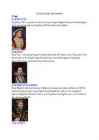
King William I, otherwise known as William the Conqueror was born in France on 1028. He became friendly with the current English King, Edward the Confessor. He invaded and attacked England on Edward's death, as he was promised the English crown, but then denied it by the Saxon Harold. King George VI King George VI did not expect to become king, he was the shy brother of Edward VIII who only took the thrown when Edward abdicated. King George VI ruled during World War two and bravely refused to leave London during the blitz. The two princesses; Elizabeth and Margaret, spent the war years in Windsor Castle away from harm. King Henry VI King Henry VI still holds the record for being the youngest king of England, it is unlikely that the record will be broken any time soon. He came to the thrown at just 9 months old. For the first 20 years of his life England and France were ruled by his uncles and advisors. King Stephen
- Constitution of Clarendon Becket was sent to exile Henry II's wife, Eleanor of Aquitaine, and his sons rose against him but failed His third son, Richard I, defeated Henry II in 1189 and became the King Richard I was a devoted Christian and a soldier - Massacres of Jews in London and York - Third Crusade - Married Berengaria of Navarre and became King of Cyprus - Received the nickname of Richard the Lionheart for fighting bravely for the rights of Christians While he was on the crusade and in caption, his brother John almost became the king but was stopped by the return of Richard who later named John as his heir due to having no children of his own Died in 1199 Richard the Lionheart on the Third Crusade In 1199 the throne was claimed by King John - Known by the nickname Lackland or as the enemy of Robin Hood - Married Isabella of Angoulême, whom he had
The witch hysteria The witch hysteria in Salem began in January 1692. It led to the deaths of more than 20. Altogether 19 people were executed by hanging. (In most of Europe witches were burned but in England and the North American colonies the punishment was hanging). Another man, 80 year old Giles Corey was pressed to death. He was accused of being a witch but before the trial could proceed he had to plead guilty or not guilty. Corey bravely refused to plead. To try and force him heavy weights were placed on him. The unfortunate man eventually died from this torture. (At one point his tongue was forced out of his mouth and the sheriff, George Corwin, pushed it back in with a cane). Furthermore four people died in prison while awaiting trial (Lyndia Dustin, Ann Foster, Sarah Osborne and Roger Toothaker). The witch mania began when two girls, 9 year old Betty Parris and her 11 year old cousin
It tells you about an action, or the way something is done. A lot of adverbs end in -ly. The baby is sleeping soundly. They laughed loudly. The dog is barking fiercely. Spelling File Alice skated beautifully. Adjective Adverb The Prince and the Princess beautiful beautifully lived happily ever after. brave bravely bright brightly The birds are singing sweetly. fierce fiercely It is raining heavily. happy happily The dog and the cat live heavy heavily together peacefully. loud loudly peaceful peacefully The soldiers fought bravely.
Of sleep, the fever racked her so; and we Had to sit up with her till daylight. ORGON How About Tartuffe? DORINE Gently inclined to slumber, He left the table, went into his room, Got himself straight into a good warm bed, And slept quite undisturbed until next morning. ORGON Poor man! DORINE At last she let us all persuade her, And got up courage to be bled; and then She was relieved at once. ORGON And how about Tartuffe? DORINE He plucked up courage properly, Bravely entrenched his soul against all evils, And to replace the blood that she had lost, He drank at breakfast four huge draughts of wine. ORGON Poor man! DORINE So now they both are doing well; And I'll go straightway and inform my mistress How pleased you are at her recovery. SCENE VI ORGON, CLEANTE CLEANTE Brother, she ridicules you to your face; And I, though I don't want to make you angry, Must tell you candidly that she's quite right. Was such infatuation ever heard of?
An admirable state of mankind, and that which they have not had wit enough to find out till this latter age. For, however Sir Robert Filmer seems to condemn the novelty of the contrary opinion, yet I believe it will be hard for him to find any other age, or country of the world, but this, which has asserted monarchy to be jure divino. He confesses that Heyward, Blackwood, Barclay, and others, that have bravely vindicated the right of kings in most points, never thought of this, but with one consent admitted the natural liberty and equality of mankind. By whom this doctrine came at first to be broached, and brought in fashion amongst us, and what sad effects it gave rise to, I leave to historians to relate, or to the memory of those, who were contemporaries with Sibthorp and Manwering, to recollect. My business at present is only to consider
of their winnings or share what they have gained in the Special World. T h e y may return to their starting point, the tribe or village, and bring back boons, elixirs, food, or knowledge to share with the rest of the group. Great cultural Heroes like M a r t i n Luther King or Gandhi gave their lives in pursuit of their ideals. HEROISM IN O T H E R A R C H E T Y P E S Sometimes the Hero archetype is not just manifested in the main character, the pro tagonist who bravely fights the bad guys and wins. T h e archetype can be manifested 32 HERO in other characters, when they act heroically. An unheroic character can grow to be heroic. T h e title character of Gunga Din begins as another archetype altogether, a trickster or clown, but by striving to be a Hero, and by sacrificing himself at a crucial
move toward it, it diminishes and grows smaller. It loses its hold ccc_tracy_12_222-248.qxd 6/23/03 3:39 PM Page 241 Live A Great Life ➤ 241 over you. But if you back away from a fear, it grows larger and soon takes control of your thoughts and feelings. When you habitually turn toward danger, do the thing you fear, face the fear, and move toward it bravely, it loses its power to affect you. Soon you dominate the fear rather than having it dominate you. You feel a tremendous sense of control. The quality that you need to face your fears, more than anything else, is the quality of self-discipline. Wonderfully enough, when you discipline yourself to face your fears, to act courageously, even when you don’t feel like it, your fear situation goes away
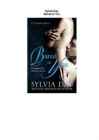
And what do you know about wild women anyway?" "I know some of them like hanging out with gay men. They like our perspective." His grin flashed. "I know a few other things, too. Hey...don't look so shocked, you two. I wanted to see if hetero sex lived up to the hype." Clearly this was news to Mark, but from the twitching of his lips, he was secure enough in their relationship to find the whole exchange amusing. "Oh?" "How'd that work out for you?" I asked bravely. Steven shrugged. "I don't want to say it's overrated, 'cause clearly I'm the wrong demographic and I had a very limited sampling, but I can do without." I thought it was very telling that Steven could relate his story in terms Mark worked with. They shared their careers with each other and listened, even though their chosen fields were miles apart. "Considering your present living arrangement," Mark said to him, catching up a stem of
The tide line was strewn with huge driftwood trees, bleached bone white in the salt waves, some piled together against the edge of the forest fringe, some lying solitary, just out of reach of the waves. There was a brisk wind coming off the waves, cool and briny. Pelicans floated on the swells while seagulls and a lone eagle wheeled above them. The clouds still circled the sky, threatening to invade at any moment, but for now the sun shone bravely in its halo of blue sky. We picked our way down to the beach, Mike leading the way to a ring of driftwood logs that had obviously been used for parties like ours before. There was a fire circle already in place, filled with black ashes. Eric and the boy I thought was named Ben gathered broken branches of driftwood from the drier piles against the forest edge, and soon had a teepee-shaped construction built atop the old cinders. "Have you ever seen a driftwood fire?" Mike asked me
word of the experimenter and obeyed to the end. (Milgram, 1963, p. 377) In addition to these observations, Milgram has provided even more convinc- ing evidence for the obedience-to-authority interpretation of his subjects' behav- ior. In a later experiment, for instance, he had the researcher and the victim switch scripts so that the researcher told the Teacher to stop delivering shocks to the victim, while the victim insisted bravely that the Teacher continue. The result couldn't have been clearer; 100 percent of the subjects refused to give one addi- tional shock when it was merely the fellow subject who demanded it. The identical finding appeared in another version of the experiment in which the researcher and fellow subject switched roles so that it was the researcher who was strapped into the chair and the fellow subject who ordered the Teacher to continue-over the
from Rennen-kampf's front struck hard at Samsonov's right; during the night, that wing was turned. Before dawn on the 27th, a hurricane barrage of artillery demoralized the hungry, tired troops of his left flank, and before noon they had fled the field without a single serious German infantry assault. Soon the realization penetrated to Samsonov that instead of the Russians crushing a retreating German Army, that army had in fact almost enveloped him. His XIII and XV Corps, in the center, fought bravely in the confused, surging struggle, but the frantic orders and cries for help that their radios squealed in clear were all heard by the Germans who, fully informed, could exploit a gap here, a movement there. Bit by bit the Germans drove in behind the two corps from both sides; soon the Russians found themselves fighting both front and rear. By the 30th, the Germans had encircled the corps with a ring of steel from which only 2,000 Russians escaped. This ended the battle: there
 annaabi.ee