11. And I (begin / already) .................................... to read the texts in my English textbooks again. 12. I (think) .................................. I (do) ............................ one unit every week. 13. My exam (be) .............................. on 15 May, so there (not / be) ................................. any time to be lost. 14. If I (pass) .............................. my exams successfully, I (start) .......................... an apprenticeship in September. 15. And after my apprenticeship, maybe I (go) ................................ back to London to work there for a while. 16. As you (see / can) ................................., I (become) ................................ a real London fan already. 1. I have been learning English for seven years now. 2. But last year I was not working hard enough for English, that's why my marks were not really that good then. 3
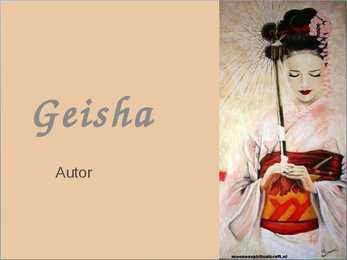
Geisha Autor Vocabulary Becoming a Geisha Appearance Geisha and prostitution Personal relationships and danna Vocabulary Geisha Maiko Okiya Ozashiki Onee-san Minarai Becoming a Geisha Apprenticeship: Strict Learning traditional arts Minarai Onee-san Ozashiki sit and observe ->potential clients Erikae White collar Hairstyle changes Maiko Minarai Appearance Makeup Most recognisable characteristics White base, red lipstick, red or black eyes and eyebrows Dress: kimono with obi and zoris and tabis Hair Hair-combs and hairpins No pillow wig zoris tabis Click to edit Master text styles Second level Third level
1771-1832 novelists. Scott wrote twenty-seven historical novels. Early Life o Was born August 15 1771 o Caught polio and survived. o Sent to Sandyknowe , his grandparents farm. o Taught to read and influenced by his aunt Jenny. o Given private tutoring by James Mitchell. o attended grammar school and met James Ballantyne. o At age 12, started studying at the University of Edinburgh. o Began an apprenticeship with his fathers office. o Later became a lawyer in Edinburgh. Literary Career launched Began to write at 25 by translating works from German. Became an ardent volunteer in yeomanry where he met Margaret Charlotte Charpentier in 1791 Had five children together Invested in money over time through various jobs and events. Founded a printing press with his poetry Succeeded in publishing numbers of poems over the next ten years. Novel Life
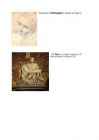
poet and architect. He was of noble birth, but was not raised by his parents. His father had him brought up by a stone carver and his wife, because his own wife was too ill to take care of the child. While living with his step-parents, young Michelangelo learned the skills that would serve him throughout his life, but his father was displeased when his son told him he wanted to be an artist, and it took much convincing for Michelangelo to be permitted to further his apprenticeship. Michelangelo went on to study sculpture at Medici gardens, where Leonardo da Vinci had also been taught. Following his sojourn at Medici gardens, Michelangelo went to Bologna, then to Rome, where he saw the impressive marble statues, which he would later echo in his own works. Upon his return, he set out to create his first complete sculpture, as statue of Mary holding Jesus' lifeless body, known as La Pietà. His first large scale commissioned
are taken when pupils are aged 11. Secondary school is for pupils aged 11-16. 11-13 years old pupils study a broad range of 10–15 subjects. No public examinations are taken during this time. Traditionally, at the age of 14 students start a programme that lasts for 2 years and during which time they study up to 11 subjects of their choice. After this students take GCSE state examinations After 16 attending at school isn't compulsory but pupils can stay at school, go to college, or take up an apprenticeship or a part-time training course. (((((They can earn money and learn new skills at the same time if they want to. )))) There are different types of school in the UK. Public schools where private education is gained in independent schools and these are fee-paying schools. And State schools provide state education, ((((schools are funded by the government or local education authorities.)))) Parents whose children go to State school do not pay directly for the cost of education.
KALARIPAYATTU • Originated as a style in southern India • The word kalari • Each warrior in the Sangam era received regular military training • One of the oldest fighting systems in existence • Originally practiced • The Sri Lankan martial art • Currently many other Indian states also practice this martial art MUSTI YUDDHA • Traditional South Asian form of boxing • Musti Yuddha term • Muki boxing from Varanasi • Panjab • Years of apprenticeship • Any part of the body may be targeted, exept the groin • Techniques incorporate • Boxers clothing • Matches SILAMBAM • Weapon-based Indian martial art • Silambam referred to the sound derive from swinging of the perambu a particular type of bamboo from the Kurinji hills in southern Indian sub continent • Named after its primary weapon • Nillaikalakki discipline • The styles differ from one another in grip, posture, foot
· Varma kalai KALARIPAYATTU · Originated as a style in southern India · The word kalari · Each warrior in the Sangam era received regular military training · One of the oldest fighting systems in existence · Originally practiced · The Sri Lankan martial art · Currently many other Indian states also practice this martial art MUSTI YUDDHA · Traditional South Asian form of boxing · Musti Yuddha term · Muki boxing from Varanasi · Panjab · Years of apprenticeship · Any part of the body may be targeted, exept the groin · Techniques incorporate · Boxers clothing · Matches SILAMBAM · Weapon-based Indian martial art · Silambam referred to the sound derive from swinging of the perambu a particular type of bamboo from the Kurinji hills in southern Indian sub continent · Named after its primary weapon · Nillaikalakki discipline · The styles differ from one another in grip, posture, foot
wife and family in the town of Settignano where his father owned a marble quarry and a small farm. Michelangelo once said to the biographer of artists Giorgio Vasari, "What little good I have within me came from the pure air of your native Arezzo and the chisels and hammers." Michelangelo's desire to become an artist was initially opposed by his father. After a period of grammatics studies with the humanist Francesco da Urbino, Michelangelo continued his apprenticeship in painting with Domenico Ghirlandaio and in sculpture with Bertoldo di Giovanni. Michelangelo's father managed to persuade Ghirlandaio to pay the young artist, which was unheard of at the time. In fact, most apprentices paid their masters for the education. Impressed, Domenico recommended him to the ruler of the city, Lorenzo de' Medici, and Michelangelo left his workshop in 1489. From 1490 to 1492, Michelangelo attended Lorenzo's school and was influenced by many
Carved stone decorated public buildings and private houses. The designs employed belong to the Gothic renaissance and Baroque periods. Windows were emphasized by slender piers and graceful curves. Armorial sheilds bespoke the pride of their owners. The monumental masons of Talliun were famous throughout northern Europe. Their carvings were in demand in Finland and other countries. The profession was highly organized. The masters constituted an exclusive guild. Boys served a three-year apprenticeship during which they were bound to a patricular master. If an apprentice ran away no other master could employ him. The next stage was that of journeyman. Its duration varied, but it came to an end when the candidate produced a master-work a small door, or window pillar, or circular wash-basin-which won the approval of 6-8 masters, Arent Passer a master mason from the Netherlands, exercised great influence on the local school of stone carving.
At present I am employed as a ....... By the local Tourist Office, a position I have held for three years. In the course of my present job , I have been responsible for planning and organisation of ..... My duties have included secretarial work as well as . . . I graduated in Business Administration from Dundee University in 1990. I was employed as a cashier with Barclays Bank from 1988 to 1992. I attended the Lycee Paul Bert , where I obtained the baccalaureate in 1989. During my apprenticeship I obtained practical training in all aspects of the catering trade. l am used to working under pressure / working to a deadline / working as a part of a team. I am familiar with Word for Windows / recent developments in the industry..... . I also have some knowledge of accountancy , having kept the books for my father's business............. PARAGRAPH 3 I believe the post you offer will give me the opportunity to . . .
Charlotte Female 26 Canadian Bachelors Koh Phangan 3 Eric Male 35 French High school drop-out Koh Phangan 5 Laura Female 28 Canadian High school degree Koh Phangan 6 Thomas Male 29 English Bachelors Koh Phangan 3 Barry Male 32 English High school degree Koh Phangan 3 Max Male 40 English Apprenticeship Koh Phangan 17 Steph Female 23 Australian High school degree Koh Phangan 3 Simon Male 50 Swiss Apprenticeship Koh Phangan 10 Jackie Female 26 English Bachelors Koh Phangan 3 Kat Female 30 Australian Masters Koh Phangan 8 Anna Female 25 English Masters Koh Phangan 3
Commons (Members of Parliament) are directly elected by eligible voters in the Canadian populace. The House of Commons is the dominant branch of parliament; the Senate and Crown rarely oppose its will. The Senate, thus, just reviews legislation from their viewpoint. 42. Education in Canada. 11-13 years of comprehensive and secondary education, depending on the region. After high school students can either embark on different educational paths: Apprenticeship – Vocational & Technical Training (1-4 years) College diploma 1-4 years Bachelor’s degree 3-4 years, which can be followed by a 1-3 year Master’s program and an at least 3-year-long Doctorate program. The French speaking Quebec has a slightly more complex system for pre-work trainings, but the university system is quite similar. 43. USA – early settlers.
Mrs. Sowerberry. Mr. Bumble and the man in white waistcoat were horrified, and Noah exclaimed that Oliver had intended to murder Mr. Sowerberry also. Mr. Bumble went with Noah to thrash Oliver and when they arrived, Mrs. Sowerberry had locked Oliver in the cellar. Mr. Bumble spoke sharply to Oliver and told Mrs. Sowerberry that she had been feeding the boy to liberally and that he should be kept on gruel for the rest of his apprenticeship. Mr. Bumble then stated that Oliver had come from a bad family, which angered Oliver again. Mr. Sowerberry arrives home asks Oliver what happened. Oliver tells him that Noah said bad things about his mother, and Mrs. Sowerberry began insulting her 1 again. She then burst into tears because Oliver was talking back to her, and this forced Mr. Sowerberry to punish Oliver severely
Sometimes just taking the time to discuss things with troubled people is a great favor and aid. I don't have much surplus money to give to worthy causes, yet donate my time freely. I don't pretend to be able to educate in general -- but do know enough about plant life in Seattle to be valuable teaching that. I suppose I could share my plant knowledge with a single student, or several, and it wouldn't make much difference to me. The whole role of apprenticeship and master-apprentice needs to be expanded beyond its present confines of carpentry, masonry, electricity, and the like. It is true all of us are genetically capable of only so much; that our upbringing and education can be the same yet we turn out differently because of our genes. Well, how should you or I raise kids? Or if we don't want to be parents, how do we help educate children in general? Most mature adults feel a responsibility to both self-education and assisting others; the
World War II, leaving the Plougastel Bridge (1930) over the River Elon at Brest, with three spans of 567ft (173m), as the longest reinforced concrete arch span until 1942. Swiss engineer Robert Maillart designed three-hinged arches in which the deck and the arch ribs were combined to produce closely integrated structures that evolved into stiffened arches of very thin reinforced concrete and concrete slabs, as at the Schwandbach Bridge (1933), near Schwarzenbach (Switzerland). Maillart's early apprenticeship with Hennebique sharpened his awareness of the plastic character of the material. His profound understanding of reinforced concrete allowed him to develop new, light, and magnificently sculptural forms. Maillart's bridges are of two distinct types: stiffened-slab arches and three-hinged arches with an integrated road slab. The 295ft (90m) Salginatobel Bridge (1930) near Schiers (Switzerland) is the most spectacular and classic example of this type in the world.
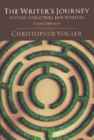
These stories teach us that not 121 T H E W R I T E R ' S JOURNEY ~ T H I R D EDITION Christopher Vogler all M e n t o r s are to be trusted, and that it's healthy to question a Mentor's motives. It's one way to distinguish good from bad advice. M e n t o r s sometimes disappoint the heroes who have admired them during apprenticeship. In Mr. Smith Goes to Washington, Jimmy Stewart learns that his Mentor and role model, the noble Senator played by Claude Rains, is as crooked and cowardly as the rest of Congress. Mentors, like parents, may have a hard time letting go of their charges. An overprotective M e n t o r can lead to a tragic situation. T h e character of Svengali from the novel Trilby is a chilling portrait of a M e n t o r who becomes so obsessed with his student that he dooms them both.
the pieces of a jigsaw puzzle. We were just a few then in Room 2646, young people who gave ourselves to cryptography with the same ascetic j;' devotion with which young men enter a monastery. It ';•: was known to everyone that the secrecy of our work '! would prevent the ordinary recognition accorded to other accomplishments. It was then that I first learned that intelligence work, like virtue, is its own reward. On completion of his apprenticeship, Zacharias took charge of an intercept post on the fourth floor of the American consulate in Shanghai to learn as much as he could from Japanese naval messages. Safford returned to cryptology in June, 1929, and, except for a four-year tour at sea from 1932 to 1936, stayed with the science from then on. He built up the communications intelligence organization into what later became OP- 20-G and, by adding improvements of his own to Edward Hebern's rotor
 annaabi.ee