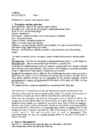
law and procedural law. 7. Classification of courts (general) Jurisdiction – the authority of a court or official organization to make decisions and judgments Adjudicate – the process of making an official decision about something Dispute – disagreement Commit a crime – to do something illegal Wrongdoer – a person who does something bad or illegal Court of first instance – a place where a legal case is heard for the first time Appellate courts – a court to which a person can apply to have the decision of a lower court reviewed Appeal – to apply to a higher court to have the decision of a lower court reviewed Civil law – the part of the legal system that relates to personal matters, such as marriage and property, rather than crime Criminal law – part of the legal system that relates to punishing people who break the law There are various ways to classify courts.
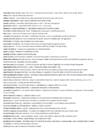
to sue somebody (kedagi kohtusse kaebama) - to file a lawsuit agains someone who commited a crime to be impartial (erapooletu) - to treat rivals or disputants equally to prove quilt (süüd tõestama) - to demonstrate the truth of that someone has commited a special offence or crime to transfer (ülekandma) - to move, carry or transport from one person or place to another original court (algupärane kohus, I astme kohus) - the court where case is heard for the first time appellate court (apellatsioonikohus) - higher level court which hears the appeals from orginal court jurisdiction (kohtualluvus) - the power or authority to decide legal cases criminal matter (kriminaal asi) - wrongful act that is considered unacceptable and described in Penal Code to adjudicate on the dispute (kohtuotsust langetama konflikti kohta) - judicially making a decision about who is right amount of the claim (nõude summa) - amount payable on the maturity of a policy or when a claim is raised
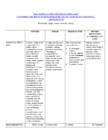
number of clients. number of clients In germany they take only to exams to enter the general assembly of prosecutors, bar of association, chamber of notaries or association of judges 31 - 32 1. Original court (maakohus) - trial court, the first level of the court, where the cases are tried; county court 2. Appellate court (ringkonnakohus) – courts, which are responsible for hearing and reviewing appeals from legal cases that have already been heard in a trial-level or another lower court. 3. Jurisdiction (jurisdiktsioon)- the official power to make legal decisions and judgements. 4. To exercise jurisdiction - to apply the official power to make legal decisions and judgements 5. Amount of a claim – the sum of money a. Main claim 2000 euros
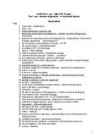
5 210. administrative courts halduskohtud 211. circuit court ringkonnakohus 212. the Supreme Court (national court) riigikohus 213. court of first instance esimese astme kohus 214. offence matters seadusrikkumiste asjad 215. tried in court menetletakse kohtus 216. at the request of the parties poolte nõudmisel 217. lay judge rahvakohtunik 218. exclusively appellate courts eranditult apellatsioonikohtud 219. review judgements vaatavad üle kohtuotsused 220. by way of appeal proceedings apellatsioonimenetluse teel 221. divided into chambers jagatud kambritesse 222. respectively vastavalt 223. handling criminal offence matters käsitleb kriminaalkuritegusid 224. in panels of at least three judges vähemalt kolmest kohtunikust koosnevas paneelis 225. en banc - (kohtunikekogu) täies koosseisus 226
Criminal and civil procedure are different. Although some systems, including the English, allow a private citizen to bring a criminal prosecution against another citizen, criminal actions are nearly always started by the state. Civil actions, on the other hand, are usually started by individuals. This was a short overview of criminal procedures, thank you for listening. Terms to explain Original court the court in which the case is first heard ( Appellate court - any court of law that is empowered to hear an appeal of a trial court or other lower tribunal To exercise jurisdiction to make and deal with especially legal decisions (you are authorized by legislation) European Court of Justice - the highest court of the European Union, in which they solve only problems related to EU law. A recovery of a debt paying back the money you own sb Arbitration - a legal technique for the resolution of disputes outside the courts by an expert.
 annaabi.ee