Lad a dog by Albert Payson Terhune Albert Payson Terhune (December 21, 1872 February 18, 1942) was born in New Jersey. He was an American author, dog breeder, and journalist. He is best known for his novels relating the adventures of his beloved collies and as a breeder of collies at his Sunnybank Kennels, the lines of which still exist in today's Rough Collies. This was a book about dogs-collies. It talked about a dog and his best mate on adventure journals. There were a Lad and a Lady. Page 11 Chapter 1 His mate Leedi oli suur osa Lad´i igapäevasest õnnest nagu päikesepaiste. Ta paistis olevat küllaltki suurepärane ja täiesti asendamatu. Ta ei suutnud kujutada oma edasist elu ilma koerata naga elu ilma päikeseta. Ta ei kahtlustanud kunagi et koer oleks oleks või...
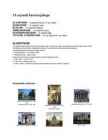
Juugend Prerafaeliidid. William Morris (18341896). William Morris (18341896). Initsiaalid raamatust "The water of the Dante Gabriel Rossetti (18281882). Tikitud padi. Wondrous Isles".1897. William Morris (18341896). William Holman Hunt (18271910). John Millais (18291896). Kuninganna Guinevere. 1857. Claudio ja Isabella. 1850. Kaunitar. Elizabeth Siddal (18291862) Edward BurneJones (18331898). Edward BurneJones (18331898). Leedi Clare. 1857 Ingel. Merlini pettus. 1874. Juugendi maalikunst
waist (n) wallpaper (n) wardrobe (n) waterfall (n) weapon (n) wear on (phr v) wearable (adj) webbed feet (n) welfare (n unc) well-being (n unc) western (n) wet-suit (n) whale (n) wheelchair (n) when it comes to (phr) whet your appetite (for) (idm) 31 whip out (v) whistle (n) white lie (n) wholeheartedly (adv) widespread (adj) wig (n) wilderness (n) windscreen (n) wing (n) wipe (v) wisdom (n unc) witch (n) with your bare hands (phr) withstand (v) witness (n) wondrous (adj) woods (n pl) word of caution (phr) work out (phr v) worm (n) worth (adj) worthwhile (adj) wounded (adj) wrap (v) wrestle (n) wrist (n) writer’s block (n) yoghurt (n) youngster (n) 32
ascents" to meet with the "sky gods". Many of the accounts of ritualistic initiation bare striking parallels to modern day UFO contacted and abduction lore. The aboriginal shamanistic "experience of death and rising again" in the initiation of tribal "men of high degree" finds some fascinating parallels with modern day UFO abduction lore. The "chosen one" (either voluntarily or spontaneously) is set upon by "spirits", ritualistically "killed", and then experiences a wondrous journey (generally an aerial ascent to a strange realm) to met the "sky god." He is restored to life -- a new life as the tribal shaman. Society Aboriginal Australians were social beings who lived in a number of social groups sometimes called bands, clans, sub-tribes and tribes, but essentially in a family or kinship group who were 1) of the same blood-line and 2) were related to other people through totems. The larger social unit known as
HORATIO Propose the oath, my lord. HAMLET Never to speak of this that you have seen, Swear by my sword. Ghost [Beneath] Swear. HAMLET Hic et ubique? then we'll shift our ground. Come hither, gentlemen, And lay your hands again upon my sword: Never to speak of this that you have heard, Swear by my sword. Ghost [Beneath] Swear. HAMLET Well said, old mole! canst work i' the earth so fast? A worthy pioner! Once more remove, good friends. HORATIO O day and night, but this is wondrous strange! HAMLET 46 And therefore as a stranger give it welcome. There are more things in heaven and earth, Horatio, Than are dreamt of in your philosophy. But come; Here, as before, never, so help you mercy, How strange or odd soe'er I bear myself, As I perchance hereafter shall think meet To put an antic disposition on, That you, at such times seeing me, never shall, With arms encumber'd thus, or this headshake,
forms come and go. The dreamer is not the person. The person is part of the dream. The dreamer is the substratum in which the dream appears, that which makes the dream possible. It is the absolute behind the relative, the timeless behind time, the consciousness in and behind form. The dreamer is consciousness itself – who you are. To awaken within the dream is our purpose now. When we are awake within the dream, the ego-created earth-drama comes to an end and a more benign and wondrous dream arises. This is the new earth. GOING BEYOND LIMITATION In each person's life there comes a time when he or she pursues growth and expansion on the level of form. This is when you strive to overcome limitation such as physical weakness or financial scarcity, when you acquire new skills and knowledge, or through creative action bring something new into this world that is life-enhancing for yourself as well as others
Russell proceeds precisely by sketching the truth conditions of sentences containing descriptions and arguing on various grounds that they are the correct truth conditions. But more of Russell in the next section. Davidson begins with two ideas that prove to be related. One is that a theory of meaning should afford guidance on what determines the mean- ing of a particular sentence. The other is that of giving central importance to the wondrous phenomenon with which this book began: our ability to understand long novel sentences in a flash. Focusing on the first idea, he asks how one might give a "theory of meaning for" a particular language--not a general theory of meaning in our philosophical sense, but a theory of English or of Chinese or of Kwakiutl--that specified the particular meanings of that language's sentences taken one by one. What form might such a theory take? Davidson offers and motivates sev-
 annaabi.ee