dropped items. They will even stop playing to help. Their sense of fairness begins young. Even if an experiment is unfairly rigged so that one child receives more rewards, they will ensure a reward is fairly split. Children show 'proactive' kindness, unlike our close relatives (Credit: Thinkstock) Children show 'proactive' kindness, unlike our close relatives (Credit: Thinkstock) We know that chimpanzees also work together and share food in apparently unselfish ways. However, Michael Tomasello of the Max Planck institute for Evolutionary Anthropology in Leipzig, Germany, says they will only cooperate if there is something in it for them. "Humans do that too, but in addition they care about what their partner gets. In some experiments we have children as young as 14-18 months who seem to expect their partner to collaborate in certain ways and who share in ways chimps don't." Human children are less selective about who they share with
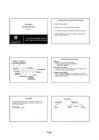
behaviour/personality as escape from `deficiency' · Aesthetic D motives - Symmetry, order, beauty · But humans do things for positive purposes · Cognitive humans seek positive, enriching experiences - knowing, understanding, exploring curiosity, unselfish giving of love · Esteem B motives - Competence, approval, recognition; self and others · Devised a hierarchy of needs · Belongingness and love strive for higher ones... - Affiliation and acceptance similar to Roger's positive regard ..
Esimese argumendi vastu : Ka head tehes lähtub inimene oma soovist, s.o. sellest, mida ta tahab. ·Ei ole tõsi, et inimene kõike, mida ta teeb, ka tahab teha. Paljusid asju teeme sest see on vahend, et saavutada mingit eesmärki (hambaarsti külastus). ·On asju, mida me teeme sellepärast, et me tunneme end olevat kohustatud neid tegema. ·Isegi kui inimene annab midagi teistele ära oma soovist lähtudes, ei tähenda see, et ta on isekas (selfish). Mis siis veel on isetu (unselfish), kui mitte teistele andmine? ·Tuleb teha vahet, MIDA inimene tahab? Kas mõtleb oma enda hüvedele ja ei hooli üldse teiste heaolust, siis on isekas. Kui tahab, et teised oleks õnnelikud ja toimib selle soovi ajel, siis pole isekas. Teise argumendi vastu: Nn "omakasupüüdmatud" toimingud tekitavad inimestes endaga rahulolu (puhas südametunnistus, rahulik uni, häbi). ·Küsigem, miks inimene tunneb heast toimingust rahulolu? Vastus: sest on teatud tüüpi inimene - isetu, mitte isekas.
debatable. *St Patric and the Christianization of Ireland was a Christian missionary and is the patron saint of Ireland. Legend says that Patrick tought the Irish about the concept of the Trinity by showing people the shamrock, a 3-leaved clover. The christianization of Ireland began in the fourth century AD, before the arrival of St Patrick, but it was not until Patrick arrived that Christianity was firmly planted. He was a leader of deep piety, humility, simplicity and unselfish devotion. *St Columba and the Irish Christian mission to Iona Columba, who had the potential to become a king in Ireland, instead, chose to give his full service to the mission of God. Columba is credited as being a leading figure in bringing the living in monasteries into life again. Iona is a small island in Scotland, where Columba settled and founded a monastery on it. From there he set about the conversion of pagan Scotland and much of northern England to Christianity
the school because that is what school is judged upon on and that’s how they see what standards we have at school. but what we are saying is that we are preparing our children for the longer term in education journey compact with rights compact with global citizenship education… emm yes we do teach our children the literacy and numeracy skills and the academic aspect of it , we are preparing these children to learn for the longer term journey and so it`s almost like emm unselfish way of learning because we are not so much interested… yes we are interested of their outcomes but more importantly is how these children develop later on in their life, so we are giving them rounded, holistic approach to education and in primary school ensuring that they have a good start good base to look from and hopefully they will fly as they go on from here emm that’s what I think Gerli: emm I am almost finished, one of the things I would like to ask is are citizenship
required, a keyword that could easily be remembered and changed, great simplicity of operation—commended it as a field cipher. Play-fair suggested that it be used as just that in the impending Crimean War when he brought it up at the dinner with Prince Albert. No evidence exists that it was used then, but there are reports that it served in the Boer War. Britain's War Office apparently kept it secret because it had adopted the cipher as the British Army's field system. Playfair's unselfish proselytizing for his friend's system unwittingly cheated Wheatstone of his cryptographic heritage; though Playfair never claimed the invention as his own, it came to be known in the War Office as Playfair's Cipher, and his name has stuck to it to this day. Five years later, an American who at the time was working for a stove and foundry firm glanced briefly at cryp-tology and produced a single short piece of work. It opened important new vistas into untrodden
 annaabi.ee