Oht seisneb selles, et oksüdeerumise käigus võib vein muutuda maitsetuks vedelikuks või koguni äädikaks. Veini laagerdumisel on oluline roll happelisusel, mis aeglustab oksüdeerumismuutusi ja hoiab veini värskena. Valge veini puhul avaldub aja toime värvi tumenemises sidrunikollasest kuldkollaseks ja lõpuks merevaigukollaseks. Punase veini puhul on protsess vastupidine: aja jooksul muutub see sügavpurpursest rubiinpunaseks, seejärel mahagonipunaseks ja lõpuks pruunikaspunaseks (tawny). Kasutatud kirjandus: http://www.minuvine.ee/veinijutt/ http://et.wikipedia.org/wiki/Veini_valmistamine Aitäh!
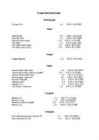
00 / 297.29 EEK Sampanja Moet & Chandon brut 20 cl 17.00 / 265.99 EEK Moet & Chandon brut 75 cl 64.00 / 1001.38 EEK Dom Perignon 75 cl 211.00 / 3301.43 EEK Krug Grande Cuvee 75 cl 230.10 / 3600.28 EEK Portvein Osborne 10 y.o. tawny 8 cl 4.50 / 70.41 EEK Osborne tawny port 8 cl 3.50 / 54.76 EEK Serri Osborne Sherry 8 cl 3.00 / 46.94 EEK Vermutid Martini Bianco 8 cl 3.00 / 46.94 EEK Martini Extra Dry 8 cl 3.00 / 46.94 EEK
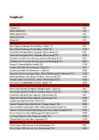
Martini Prosecco 12cl 4,00 Martini Prosecco 75cl 25,00 Pinot Brut Spumante,NV Fontanafredda, Piemonte /(Itaalia) 75cl 25,00 Freixenet Carta Nevada Brut/ Semi-seco/Rosado-seco 20cl 6,50 Portvein EUR Taylor Late Bottled Vintage 2000 8cl 6,50 Taylor 10 YO Tawny 8cl 8,80 Dessertvein EUR Torres Moscatel Oro 8cl 4,70 Konjak, kalvados ja brändi EUR Camus VSOP Elegance 4cl 6,50 Martell VSOP 4cl 6,30 Gran Garvey Solera Reserve 4cl 3,00
Oht seisneb selles, et oksüdeerumise käigus võib vein muutuda maitsetuks vedelikuks või koguni äädikaks. Veini laagerdumisel on oluline roll happelisusel, mis aeglustab oksüdeerumismuutusi ja hoiab veini värskena. Valge veini puhul avaldub aja toime värvi tumenemises sidrunikollasest kuldkollaseks ja lõpuks merevaigukollaseks. Punase veini puhul on protsess vastupidine: aja jooksul muutub see sügavpurpursest rubiinpunaseks, seejärel mahagonipunaseks ja lõpuks pruunikaspunaseks (tawny). Mõlemal juhul näitab veini pruun värv, et protsess on jõudnud liiga kaugele ja vein on oksüdeerunud, kui pole tegemist kangestatud veiniga, mille puhul pruun värv võib olla vastuvõetav. 18 6. SERVEERIMISE NÕUDED 6.1. Veiniklaasid Enamikele veinidele on kasvatuspiirkondades leitud klaasitüüp, mis sobib kohaliku veiniga kõige paremini. Enim levinud klaasitüübid on ka nimetatud nende kuulsate piirkondade järgi
68 °C aastakäigu sampanja, rosésampanja, värske rosévein, kerge noor valge vein 911 °C Chablis, Chardonnay, tammevaadis arendatud valged veinid, noored valged dessertveinid, fino serri 1012 °C tammevaadis arendatud vanemad valged veinid, täidlane rosévein toidu kõrvale 1214 °C punased dessertveinid, valge port, magus serri, madeira, marsala 1315 °C värsked, kerged ja noored punaveinid 1618 °C tammevaadis arendatud punaveinid, Tawny port, vintage port Madalam serveerimistemperatuur võimendab veinis happelisust ja parkhappesust, kõrgem temperatuur võimendab puuviljasust, parkhapped pehmenevad, alkohol muutub agressiivsemaks. VEINIKLAASID: Vahuveiniklaas pikk kitsas keha Chardonnay klaas (valge veini klaas) Bordeaux klaasi vähendatud variant Bordeaux klaas pikk mahukas keha, kergelt kitsenev Burgundia klaas lai kellukesekujuline keha, tugevalt kitsenev Dessertveini klaas väike, suht kitsa avaga
American registries like to add "mink" after the Tonkinese colours whereas British registries use the same name for that colour as is used in the equivalent Siamese or Burmese colour. Confused? Don't worry - there are some cross- reference tables later on! The jet-black colour you known as "black" is called "ebony" and "ebony tabby" in Orientals, "black" in solid coloured domestic shorthairs, "brown" when it refers to brown tabby domestic shorthairs, "bronze" in Egyptian Maus, "tawny" in Ocicats and "ruddy" in Abyssinians. In colour-pointed cats, "black" is called "seal". In Burmese it is "sable" or "seal sepia" and in American Tonkinese it is "cinnamon" or "natural mink". In the Asian breed (self Burmese cats) it has a breed name to itself "Bombay". Shaded silvers, black smokes and chinchilla cats may look various shades of grey or silver, but they are black cats with silver roots to their fur. Add dilution and it becomes "blue". Modify the dilution and it becomes
And some version of the CausalHistorical Theory characterizes their refer- ring use. This view sharply opposed a long-held Descriptivist theory of naturalkind terms, which associated each such term with a descriptive stereotype. For example, "water" would have been analyzed as meaning something like "a clear, odorless, tasteless potable liquid that falls from the sky as rain and fills lakes and streams," and "tiger" as something like "a ferocious, carnivorous jungle feline, tawny with distinctive black stripes." Kripke and Putnam urged modal arguments against such analyses, similar to objection 3 from the pre- vious chapter and to the rigidity argument that began this one. For example, there could have been water even if there had never been rain, lakes or streams, and under different circumstances water might have had an odor or a taste. Tigers might have been born tame, and we might even find out that no tiger
"I thought you were supposed to be pretending I don't exist, not irritating me to death." "That was for Tyler's sake, not mine. I had to give him his chance." He snickered. "You..." I gasped. I couldn't think of a bad enough word. It felt like the heat of my anger should physically burn him, but he only seemed more amused. "And I'm not pretending you don't exist," he continued. "So you are trying to irritate me to death? Since Tyler's van didn't do the job?" Anger flashed in his tawny eyes. His lips pressed into a hard line, all signs of humor gone. "Bella, you are utterly absurd," he said, his low voice cold. My palms tingled -- I wanted so badly to hit something. I was surprised at myself. I was usually a nonviolent person. I turned my back and started to walk away. "Wait," he called. I kept walking, sloshing angrily through the rain. But he was next to me, easily keeping pace. "I'm sorry, that was rude," he said as we walked. I ignored him
 annaabi.ee