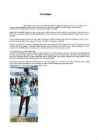
Petra Majdic was born on December 22, 1979 in Ljubljana, Yugoslavia. She is an Olympic cross country skiing specilizing in the women's individual sprint discipline. Majdic is representing her home country of Slovenia in the 2010 Winter Olympics in .Vancouver, British Columbia Majdic has made 169 World Cup starts in her career, with 15 victories and 31 podiums to her credit. In her first start on the circuit on January 9, 1999, she finished 69th of 75 skiers in a 10 km cross country event held in Nove Mesto, Czech Republic. Her first podium came just over two years later on February 1, 2001 n Asiago, Italy when she placed third in the 1.5 km sprint event.10Her first victory came on December 1, 2007 in Kuusamo, Finland.11 She also has made 17 World Ski Championships starts in her career with one podium to her credit. That came when she finished second in Sapporo, Japan
Olympic Games · The first Winter Olympics was held in Chamonix, France, in 1924. · It was organized by the French Olympic Committee. · Winter Olympics medal table (1924): Winter Games · Alpine skiing · Cross-country skiing · Figure skating · Ice hockey · Ski jumping · Speed skating · Short track speed skating · Freestyle skiing Estonian's famous cross-country skiers Kristina Smigun-Vähi Torino 2006 Andrus Veerpalu Salt Lake City 2002 Torino 2006 Future Raido Ränkel Triin Ojaste Click to edit Master text styles Second level Third level Fourth level Fifth level
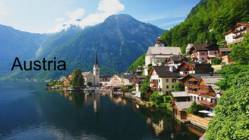
Austria Austria Mountainous landscapes.charming villages,and a passion for coffee and cake are just a handful of reasons why paying a visit to Austria is a must for those hoping to travel to europe one day. Winter sport The Alps surrounding Austria provide a skiers paradise .Many natives and tourists head the hills at least once a year to partake in a little gliding ,slipping ,and sliding Hotels are not very expensive there.Three nights will cost the 130 eurot. Airplane prices for austria Back and forth is a 90 eurot by person . The flight lasts 1 hour Austria by car From Häädemeeste 24hours 1700 km To drive there it takes around 100 liters gas.
it`s doors in 1632. Through Tartu flows the second biggest river in Estonia, Suur Emajõgi ( Big Mother River). Pärnu is the summer capital of Estonia. It is located in south west Estonia on the coast of Pärnu bay. Pärnu is popular with the tourists for its spas and beautiful beaches. Otepää is known as the winter capital of Estonia. With its hilly terrain it is the perfect place for winter sports. There are many tracks for snowboarders, mountain and cross country skiers. Not far from Otepää is the highest mountain in the Baltic states - Suur Munamägi. Yet another big city in Estonia is Kohtla- Järve. Kohtla- Järve is an industrial city near the eastern border of Estonia. It is known for its chemical industry. But there are also other industries, for example metal -, furniture - and building material producers.
Olympic Sport Fact Sheet Name of sport-- Cross-country skiing Country of origin-- Norway Rules of the sport-- Racers use two basic techniques in cross-country skiing: classic technique, where the skis move parallel to each other through machine-groomed tracks in the snow, and free technique, where skiers propel themselves in a manner similar to speed skating, pushing off with the edge of their skis. Free technique uses shorter skis and is slightly faster than classic -- on average about eight per cent faster over an entire race distance. When did your sport enter the Olympics?-- In 1924 How do people participate in this sport at the Olympics (is it an individual, or a team sport)?-- It's an individual sport. What equipment is needed to participate in this sport
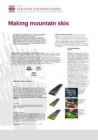
One of the usually hickory or ash, steel edges were introduced on the bottom for drawbacks of the polyethylene base is its softness, and with time the ski can smoother glide, but the depletion of inexpensive wood meant a need for become scratched by small stones and ice. A polyethylene candle is used by product development and usage of modern materials. Metal skis became skiers and ski repair technicians to patch such scratches on the base. Also common in the mid-1950s. The light metal was sandwiched around a wooden core and fused by glue and heat, but this aluminum bottom froze because of its chemical nature, polyethylene is easily broken down by easily and was not the best solution. ultraviolet rays
Estonian athletes took part of the Olympic Games until the country was annexed by the Soviet Union in 1940. The 1980 Summer Olympics Sailing regatta was held in the capital city Tallinn. After regaining independence in 1991, Estonia has participated in all Olympics. Estonia has won most of its medals in athletics, weightlifting, wrestling and cross-country skiing. The list of notable Estonian athletes include wrestlers Kristjan Palusalu, Voldemar Väli and Georg Lurich, skiers Andrus Veerpalu and Kristina Smigun-Vähi, decathlonist Erki Nool, tennis player Kaia Kanepi, cyclists Jaan Kirsipuu and Erika Salumäe and discus throwers Gerd Kanter and Aleksander Tammert. culture Traditionally, Estonia has been seen as an area of rivalry between western and eastern Europe on many levels.The Estonian Academy of Arts (Estonian: Eesti Kunstiakadeemia, EKA) is providing higher education in art, design, architecture, media, art history
who has competed since 1994. He won a bronze in the 15km event at the 2002 Winter Olympics in Salt Lake City. Mae won a silver medal in the 15km event at the 2003 FIS Nordic World Ski Championships in Val di Fiemme. He has also finished 5th at the 2006 Winter Olympics and 5th at the FIS Nordic World Ski Championships 2009. Kristina Smigun-Vähi (born February 23, 1977 in Tartu) is an Estonian cross- country skier. Her parents, Anatoli Smigun and Rutt Rehemaa were both prominent Nordic skiers. Kristina Smigun is coached by her father. On February 12, 2006, she won the Winter Olympics gold medal for the 7.5 km + 7.5 km double pursuit, becoming the first Estonian woman to win a medal at the Winter Olympics. Four days later, she won a second gold medal in the 10 km classical. Smigun-Vähi has also found success at the FIS Nordic World Ski Championships, earning six medals. This included one gold (2003: 5 km + 5 km double pursuit), three silvers (1999:
The next Winter Olympics are held in Torino in 2006. The most important event in these Olympics for Estonians is cross-country skiing. It is the art of gliding over snow. There are three types of it alpine skiing, freestyle skiing and cross-country skiing. Alpine skiing is downhill skiing. Skiing has been popular in Nordic countries for a long time. Finns used ski patrols in World War II. Skiing is also popular in Estonia. Especially cross-country skiing. We have some very good skiers. There are three good men who are Jaak Mae, Andrus Veerpalu and Raul Olle who skis longer distances. We also have a world-class female skier Kristina Smigun. They have won many medals. Football and basketball are also popular sports among Estonians. Many children go to football trainings but there are no world-famous footballers in Estonia. Mart Poom is the most well-known because he plays in the English Premiership and that league has very many viewers and fans
held there, the host city must also have at least 2 outdoor stadiums for figure skating, speed skating and ice-hockey. Skilled workers establish ski-runs for the cross-country, downhill, freestyle and slalom competitions. There must also be two ski-jumps near the host city. The most famous cross-country skier in Estonia are Andrus Veerpalu and Kristina Smigun. The Winter Olympic Games in Turin in 2006 were very successful for Estonia's cross-country skiers: Andrus Veerpalu won the gold medal in the men's 15 km classic-style cross-country skiing race. With Turin Olympics Andrus Veerpalu became double Olympic champion since he placed 1st in the same event in 2002 at the Salt Lake City Olympic Games. Winter sports made their Olympic debut at the Summer Games in London in 1908. Figure skating competitions were organised for men, women and pairs. The experience was repeated at the Antwerp Games in 1920, along with an ice hockey tournament
raise the art of dance to the same professional level as other kinds of art. In addition to Estonian groups, other groups from abroad participate in the final event of the festival. The Tartu ski marathon in the worldloppet series Every year, the Worldloppet Ski Federation promotes crosscountry skiing marathons in fourteen countries. Founded in Sweden in 1978, Worldloppet incorporates one top race from each member country. Skiers that complete at least 10 Worldloppet races, including one overseas, if not all 14, become Masters. There are currently over 2400 Masters, some of whom have completed the circuit multiple times. Each race with its own personality and traditions has options for everyone, from 79km races to 5km sprints mingling elite and beginners skiers to create an atmosphere of camaraderie and festivity. Tallinn Old Town Days
south, that includes the Algarve and the Alentejo regions, is characterized by rolling plains. Portugal's highest peak is the similarly named Mount Pico on the island of Pico in the Azores. This ancient volcano, which measures 2,351 m (7,713 ft) is a highly iconic symbol of the Azores, while the Serra da Estrela on the mainland (the summit being 1,991 m (6,532 ft) above sea level) is an important seasonal attraction for skiers and winter sports enthusiasts. The archipelagos of Madeira and the Azores are scattered within the Atlantic Ocean: the Azores straddling the Mid-Atlantic Ridge on a tectonic triple junction, and Madeira along a range formed by in-plate hotspot geology (much like the Hawaiian Islands). Geologically, these islands were formed by volcanic and seismic events, although the last terrestrial volcanic eruption occurred in 195758 (Capelinhos) and minor earthquakes occur
 annaabi.ee