21.09.2008 Dear Sir Brown I'm writing for you because I'm dissatisfied about the success rate in this year's examinations. I read your report and it leaves me an explicit and clear message the standards are falling and noone tries itselfs best anymore. Years ago it was very difficult to pass an exam, it was hard for us and only few of us could do it so I have to agree with your sayings. None of them worked hard I guess, they just walk in school from door to door and they think that they can just achieve theirs purposes like that. They need some experiences and things which can give them something to learn. In the future, they can't just celebrate and walk on air every day. They have to face difficulties and learn that somethimes there are hard times in everyone's life. Having done the exams and they're celebrating and being proud of themselves. There
opened minded way. As we all know Helen Keller was a remarkable activist with a really high tolerance level. Tolerating our fellow compatriots should be every person's goal. For me seeing a bigoted with a high degree is just asinine. How can you even name yourself so called educated person when you are unwilling to be open-minded and do not listen to other people's ideas. It is actually very sad. I am rather sure that those people do not think about how they may hurt others with their sayings caused by their intolerance. So do you remember my question at the beginning of the speech? Why do we need to tolerate weird kids at school? I hope by now you have figured out that because they may turn out to be rich and successful one day. But in all seriousness my grandma once said to me: `'Oh, my child, never be mean to people, tolerate them, be patient and kind. Even to those who you do not agree with. That makes you better and smarter.'' I have lived by those words. And I think
English idioms an adequate English idiom. important Idioms are in such great use by society in general that the ability to understand idioms is essential to being able to comprehend the meaning of what is being communicated. My suggestion how to learn idioms: Get a copy of Scholastic's Dictionary of Idioms by Marvin Terban. It explains more than 600 phrases, sayings, and expressions, the vast majority of which are in everyday usage: To take an idiom self-test Play some fun, interactive idiom games Discuss cartoons about idioms or read & discuss some idiom- filled books together To distinguish different kinds of idioms We need to understand different types of idioms and they are categorized as either opaque or transparent.
again. Since the main emphasize of Dorian's worries concerns his looks it is no wonder that he is selfish and weak. It is not too hard to sway his mind. Whether it is his true nature or an outcome of being easily influenced and manipulated with, Dorian cares not for standards of morality or consequences of his actions. He often concentrates on one of his most influential friend and sets his life according to his sayings. This causes Dorian to lose other amigos and important people. Dorian also lacks the knowledge of what is true love. He wants a trophy wife who either looks good or has a great talent. But if the woman loses her gift, Dorian feels like she betrays him. This proves once again the superficiality of Dorian Gray. To sum up Dorian Gray may look good from the outside but is restless and constantly fighting his demons in the inside. He is not worth anyone's affection or jealousy. Basil Hallward
vaatamisväärsused, sõbralikud iirlased ning hõrgutavad rahvusroad http://www.youtube.com/watch?v=bQwdahZwe0M Kasutatud allikad http://et.wikipedia.org/wiki/Iirimaa http://en.wikipedia.org/wiki/Ireland http://www.youtube.com/watch?v=QV7lGmgFovM http://www.eures.ee/iirimaa/ http://ilusiirimaa.com/tag/kliima-iiirmaal/ http://en.wikipedia.org/wiki/Vehicle_registration_plates_of_Ireland http://www.askmen.com/entertainment/better_look/top-50-irish-sayings-proverbs.html http://selene111.wordpress.com/2007/05/23/loodus/ http://e24.postimees.ee/776846/iirimaalt-leiti-naftat http://stoliverscarlingford.scoilnet.ie/blog/2011/01/25/rivers-in-ireland/ http://commons.wikimedia.org/wiki/File:Celtic_cross,_Irish_National_Heritage_Park_- _geograph.org.uk_-_1251387.jpg http://www.ancient-symbols.com/irish-symbols.html http://www.irishindeed.com/page.htm?pg=HARP http://oliverdiplace.blogspot.com/2012/03/rainbows-end.html http://amayodruid.blogspot
known (Shakespeare Hamlet) Epigram is short compact statement, which stresses an idea. Individuals whose names we know coin epigrams. Epigrams are independent if taken out of the context. The last 2 lines of sonnets are called epigrammatic. (A favourite has no friend--Gray) Phraseological units make the text emphatic and colloquial. They may appear in the original form and maybe deformed (here belong proverbs, idioms, and sayings) · The word order may change (too true to be good) · Substituting words (the loser takes it all) · Reviving meaning of words (I have so many new schemes up my sleeve that I have to wear kimono to hold them) · New words may be added (he knows all the official ropes) Paradox is a statement that seems impossible because it contains two opposing ideas that are both true (The only way to get rid of a temptation is to yield to it. O. Wilde)
o It was her brother’s leg that she pulled Elements can’t be referred back to anaphorically o She pulled his brother’s leg, Jon pulled it too Elements can’t be substituted for their synonyms or near synonyms o She pulled his lower limb about it, the man kicked the barrel Lexemic idioms – phrasal verbs (get away with, work out etc) Phraseological idioms – frozen forms Sayings and proverbs o Don’t wash your dirty linen in public, don’t count your chicken before they’re hatched. 48. Syntactic freezes (irreversible binomials, trinomials) Syntactic freezes aka irreversible idioms are multi-word expressions, whose order can’t be changed. o Binomial – two-part freeze Bits and pieces, spick and span, thick and thin, safe and sound o Trinomial – three-part freeze
Islamic scholars (known as ulema) have elaborated systems of law on the basis of these rules and their interpretations. Fiqh, or "jurisprudence", is defined as the knowledge of the practical rules of the religion. The method Islamic jurists use to derive rulings is known as usul alfiqh ("legal theory", or "principles of jurisprudence"). According to Islamic legal theory, law has four fundamental roots, which are given precedence in this order: the Qur'an, the Sunnah (actions and sayings of Muhammad), the consensus of the Muslim jurists (ijma), and analogical reasoning (qiyas). For early Islamic jurists, theory was less important than pragmatic application of the law. In the 9th century, the jurist ashShafi'i provided a theoretical basis for Islamic law by codifying the principles of jurisprudence (including the four fundamental roots) in his book arRislah. Religion and state Islamic law does not distinguish between "matters of church" and "matters of state"; the
9. There are words with a wide range of application (e.g. thing, stuff, job these words may stand for nearly everything and when they are used a text has a colloquial touch). 10. Phrasal verbs are more colloquial than their one-word counterparts (e.g. "to make up" comprise, "to take up" occupy). 11. Nouns converted from these phrasal verbs are strikingly colloquial (e.g. "a getaway", "a breakoff") 12. Idioms + proverbs + sayings they normally sound quite colloquial. 13. There are `schwa' words (sound fillers) (e.g. "you see", "I mean", "well", "ie...", "eh" pauses in speech filled with sounds). 12. SPECIAL LITERARY VOCABULARY It comprises words that are associated with more or less definite spheres of use: 1. Terms part of scientific discourse () and are indispensable () in developing a science (e.g. "molecule", "atom", "syntax", etc.).
"high style") in favor of grammar and vocabulary found in the spoken language of the time. Even modern readers of younger age may only experience slight difficulties understanding some words in Pushkin's texts, since relatively few words used by Pushkin have become archaic or changed meaning. In fact, many expressions used by Russian writers of the early 19th century, in particular Pushkin, Mikhail Lermontov ( ), Nikolai Gogol ( ), Aleksander Griboyedov ( ), became proverbs or sayings which can be frequently found even in modern Russian colloquial speech. The political upheavals of the early 20th century and the wholesale changes of political ideology gave written Russian its modern appearance after the spelling reform of 1918. Political circumstances and Soviet accomplishments in military, scientific and technological matters (especially cosmonautics), gave Russian a worldwide prestige, especially during the mid-20th century.
There are words with a wide range of application (e.g. thing, stuff, job these words may stand for nearly everything and when they are used a text has a colloquial touch). 10. Phrasal verbs are more colloquial than their one-word counterparts (e.g. "to make up" comprise, "to take up" occupy). 11. Nouns converted from these phrasal verbs are strikingly colloquial (e.g. "a getaway", "a breakoff") 12. Idioms + proverbs + sayings they normally sound quite colloquial. 13. There are schwa words (sound fillers) (e.g. "you see", "I mean", "well", "ie...", "eh" pauses in speech filled with sounds). Special colloquial vocabulary falls into several groups: 1. Slang belongs to low colloquial vocabulary. Slang words are very colourful units that sound quite rude or coarse, and they are used by different social groups. Slang words do
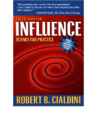
first-person accounts in which readers of odors. of previous editions describe how e Increased coverage of how compliance they've seen a principle work on principles work in other cultures. or for them. Reader's Reports have New insights are derived from the become the most popular feature of research findings, sayings, and customs the book. Boston. New York • San Francisco Mexico City • Montreal • Toronto • London • Madrid • Munich • Paris Hong Kong • Singapore • Tokyo • Cape Town • Sydney Acquisitions Editor: Michelle Limoges Editorial Assistant: Christina Manfroni Executive Marketing Manager: Wendy Gordon Production Supervisor: Liz Napolitano Editorial Production Service: Modern Graphics, Inc. Manufacturing Buyer: JoAnne Sweeney Electronic Composition: Modern Graphics, Inc.
 annaabi.ee