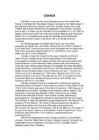
Muutke teksti laade Information Teine tase Kolmas tase Neljas tase Length: body 50 cm -80 cm. Tail 30 cm- Viies tase 50 cm. Weight: 5 kg-10 kg. Adobe: swamps, undrewoods and cultural Landscapes. Food: birds, insects, small rodents, berries. Puppies: 4-7 Life: 3-10 years. (captivity 25 years) Looks: He has a very fluff coat. This gives the impressioon he would weighs as more Badger Muutke teksti laade Teine tase Kolmas tase Neljas tase Viies tase Muutke teksti laade Information Teine tase Kolmas tase Length: body 60cm- 90cm
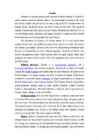
Giving birth throughout the year, females can have litters of up to four kittens, but usually only one or two survive. Born spotted, the kittens stay with their mothers for about 18 months, after which time they will leave in search of their own home range. The Mountain Lion is capable stalk-and-ambush predator; the cougar pursues a wide variety of prey. Primary food sources include ungulates such as deer and bighorn sheep, but it hunts species as small as insects and rodents The Cougar prefers habitats with dense underbrush and rocky areas for stalking, but it can live in open areas. The cougar is territorial and persists at low population densities. Individual territory sizes depend on terrain, vegetation, and abundance of prey. A single male lion may require up to 175 square miles of territory for its home range. They prefer wild areas frequented by deer. One lion will consume about one deer per week. A lion will cover
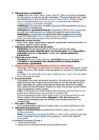
Fourth level Fifth level Click to edit Master text styles Second level Third level Fourth level Fifth level NATURAL ENEMIES Natural enemies Under normal conditions they tend to hold them check Beneficial insects Birds Rodents Fungus, bacterial and other diseases of insects Beneficial Insects Insects eat other insects 1) Predators, which quickly kill and eat their prey. 2) Parasites, which live within or on their host during some stage of its life and gradually consume it without causing the death of the host. Predator and Parasite Harmonia axyridis Chalcidoidea muscidifurax Birds
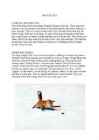
THE RED FOX GENERAL INFORMATION One of the most cleverest animals found in Estonia is the fox. These attractive creatures can live almost everywhere. Fox habitat may be the forest, brushes or even swamps. They eat mainly small rodents like rats and rabbits but also all kind of bugs, fruits and birds eggs. As well as being good escapers, they have also a good sense of smell, hearing and they can see in the dark. Their homes are holes, which they dig under the ground or take over other animals. The hole has always more than one exit. Foxes are having rat in February and the female animal calves in April. OBSERVING FOXES Catching a sight of an fox in the wild is quite a challenge, because they have a
the Donegual moutintains is very popular for a photographers. Lakes of Killarney They consist of three lakes - Lough Leane, Muckross Lake (also called Middle Lake) and Upper Lake. The lakes lie in a mountain-ringed valley starting in the Black Valley. Animals Ireland is known for not having any snakes and the only reptiles in Ireland are lizards. Some animals and sea life found in Ireland are: grey seals, pine martens, otters, red fox, rabbits, rodents, deer, badgers and goats. There are also many species of birds in Ireland, especially on the west coast where birds stop en route to other places. References http://www.lahinchhouse.com/things.htm http://www.irelandseye.com/aarticles/travel/nature/ http://en.wikipedia.org/wiki/Republic_of_Ireland#La http://karavanserai.bluemoon.ee/Euroopa/iirimaa.h http://www.earthyfamily.com/IR-geog.htm
Where lived the boys grandmother? A. In Norwegia B.In England C.In Kanada D. In Finland 3. Do witches have big nostrils? A.No B. Not too big and not too small C. The dont have an nose D. Yes 4. What pets did the grandmother give to his grandson? A. Two turtels B.Two mice C. Two parrots E. Two cats 5. What was the name of the potion that turned people into mice? A. The fast mouse maker B. Formula 87 Delayed Acton Mouse- Maker C. Formula 86 Delayed Acton Mouse- Maker D. The fast way to rodents 6. Whom did the witches hate the most? A. Children B. Grownups C. Mice D. Turtels 7. How did the witches call the head WITCH? A. Boss B. Majesty of all witches C. The Grand High Witch D. The Grand High Witch of all Witches 8. What did the grandmother always smoke? A. pipe B. A cigar C. Water pipe D. A regular cigar 9. What was the boys name who got turned into a mouse too? A. Bruno B. Trevor C. Jay D. Paul 10. What was the mission at the end of the book. A
When these animals hibernate their body temperatures can drop near freezing. Their hearts also slow so much that they are barely alive. Black bears also avoid the winter by sleeping in their dens. They go into a deep sleep and only wake up several times during the winter to leave their dens. Temperate grassland- Plants are also food for animals. Most temperate grasslands are inhabited by hares, mice, and other small rodents. These animals have sharp teeth that are able to easily gnaw through grass. Some of the familiar rodents found in the North American grasslands are prairie dogs, mice, rats, and ground squirrels. Prairie dogs are cute, burrowing rodents that live in underground communities. A dominant male heads a prairie dog family. They make their home in underground burrows that consist of several chambers and entrances. Taiga - Most animals migrate to warmer climates once the cold weather begins
Euroopa imetajad. 1993 2. http://et.wikipedia.org/wiki/Kasetriibik#Elupaik_ja_eluviis 3. http://bio.edu.ee/loomad/Imetajad/SICBET2.htm 6 4. http://bio.edu.ee/loomad/Imetajad/SICBET.htm 5. http://www.hot.ee/pisiimetajad/SP17.HTM 6. http://loodus.keskkonnainfo.ee/WebEelis/infoleht.aspx?obj=ala&id=3743 7. http://worldnaturephoto.com/galerie/savci-mammals-sugetiere/hlodavci- rodents-nagetiere/7449-mysivka-horska-sicista-betulina-northern-birch-mouse 7
recession () and rising unemployment, when people can no longer afford ( ) housing, and governments cut down public housing expenses. Inadequate shelter or housing creates conditions that promote disease. Without decent ( ) protection, many of the poor are exposed ( ) to severe ( ) and dangerous weather as well as to bacteria and viruses carried by other people and animals. They also are more likely to become infected with diseases carried by insects or rodents (). In arid()regions, drought leaves the poor without clean water for drinking or bathing. In temperate climates, including in the major cities of developed countries many of the homeless poor are harmed by or die of exposure ()to extreme winter cold. Inadequate shelter almost always accompanies inadequate sanitation and unhygienic practices. Because the poor in developing nations commonly have no running water or sewage() facilities, human excrement and garbage
take its toll on people as well. Particularly those who are physically weaker are going to have a harsh life. During the hot summer of 1995, the frightening effects of high temperatures were felt in Chicago, when 700 people died as a result of heat-related problems. Air quality in many parts of the country is already considered unhealthy. With global warming adding to it, it's only going to get worse and worse. Furthermore, warmer temperatures would widen the range of disease carried by rodents and mosquitoes. This increase of temperatures is happening at a pace that outstrips anything the Earth has seen in the past 100 million years. We have caused all of this over many years of over industrialization in this growing world. Many different things cause the greenhouse effect. The amount of carbon dioxide in the atmosphere is increasing because of the massive consumption of fossil fuels such as oil, coal, and natural gas. Another contributing factor is the the amount of forest logged
some birches in the lower latitudes. Willows do grow on some parts of the tundra but only as low carpets about 8 cm high. Most plants grow in a dense mat of roots that has developed over thousands of years. The soil is very low in nutrients and minerals, except where animal droppings fertilize the soil. Although there isn't a lot of biodiversity, only 48 species of land mammals are found on the tundra, there are a lot of each species. These consist of slightly modified shrews, hares, rodents, wolves, foxes, bears and deer. There are huge herds of reindeer in North America that feed on lichens and plants. There are also smaller herds of musk oxen. Wolves, wolverines, arctic foxes, and polar bears are the predators of the tundra. Smaller mammals are snowshoe rabbits and lemmings. There aren't many different species of insects in the tundra, but black flies, deer flies, mosquitoes and "no-see-ums" (tiny biting midges) can make the tundra a miserable place to be in the summer
They are major source of oxygen. The climate is cold and harsh. The soil is acidic so only deciduous trees can grow there: like hemlocks, pines, larches, spruces and firs. Typical animals are brown bears, foxes, geese, lynxes and moose. Prairies are temperate grasslands. The consist of plains of grass that are hot in summer and cold in the winter. They are made by fires. The soil is rich so prairies are used for agriculture. Some animals that live there are: bobcats, antelopes, snakes, rodents, rabbits, badgers and bisons. Deciduous forests are cool, rainy areas. There are four distinct seasons. Well before coming of the first European settlers, Canada's aboriginal peoples had discovered the food properties of maple sap, which they gathered every spring. According to many historians, the maple leaf began to serve as a canadian symbol as early as 1700. The maple leaf today appears on the Canada's flag and on the penny. Canada's flag is with colours red and
Karmiinpunase suudluse juhtum 2001 Elmatar est ing Liina Tordik Gambiit 1997 Elmatar est ing Mia Mygri Ajujaht isale 2006 Elmatar est ing Pille Johanson Kaka ja kevad 2009 Varrak est est The amazing Maurice and his educated 2004 Corgi rodents Booksing ing Hooletu kassipoja juhtum 1997 Elmatar est ing Liina Tordik Amberi veri 2010 Fantaasia est ing Juhan Habicht Mahtra sõda 2009 Eesti Päevaleht est est Ajavaras 2007 Varrak est ing Allan Eichenbaum
It is one of the biggest in that carnivore family. Good paintbrushes are made from its fur. They eat snakes, squirrels and insects. Snake poison doesn't harm these mammals unless the snake strikes its nose. Moose live also in Canada. They live in marshy areas all around the country. They are reddish brown and the males are bigger than the females. Moose are herbivores. The male moose have big antlers, female ones don't have them. Prairie dogs are very funny-looking animals. They are rodents who live in tunnels under the ground. They are very good diggers. Prairie dogs are 30 centimetres long. They eat insects and grass. Land. Canada is divided into five major regions geographically: the Pacific Region, the Prairie Provinces, Central Canada, the Atlantic Provinces and the North. The Pacific Region includes British Columbia. The region is known for its mild coastal climate, its forests and its spectacular mountains, including the famous Rocky Mountains
animals are brown bears, foxes, geese, lynxes and moose. Prairies are temperate grasslands which consist of grass plains that are hot in summer and cold in winter. Prairies are made by fires. The soil is rich and precipitation is medium and because of that prairies are used for agriculture. Common agriculture plants are oats, rye, barley and wheat. The area has very few trees or shrubs so it's very windy. Some typical animals that live there are: bobcats, antelopes, snakes, rodents, rabbits, badgers and bisons. Prairies are also called the "Bread-basket of Canada". The Deciduous Forests are cool and rainy areas. There are four distinct seasons. Annual precipitation is 0.5-1.5 meters. The summer average is 24-30'C. There are such plants as: white oak, white birch, pecan, lady fern, common lime and carpet moss. Typical animals are: eagles, black bears, coyotes, deers and chipmunks. Land.
Precipitation is low. The growing season is short. Only deciduous trees can grow there since the soil is acidic. Some typical animals are brown bears, foxes, geese, lynxes and moose. Prairies are temperate grassland. They consist of plains of grass that are hot in the summer and cold in the winter. Prairies are made by fires. The soil is rich and the precipitation is medium. The area has very few trees or shrubs so it is very windy. Typical animals are bobcats, antelopes, snakes, rodents, rabbits, badgers, bisons. Prairies are located in Alberta, Saskatchewan and Manitoba. Those regions are called the ,,Bread-basket of Canada" because of the wheat and other grains they get from there. 9. Population Although Canada's population is growing slowly, their growth rate is higher than that in most industrialized countries. Their population growth is concentrated in areas with considerable environmental stresses, particularly around Toronto and Vancouver.
Traits that are thought to be characteristic of r-selection include: high fecundity, small body size, early maturity onset, short generation time, and the ability to disperse offspring widely. Organisms whose life history is subject to r-selection are often referred to as r-strategists or r-selected. Organisms with r-selected traits range from bacteria and diatoms, through insects and weeds, to various semelparous cephalopods andmammals, especially small rodents. K-selection (stable environments) In stable or predictable environments, K-selection predominates as the ability to compete successfully for limited resources is crucial and populations of K-selected organisms typically are very constant and close to the maximum that the environment can bear (unlike r-selected populations, where population sizes can change much more rapidly). Traits that are thought to be characteristic of K-selection include: large body size, long life
Prairies are temperate grasslands which consist of grass plains that are hot in summer and cold in winter. Prairies are made by fires. The soil is rich and precipitation is medium and because of that prairies are used for agriculture. Common agriculture plants are oats, rye, barley and wheat. The area has very few trees or shrubs so it's very windy. Some typical animals that live there are: bobcats, antelopes, snakes, rodents, rabbits, badgers and bison. Prairies are also called the "Breadbasket of Canada". The Deciduous Forests are cool and rainy areas. There are four distinct seasons. Annual precipitation is 0.51.5 meters. The summer average is 2430'C. There are such plants as: white oak, white birch, pecan, lady fern, common lime and carpet moss. Typical animals are: eagles, black bears, coyotes, deer and chipmunks. 7. Population The population of Canada is about 31 million people
concentrations up to 14.3 or 30 ppm (17 - 36 mg/m 3 ), respectively. These clear species differences appear to be related, in part, to the local dosimetry and disposition of formaldehyde in nasal tissues. For example, mice possess the capacity to minimize inhalation of irritating substances more efficiently than rats through a reflex depression of respiratory rate. Studies in humans The finding of nasal tumors in rodents exposed to high levels of airborne formaldehyde in the early 1980s led to a concern for cancer effects in occupationally exposed workers. There are now more than 40 epidemiology studies examining the potential for occupational formaldehyde exposure to cause cancer in humans. The studies include cohort mortality studies of formaldehyde-exposed industrial workers, cohort mortality studies of formaldehyde-exposed professionals or medical
 annaabi.ee