Science reigns people Biochemist Isaac Asimov has once said: “The saddest aspect of life right now is that science gathers knowledge faster than society gathers wisdom.”. The more one thinks about his words, the more they have to be accepted. It is true that science affects people, but the most influential is the part that directly concerns them and their lives. That is why this essay will take a closer look at some of the pros and cons of medical development. I will begin with the positive aspects of medical evolution. Firstly, thanks to advanced medicine, doctors are able to detect diseases at an early stage, or even before they arise, which gives people a longer life. Secondly, knowing how diseases spread and behave is possible with the help of medicines to avoid huge outbreaks that could kill thousands of people. Thirdly, studies will be helping to make the medicaments less harmful. Fourthly, ma...
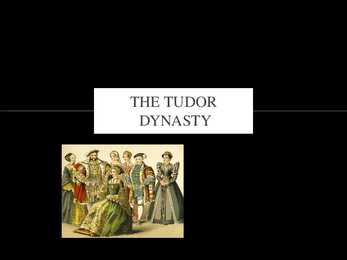
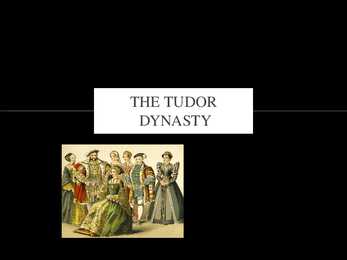
DYNASTY ELIZABETH I Elizabeth I was queen regnant of England and Ireland from 17 November 1558 until her death. Sometimes called The Virgin Queen, Gloriana, or Good Queen Bess, Elizabeth was the fifth and last monarch of the Tudor dynasty. THE TUDOR DYNASTY ELIZABETH I Elizabeth's reign is known as the Elizabethan era, famous above all for the flourishing of English drama. After the short reigns of Elizabeth's brother and sister, her 44 years on the throne provided welcome stability for the kingdom and helped forge a sense of national identity. THE TUDOR DYNASTY ELIZABETH I The Queen's health remained fair until the autumn of 1602, when a series of deaths among her friends plunged her into a severe depression. She died on
century later. The beginning of the English Renaissance is often taken, as a convenience, to be 1485, when the Battle of Bosworth Field ended the Wars of the Roses and inaugurated the Tudor Dynasty. Renaissance style and ideas, however, were slow in invading England, and the Elizabethan era in the second half of the 16th century is usually regarded as the height of the English Renaissance. If you're looking for what is sometimes referred to as the English Renaissance then it would cover the reigns of both Henry VIII and Elizabeth I, with Edward VI and Mary I coming in between; although the more famous elements came during the Elizabethan period (1558 - 1603). Arguably, however, there was no Renaissance in England as it differed considerably to everywhere else. The dominant art forms of the English Renaissance were literature and music. Visual arts in the English Renaissance were much less significant than in the Italian
DYNASTY ELIZABETH I Elizabeth I was queen regnant of England and Ireland from 17 November 1558 until her death. Sometimes called The Virgin Queen, Gloriana, or Good Queen Bess, Elizabeth was the fifth and last monarch of the Tudor dynasty. THE TUDOR DYNASTY ELIZABETH I Elizabeth's reign is known as the Elizabethan era, famous above all for the flourishing of English drama. After the short reigns of Elizabeth's brother and sister, her 44 years on the throne provided welcome stability for the kingdom and helped forge a sense of national identity. THE TUDOR DYNASTY ELIZABETH I The Queen's health remained fair until the autumn of 1602, when a series of deaths among her friends plunged her into a severe depression. She died on
The last monarch of the Stuarts was Queen Anne. The House of Hanover At the beginning of the 18th century the English parliament asked George of Hanover, a Protestant descendant of James I, to become king. George I was a controversial king who spent most of his time in Hanover, leaving the country in the care of the Cabinet. This was eventually headed by Sir Robert Walpole, Britain's first Prime Minister and the first to live at 10 Downing Street. During the reigns of George I and George II, Parliament assumed almost absolute responsibility for running the country. Large areas of Canada and India were colonized at the expense of the French. The single greatest threat to George I came with the Scottish Jacobite Rebellions of 1715 and 1719. However, James Stuart, their leader, was easily defeated and fled to Rome. His son tried to claim the British throne twice, but he was soon forced to retreat. On 16 April
parliament. An act may also provide for secondary legislation, which can be made by the Crown, subject to the simple approval, or the lack of disapproval, of parliament. To reign Reign is a word that has traditionally been used to refer to time or period during which a king or emperor occupied the throne. When used as time period or duration, reign becomes a noun. However, it is also used as a verb to express domination or control or even influence of one or the other kind as in violence reigns, poverty reigns, etc. History books make good use of reign to refer to the time periods during which a particular king or queen remained on the throne of a territory. For example, during the reign of Queen Victoria, reign of King Phillip, and so on. However, the word reign is also used to reflect the supremacy of a king or queen in royal rule or authority as in King Edward reigned. Reign is also used to indicate
Afonso was recognized in 1143 by King Alfonso VII of León and Castile, and in 1179 by Pope Alexander III. Afonso Henriques and his successors, aided by military monastic orders, pushed southward to drive out the Moors, as the size of Portugal covered about half of its present area. In 1249, this Reconquista ended with the capture of the Algarve on the southern coast, giving Portugal its present-day borders, with minor exceptions. The reigns of Dinis I, Afonso IV, and Pedro I for the most part saw peace with the Christian kingdoms of Iberia, and thus the Portuguese kingdom advanced in prosperity and culture. In 1348 and 1349, like the rest of Europe, Portugal was devastated by the Black Death. In 1373, Portugal made an alliance with England, which is the longest-standing alliance in the world. In 1383, John I of Castile, husband of Beatrice of Portugal and son-in-law of Ferdinand I of Portugal, claimed the throne of Portugal
Queen Victoria was the granddaughter of George III, and was a descendant of most major European royal houses. She was the last British monarch of the House of Hanover. George I, George II, George III (in the 18th century), George IV, William IV, Victoria (in the 19th century). *Robert Walpole and the Cabinet System He was a British statesman who was the first Prime Minister of Great Britain. Walpole is acknowledged for his influence within the Cabinet. Walpole served during the reigns of George I and George II. He became the sole and undisputed leader of the Cabinet. Walpole's influence on the politics of his day was tremendous. The Tories became a minor, insignificant faction, and the Whigs became a dominant and largely unopposed party. Walpole's strategy of keeping Great Britain at peace contributed greatly to the country's prosperity. Walpole also managed to secure the position of the Hanoverian Dynasty, and effectively countervailed Jacobitism.
(военно-)морской, флотский 'naval warship боевой корабль 12. enable давать возможность (сделать что-л.); облегчать, позволять 13. reign (n) царствование reign (v) царствовать The king (queen) reigns but Король (королева) царствует, но не управляет. doesn’t rule. 14. adviser советник 15. trade rival торговый соперник 16. trade route торговый путь 17. follow two policies следовать двум направлениям в политике 18. share treasure with smb. делиться сокровищами с кем-л.
The hart ungalled play; For some must watch, while some must sleep: So runs the world away. Would not this, sir, and a forest of feathers— if the rest of my fortunes turn Turk with me—with two Provincial roses on my razed shoes, get me a fellowship in a cry of players, sir? HORATIO 105 Half a share. HAMLET A whole one, I. For thou dost know, O Damon dear, This realm dismantled was Of Jove himself; and now reigns here A very, very—pajock. HORATIO You might have rhymed. HAMLET O good Horatio, I'll take the ghost's word for a thousand pound. Didst perceive? HORATIO Very well, my lord. HAMLET Upon the talk of the poisoning? HORATIO I did very well note him. HAMLET Ah, ha! Come, some music! come, the recorders! For if the king like not the comedy, Why then, belike, he likes it not, perdy. Come, some music! Re-enter ROSENCRANTZ and GUILDENSTERN GUILDENSTERN
If we are to defend ourselves adequately against any such weapon, it is vital that we know its optimal operating conditions in order to recog- nize when we are most vulnerable to its influence. We have already had a hint of one time when the principle of social proof worked best with the Chicago believers. It was a sense of shaken confidence that triggered their craving for converts. In gen- eral, when we are unsure of ourselves, when the situation is unclear or ambiguous, when uncertainty reigns, we are most likely to look to and accept the actions of oth- ers as correct (Sechrist 8{ Stangor, 2007; Wooten 8{ Reed, 1998; Zitek 8{ Hebl, 2007). Another way that uncertainly develops is through lack of familiarity with a sit- uation. Under such circumstances, people are especially likely to follow the lead of others there. Consider how this simple insight allowed one man to become a mul- timillionaire. His name was Sylvan Goldman and, after acquiring several small gro-
 annaabi.ee