It is very important in our life. Positive stress gives you the energy to throw yourself into something what you want to do very well. For example, approximation for exams. In this situation a student begins to learn diligently all materials that he didn’t learn before. On the other hand, we have negative stress too. This type of makes people nervous and they can’t be positive. Nowadays we have a lot of sources of stress. For instance: problems at school, quarrels with friend or other people, emotional problems. In the same way, changes that occur with the body are a big cause of stress too. However in our life we have a lot of ways to get rid of stress. For example, most popular is having a conversation with another person, who understands you. Also there is eating, travelling, listening to music, enjoying your hobbies. All things considered, I believed that everyone finds his own output of stress and learn to live happily no matter what.
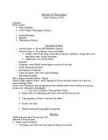
Napoleon, however, proves to be a power-hungry leader who steals the cows milk and a number of apples to feed himself and the other pigs. -> Napoleon's lust for power increases to the point where he becomes a totalitarian dictator, forcing "confessions" from innocent animals and having the dogs kill them in front of the entire farm. Ends with Pilkington sharing drinks with the pigs in Jones' house. Napoleon changes the name of the farm back to Manor Farm and quarrels with Pilkington during a card game in which both of them try to play the ace of spades. As other animals watch the scene from outside the window, they cannot tell the pigs from the humans. Snowball ● He devotes himself to bettering the animals in intellectual, moral and and physical ways ● Brings literacy to farm so the animals could understand animalism better. ● The “thinker” ● Made a plan for the windmill ● Made Seven Commandments for other animals to read. Napoleon
some footprints that didn't belong to any of our team members. /.../ Kaoru is quiet about the weather now the snow is getting heavier. No surprise if our camps were smashed one night. 24 May /.../ Our situation is hopeless, I don't see a way for us to ever leave this canyon... / .../ 25 May No food. The water is ending. Why? What have we done wrong to deserve such a cruel end? Back in Singapore we never harmed anyone seriously! Well, there were quarrels between the leaders, but that's normal in army... /.../ Sometimes I wonder how is Elizabeth doing? It's been three months since I last saw her... I bet Mickey has grown a lot, soon he'll be four and a half. My big boy, how I miss you! If I could only see your smile once again, at least once! But, miracles never happen... I just hope that they have good memories of us, the ones destined to the snow. 30 May We found a hare and cooked it of the fire, it was delicious !/.../ /..
Traditionally, Lilliputians broke boiled eggs on the larger end; a few generations ago, an Emperor of Lilliput had decreed that all eggs be broken on the smaller end. The differences between BigEndians (those who broke their eggs at the larger end) and LittleEndians had given rise to "six rebellions... wherein one Emperor lost his life, and another his crown". The BigEndian/LittleEndian controversy reflects, in a much simplified form, British quarrels over religion. England had been, less than 200 years previously, a Catholic (BigEndian) country; but a series of reforms beginning in the 1530s under King Henry VIII (ruled 15091547), Edward VI (1547 1553), and Queen Elizabeth I (15581603) had converted most of the country to Protestantism (Little Endianism), in the episcopalian form of the Church of England. At the same time, revolution and
philosopher is like a doctor who must sometimes give his patients unpleasant medicine to make them better. - Pursuit of pleasure is not the highest good. The tyrant who can do whatever he wants is neither happy nor truly powerful (a theme which will be taken up again in The Republic). In the afterlife we will all have to be judged naked. Time will tell. Sophistry- False but appealing argument Rhetoric- The art of argument Philosophy- Pursuit of the truth Passion leads to quarrels (emotion), reason leads to harmony. The unjust tyrant is unhappy because he cannot make common cause with the virtues. The Republic · The longest and most influential of Plato's dialogs. · The dialogue opens with a discussion of old age, but then the question is raised: What is true justice? · A series of attempts to answer this question is given, Thrasymachus (a Sophist) argues that
The struggle for power culminated in a war called The War of Roses. It was a civil war between two dynasties, families. They had different emblems on one side the Yorks (white rose) other Lancasters (red). They couldn't decide who gets the throne. War ended 1485. A new dynasty came to throne, Tudor, the first king in this dynasty was Henry Vll. When he came to throne a period of stability followed because he built a nation based state. He was good at diplomacy.He could avoid quarrels and wars with neigbouring countries. France, Spain - greatest enemies.So he could save much money and thus laid a good economic basis for his state. Besides that he built a merchant fleet (kaubalaevastik) England begun to dominate in international trade. Unfortunately the king got old and died. Next king was Henry Vlll, second son of the family, wasn't prepared to become a king. Had to take the role as his elder brother died. Was prepared to come a clergyman
1 The Hundred Years’ War was followed by a long power struggle (1455–1485) for the English Crown between the two branches of the royal family 2, which Walter Scott later called the Wars of the Roses. The man who ended the war and united the two royal houses and their supporters was Henry Tudor, duke of Richmond, who became King Henry VII 3 giving origin to the Tudor dynasty (1485–1603). Henry avoided quarrels with neighbours and made important trade agreements with European countries. He was careful to keep the friendship of the merchant and lesser gentry classes who produced most of the nation’s wealth. Like him they wanted peace and prosperity. He understood earlier than most people that England’s future wealth would depend on international trade and he built a large fleet of merchant ships. Henry VII built the foundations of a wealthy nation state and a powerful monarchy.
Them try to vilify me to my brother! ORGON Ah! TARTUFFE The mere thought of such ingratitude Makes my soul suffer torture, bitterly . . . My horror at it . . . Ah! my heart's so full I cannot speak . . . I think I'll die of it. ORGON (in tears, running to the door through which he drove away his son) Scoundrel! I wish I'd never let you go, But slain you on the spot with my own hand. (To Tartuffe) Brother, compose yourself, and don't be angry. TARTUFFE Nay, brother, let us end these painful quarrels. I see what troublous times I bring upon you, And think 'tis needful that I leave this house. ORGON What! You can't mean it? TARTUFFE Yes, they hate me here, And try, I find, to make you doubt my faith. ORGON What of it? Do you find I listen to them? TARTUFFE No doubt they won't stop there. These same reports You now reject, may some day win a hearing. ORGON No, brother, never. TARTUFFE Ah! my friend, a woman May easily mislead her husband's mind. ORGON No, no. TARTUFFE
 annaabi.ee