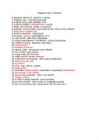
Negative traits of character 1.agressive, dishonest- agresiivne, ebaaus 2.ambitious, lazy- ambitsoonikas, laisk 3.arrogant, proud- ülbe=upsakas, uhke 4.pompous, boastful- üleolevalt uhke, hooplev 5.selfish, self-centered- isekas, enesekesne 6.snobbish, narrow-minded- peenutseja=snoob, kitsarinnaline=väitlane 7.petty, mean- väiklane, õel 8.stubborn=obstinate- kangekaelne 9.two-faced , greedy- kahepalgeline, ahne 10.rude, violent- ülbe=jäme, vägivaldne 11.moody, bad-tempered= ill-tempered- tujukas, havatujuline 12.indifferent, boring- ükskõikne, igav=tüütu 13.brutal, pathetic- 14.intrusive, capricious- 15
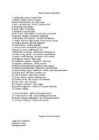
29.wise, witty- tark, vaimukas 30.courageous, punctual- julge, vapper 31.grateful, imaginative- tänulik, ette kujutlusvõimeline 32. trustful- usaldav 1.a man of character- tugeva iseloomuga inimene 2.be characteristic to smb- olema kellelegi iseloomulik 3.a person with good upbringing- hea kasvatusega inimene 4. a review of character- kirjalik iseloomustus Negative traits of character 1.agressive, dishonest- 2.ambitious, lazy- 3.arrogant, proud- 4.pompous, boastful- 5.selfish, self-centered- 6.snobbish, narrow-minded- 7.petty, mean- 8.stubborn=obstinate- 9.two-faced , greedy- 10.rude, violent- 11.moody, bad-tempered= ill-tempered- 12.indifferent, boring- 13.brutal, pathetic- 14.intrusive, capricious- 15.impolite, spoilt- 16.dull, careless- 17.stupid, noisy- 18.untidy, jealous- 19.disobedient, uninteresting- 20. weird, eccentric, odd- 21.pig-headed- 22.naive, nosy- 23.bossy, stingy- 24.pessimistic, simple-minded- 25.quarrelsome, cruel, sadistic-
After she attends an extravagant ball at the home of a wealthy nobleman, she begins to dream constantly of a more sophisticated life. She grows bored and depressed when she compares her fantasies to the humdrum reality of village life, and eventually her listlessness makes her ill. When Emma becomes pregnant, Charles decides to move to a different town in hopes of reviving her health. In the new town of Yonville, the Bovarys meet Homais, the town pharmacist, a pompous windbag who loves to hear himself speak. Emma also meets Leon, a law clerk, who, like her, is bored with rural life and loves to escape through romantic novels. When Emma gives birth to her daughter Berthe, motherhood disappoints her--she had desired a son--and she continues to be despondent. Romantic feelings blossom between Emma and Leon. However, when Emma realizes that Leon loves her, she feels guilty and throws herself into the role of a dutiful wife
anti-monarch stream, the fact that the huge part of British tax income is spent on the royal upkeep is undeniable. The carefree life of the winsdors costs Britain $450 million per year. Yet the poll carried out in 2013 showed that the percentage of the society support of a Queen is 75%. And everyone of us understands, that royals are a huge corporayion, whose ruling leader is the Quenn Elizabeth II. Royal wedding are another theme to discuss. Those have always been pompous events observed by millions of people. The Future. The time since the House of Windsor was founded has been unlike any other time in history. Life today isn't the same as it was 100 years ago, and neither are the Windsors. A once distant monarchy that in the past many may have only seen in portraits or on coins has become closer to the public. Today, the Windsors embrace the technology of a digital age, in tune with the times and more accessible than ever before.
signs of guilt and human feeling--his love for Gertrude, for instance, seems sincere. Claudius (In-Depth Analysis) Gertrude - The Queen of Denmark, Hamlet's mother, recently married to Claudius. Gertrude loves Hamlet deeply, but she is a shallow, weak woman who seeks affection and status more urgently than moral rectitude or truth. Gertrude (In-Depth Analysis) Polonius - The Lord Chamberlain of Claudius's court, a pompous, conniving old man. Polonius is the father of Laertes and Ophelia. Horatio - Hamlet's close friend, who studied with the prince at the university in Wittenberg. Horatio is loyal and helpful to Hamlet throughout the play. After Hamlet's death, Horatio remains alive to tell Hamlet's story. Ophelia - Polonius's daughter, a beautiful young woman with whom Hamlet has been in love. Ophelia is a sweet and innocent young girl, who obeys her father and her brother, Laertes
His interest in analyzing the causes of the war leads to many of the most critical antiwar sentiments in the novel. Müller - One of Paul's classmates. Müller is a hardheaded, practical young man, and he plies his friends in the Second Company with questions about their postwar plans. Tjaden - One of Paul's friends in the Second Company. Tjaden is a wiry young man with a voracious appetite. He bears a deep grudge against Corporal Himmelstoss. Kantorek - A pompous, ignorant, authoritarian schoolmaster in Paul's high school during the years before the war. Kantorek places intense pressure on Paul and his classmates to fulfill their "patriotic duty" by enlisting in the army. Read an in-depth analysis of Kantorek. Corporal Himmelstoss - A noncommissioned training officer. Before the war, Himmelstoss was a postman. He is a petty, power-hungry little man who torments Paul and his friends during their training
subjects, general intention of improving society by exposing its vices and follies. Jonathan Swift: combined parody, with its imitation of form and style and satire in prose; technique to create fictional speaker (Gulliver), utter sentiments which intelligent reader recognises as self-satisfied, egoistical, stupid. Master of understaded irony. Gulliver’s Travels (greatest of satires). Fashionable guise of travel book, ship surgeon, fantastic locasions, liliput island (pompous habits of liliputs satirised). The Battle of the Books – mimics the style of excitable journalism in a debate on the relative merits of the ancients as against the moderns in literature, fought between Bee and Spider. A Tale of a Tub – personates a madman, satire on „corruption in religion and learning”. Alexander Pope: 2 great mock-heroic poems, series of Horatian imitations, 4 verse epistles on moral themes. The Rape of the Lock – based on piece of real-life gossip
CLEANTE So! There you go again, quite off the handle! In nothing do you keep an even temper. You never know what reason is, but always Jump first to one extreme, and then the other. You see your error, and you recognise That you've been cozened by a feigned zeal; But to make up for't, in the name of reason, Why should you plunge into a worse mistake, And find no difference in character Between a worthless scamp, and all good people? What! Just because a rascal boldly duped you With pompous show of false austerity, Must you needs have it everybody's like him, And no one's truly pious nowadays? Leave such conclusions to mere infidels; Distinguish virtue from its counterfeit, Don't give esteem too quickly, at a venture, But try to keep, in this, the golden mean. If you can help it, don't uphold imposture; But do not rail at true devoutness, either; And if you must fall into one extreme, Then rather err again the other way. SCENE II DAMIS, ORGON, CLEANTE DAMIS What
" "Though it is difficult," said Jane, "to guess in what way he can mean to make us the atonement he thinks our due, the wish is certainly to his credit." Elizabeth was chiefly struck by his extraordinary deference for Lady Catherine, and his kind intention of christening, marrying, and burying his parishioners whenever it were required. "He must be an oddity, I think," said she. "I cannot make him out.--There is something very pompous in his style.--And what can he mean by apologising for being next in the entail?--We cannot suppose he would help it if he could.--Could he be a sensible man, sir?" "No, my dear, I think not. I have great hopes of finding him quite the reverse. There is a mixture of servility and self-importance in his letter, which promises well. I am impatient to see him." "In point of composition," said Mary, "the letter does not seem defective. The idea of the
of infelicity. An utterance can go wrong in any one of any number of quite different ways. It can be an ill-advised move in a game, as when one utters (6) because one has miscalculated the odds. Or it may be insincere. Or one may lack the standing or authority to perform an act of the kind intended. Or it may be very rude. Or it may be made too softly and go unheard. Or it may be made, tactlessly, in front of the wrong people. Or it may be verbose and pompous and blather on and on. Or it may presuppose something false, as if I were to apologize for doing something that my hearer had wanted done, or that was not in any way a bad thing to have done, or that I did not even do at all. This great variety of defects will become philosophically important later on. In particular, now that we have recognized that some speech acts are acts of stating, asserting, and the like, we see that falsity is one common besetting
Many of them proved to be German as well; concealed under one superencipherment, for example, they found Code 0075. But this time England entered no protest. Hall perceived that it was more advantageous to listen to what the Germans were saying than to stop them from talking. The second route that Zimmermann used was of such simplicity, perfidy, and barefaced gall that it probably remains unequaled in the annals of diplomacy. It had its inception in the pompous mind of Colonel Edward M. House, President Wilson's alter ego and a major exponent of personal diplomacy. On one of his missions to Europe in 1915, House arranged to have coded reports from the embassies cabled directly to him, bypassing the State Department. When, on December 27, 1916, Ambassador Bernstorff discussed a new peace attempt by Wilson with House, he pointed out that the chances would be improved if his government could communicate directly with Wilson through House
 annaabi.ee