 50 punkti
Autor soovib selle materjali allalaadimise eest saada 50 punkti.
50 punkti
Autor soovib selle materjali allalaadimise eest saada 50 punkti.
 ~ 6 lehte
Lehekülgede arv dokumendis
~ 6 lehte
Lehekülgede arv dokumendis
 2012-05-20
Kuupäev, millal dokument üles laeti
2012-05-20
Kuupäev, millal dokument üles laeti
 4 laadimist
Kokku alla laetud
4 laadimist
Kokku alla laetud
 0 arvamust
Teiste kasutajate poolt lisatud kommentaarid
0 arvamust
Teiste kasutajate poolt lisatud kommentaarid
 ursula1607
Õppematerjali autor
ursula1607
Õppematerjali autor
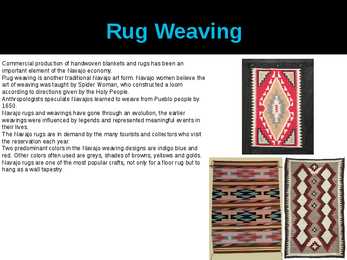
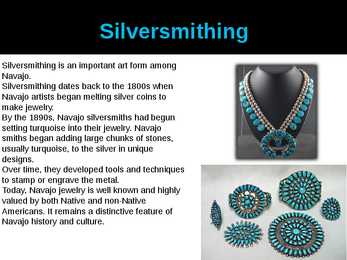
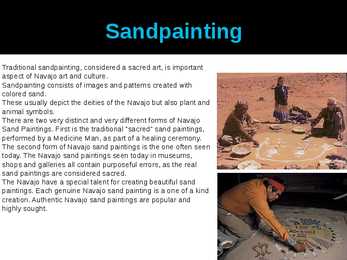
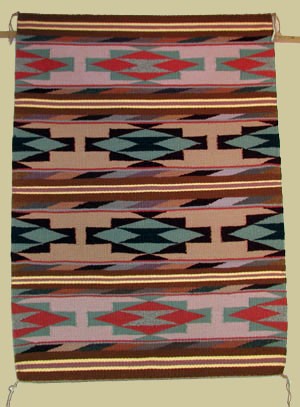
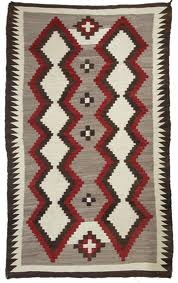
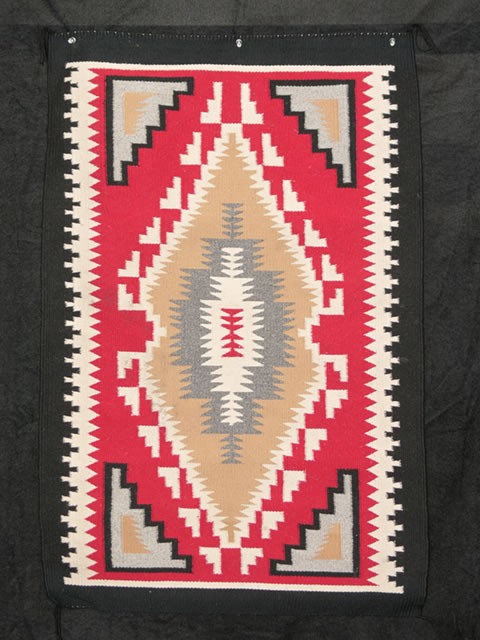
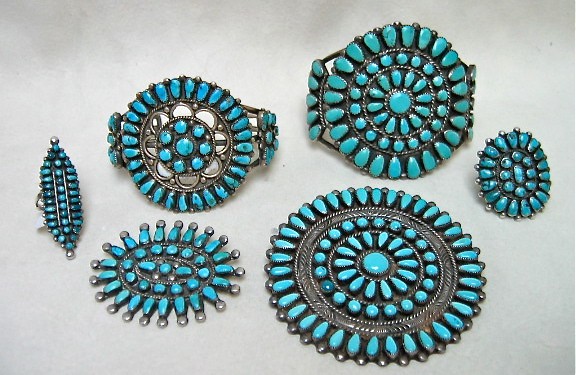
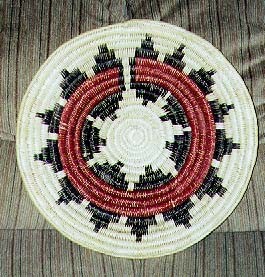
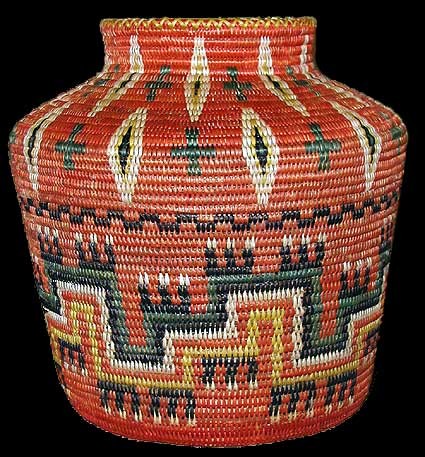
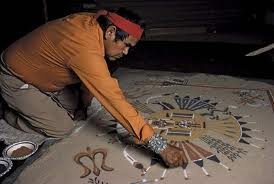
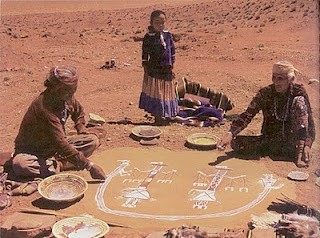
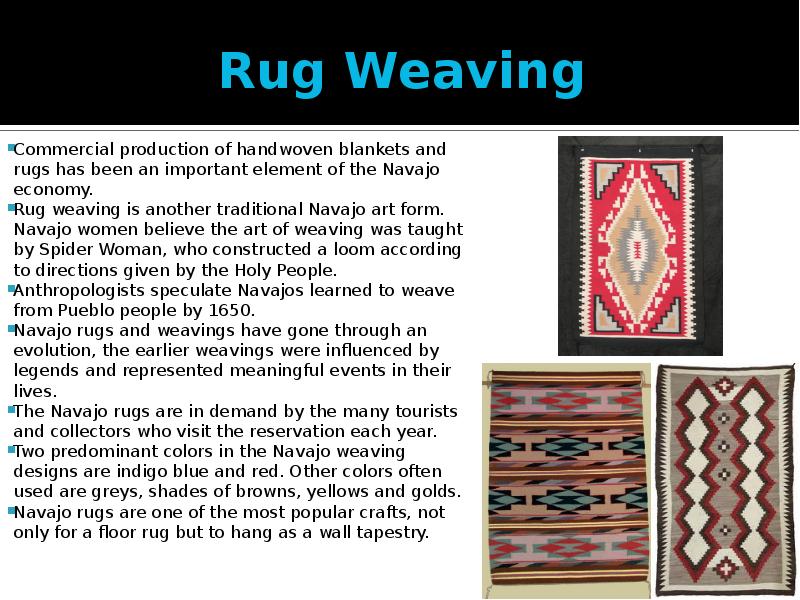
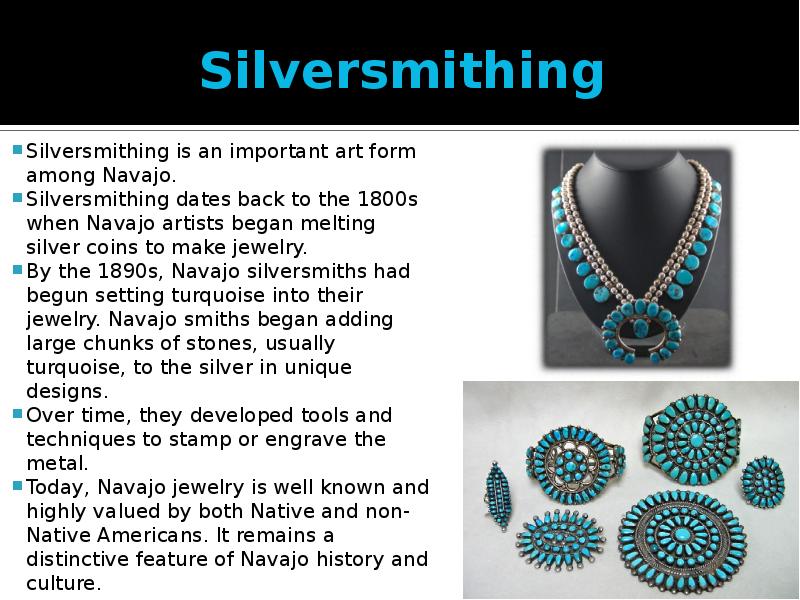
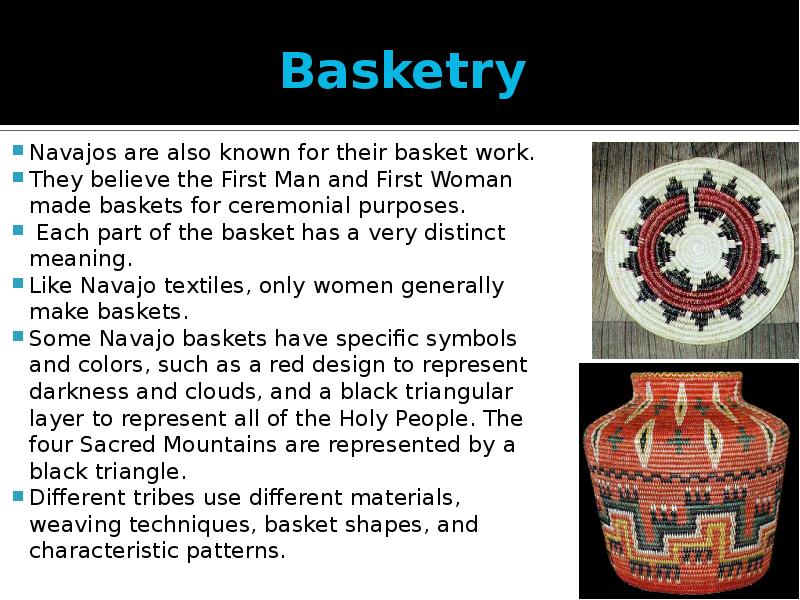
THE NAVAJO PEOPLE Art THE NAVAJO PEOPLE The Navajo are the largest Native American tribe in North America. They have been living there for more than four hundred years. ART Navajo Art is adored for its traditional native style. Talented artists produce some of the most sought after southwestern style jewelry, rugs, blankets, and pottery. JEWELR Y The Navajo Jewelry is believed to have been first learned from Spanish metal working techniques. Today the Navajo artists use traditional as well as modern tools, to create some distinctive and highly desired jewelry. RUGS One of the oldest and well known Navajo Art is weaving.
Navajo NAHvuhho Location Still living in their traditional territory Arizona, New Mexico, Utah and Colorado 17,5 million acres From low dry desert to mountains Tribes Navajo Nation has 300,048 tribal members 150,000 speak Navajo language (Athabaskan language) and others speak English Easy Word ''yi'it'eeh''(Yah-ah-t-ay) means hello `Ats'osi Dine' Feather People, Hasht['ishnii - Mud Clan, Kinyaa'1anii - Towering House People Beliefs Religion Christianity, Native American Church and traditional Navajo people(The Dines) belive that there is two classes of people: the Earth People and the Holy People Holy People taught the Dine how to live in harmony
The word Navajo comes from the phrase Tewa Navahu, meaning highly cultivated lands. The Navajo Indians largely resides in New Mexico and Arizona. They originally began their tribes in the 1500's and are considered to be the largest tribe of all Native American Indians. The Navajo region focuses more on land then on people. According to Navajo beliefs land is holy and it is the Job of every man to protect and preserve it. The Navajo religion tells of a time when the Creator developed a sacred land between 4 mountains. It is said that the Creator gave the Navajo people the instructions to never go past these mountains. The Navajos have never stopped speaking their native Athabaskan language, unlike many other native peoples who are trying to revive their languages. The Navajo language is spoken only on the Navajo reservation in the southwestern United States, and until recently was an unwritten language
NEW ZEALAND Geography: New Zealand is situated midway between the Equator and the South pole in the southern Pacific Ocean. It consists of two large islands, North Island and South Island, plus several smaller ones of which Stewart Island is the largest. North and South Islands are separated by the 32km wide Cook Strait. The total land area is 270,535 sq Km, about the size of Italy, the United Kingdom or the US state of Colorado. North Island is volcanically active with three active volcanoes. South Island has the high snow covered mountain peaks and glaciers of the Southern Alps, a range running almost 500Km along the Island. The longest river is the Waikato on North Island (425 Km), the largest inland stretch of water is Lake Taupo also on North Island (607 sq Km) and the highest point is Mount Cook on South Island (3754 m). Over 75% of New Zealand is above 200m. Land use is broken down to about: forested 30% - meadows and pastures 50% - agricultural and under permanent cultivatio
Australia Fact file: Australia comprises a land area of 7 686 850 square kilometres. Its population is about 21,3 million people. Australia's capital is Canberra. The national language is English. The official name of it is the Commonwealth of Australia. It's divided into six states and two territories: New South Wales, Queensland, South Australia, Western Australia, Tasmania, Victoria, Australian Capital Territory (ACT) and Northern Territory. Symbols: Australia had the British flag as their official flag until 1901, when the Commonwealth of Australia was formed. Over 30 000 entries attracted the official competition. Five of them, which contained almost identical designs, were placed equally first. The Australian flag symbolises Australia's historical links with Britain, because it has British flag on it, and Australia's location in the southern hemisphere, because it has stars of the Southern Cross on it
and climate, and above all rainfall, have been more kind to graziers and farmers. Of every ten Australians, five live in capital cities, two in other towns and three on farms and stations. This remarkable concentration of people in town and city may seem surprising in view of the great importance of wool, wheat, meat, butter and fruit production. But mechanised farming enables great areas to be made productive by the work of quite few people. Tourism is very important in Australia. Australia Day is the most important holiday. It is celebrated on January 26. People come together then to celebrate what's good: the people, their land, their diversity, Aboriginal cultures, their freedom and democracy, their spirit. Sports. One third Australians do sports. Most important sports in Australia are water sports. The most famous sportsman in Australia is Ian Thorpe. He is a world class swimmer
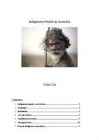
the origin of the world. In the Dreaming, ancestral beings created features of the land, sea and sky, as well as humans, animals and plants. The Dreaming describes the actions and travels of these beings, some of whom were themselves transformed into features of the landscape, like the Three Sisters rock formation in the Blue Mountains. These beliefs have governed every aspect of Indigenous peoples' lives and relationships with the land. They are the subject of traditional stories, music and artwork across the continent. Art, culture and music Australian Indigenous art is one of the oldest continuous art traditions in the world. The earliest Indigenous art forms were paintings and engravings on boulders, rock shelters and cave walls, some of which date back 30 000 years. Modern Indigenous paintings are the most recent expression of this tradition, which is now acclaimed in Australia and internationally.
There are 55 species of parrots in Australia, and the birds are as numerous as they are colourful. Two types of crocodile, the saltwater and the freshwater crocodile are found in the north. The dingo, or native dog is not really an Australian native. It was bought from Asia around 4000 years ago. The dingo is an effective hunter. To save their sheep from dingo attacks, farmers built many fences to keep the dingo out. These fences didn't work so in 1946 the government built a single fence which stretched 5400 km from Great Australian Bight in South Australia to near the Queensland coast. The single fence worked better. Lyrebirds are covered with brown feathers. They live in forests and woodland in Australia. They eat insects, spiders, beetles and worms. Male lyrebirds can copy many sounds. Lyrebird gets its name because of the tail of the male bird. It is shaped like a musical
 annaabi.ee










Kõik kommentaarid