triceps; (contraction) pulls on end of ulna; extensor (muscle)/straightens arm/pulls lower arm down; 2 max 3 max [9] 2+ 45. (calcium ions/Ca ) released from sarcoplasmic reticulum; bind to troponin; troponin changes shape; troponin/tropomyosin, moves; myosin binding site exposed; myosin head binds (to actin); 3 max [3] 46. (Alzheimer’s) 1 reduced uptake of isotope/less positrons emitted/less glucose in brain 2 cells; 3 reduced blood flow; 4 reduced brain activity; 5 reduced respiration in cells; AVP; e.g
the A-band is made up of thick filaments and up about 7% of the total myofibrillar protein. some overlapping thin filaments (Goll et al. Tropomyosin is made up of two polypeptide 1984). The backbone of the thin filaments is chains (alpha and beta) The alpha chain has made up primarily of the protein actin, while an approximate molecular weight of 34,000, the largest component of the thick filament is and the beta chain has a molecular weight of the protein myosin. Together, these two pro- approximately 36,000. These two chains teins make up nearly 70% of the proteins in interact with each other to form a helix. The the myofibril of the skeletal muscle cell. native tropomyosin molecule interacts with Myosin is the most abundant myofibrillar the troponin molecule to regulate contrac- protein in skeletal muscle, making up approx- tion. Native troponin is a complex that con-
(visual appearance) is chocolate. This indicates a diluted-colour but the cats do not have the dilution gene (d/d) at the D locus. In any case, “d” causes blue dilution i.e. black to grey. “d” is one of the three genes involved in melanosome transfer and translocation. The unexplained “Ukraine chocolate” seems due to a gene for which there is no test (at least in the cat). Possible candidates are the other two melanosome transfer and translocation genes: Myosin Va (MYO5A) and RAB27A. Genes involved in the synthesis of eumelanin other than TYRP1, for example, TYRP2, are also possibilities. The other known dilutions in the cat are the extinct Barrington Brown cats (none of which were bred outside of a laboratory colony) and the single example of a pink-eyed dilution cat. UNDETERMINED DILUTION There are 4 cats of Thai descent whose dilution factor hasn’t been genetically identified. The first of these is Mai Thong
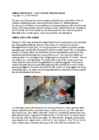
laboratory in Australia for testing of the ACTN3 gene, which codes proteins for fast-twitch muscle ber. Fast-twitch muscle bers have the greatest potential for growth, whereas slow- twitch fibers have the least potential. Just a smidge of helpful science: muscle bers are composed of myofibrils, which are in turn composed of two laments--actin (thin laments) and myosin (thick laments)--that slide over each other to cause muscles to contract, a literal shortening of the muscle. Actin laments, which are necessary to this process, are stabilized by actin-binding proteins. One actin-binding protein called alpha-actinin 3 (ACTN3) is expressed only in fast-twitch muscle ber, the crown jewel of shot-putters and bodybuilders worldwide. It turns out that both of my chromosomes (one from Mammy and one from Pappy Ferriss)
 annaabi.ee