and emotional needs while reinforcing individual strengths, interests, and abilities. Differentiated, individualized instruction is based on the learning style of each child. Most science classes would take place outdoors. Children would be exposed to great literature, art, and music and encouraged to make their own relationships with these works. Children would have guidance in setting long-and short-term goals. Teachers would serve as mentors and facilitators, sharing their educational passions and helping children learn to help themselves. The children would be completely free to set up their own schedules. However, they would be held accountable for achieving their goals every week. There would be no grades until 7.class-there would be feedback from mentors and peers. Teachers would be in constant contact with one another. They would work together to implement cross curricular material and to provide continuity.
In addition it appears that students might not know the plus sides and possibilities that student organizations could enable them so they do not even bother to make clear the benefit of being part of student organizations. One the other hand it might be said that students who have been in many student organizations have got jobs or scholarships more easily than those who have not. Firstly taking part actively in student organizations have given them many useful contacts and they have had mentors. Also secondly joining student organizations might provide help with students future careers and most of all it improves their social skills which causes personal and personality development. For example students on one student organization share similar interest, hobby or religion and it helps to network being in one group and supplementing each other. Briefly, it can be said that students who belong to some student organization get more
protagonist. The best example of a noble savage projected to a mentor is Yoda from the Star War (first appearance in 1980) series. He's a Jedi master and a teacher to Luke Skywalker in a time of a civil war between the Empire and the rebels in a galaxy far far away. In order to defeat the Empire, Luke must face his adversary Darth Vader. The only way to do that is to fullfill his destiny and become a jedi, and that is where Yoda steps in. He mentors Luke in the way of the Force, teaching him patience and the balance between the Light and the Dark side, how to restrain his anger and recklessness. Luke is the hero the consumer follows. Yoda is the mentor who gives the actual lessons. Luke does not teach us anything, we learn with him in course of the story. Yoda is the savage with the quirky apprearance, strange voice and grammatically incorrect sentences, bottomless wisdom and badass Force skills. Mr
throughout the life. We have to study to get knowleges and skills. In Estonia you can study business in Estonian Business School and in Estonian Entrepreneurship University of Applied scienses. Both school focus mainly in business area. In Estonian Entrepreneurship University of Applied scienses you can learn new speciality which is Business Start Up. Learning Start up is 3 year. First year you make a group and think business idea, other two years you start your own business where mentors and business leaders are always next to you and tells what to do and how to do. After 3 years you got diploma and your own business. THIRD: The market for the industrial sector which interests me is agriculture, more specifically the milk industry. Right now the situation is quite hard because the milk price has gone low which sets many smaller farms in difficult situation which often leads to shutting down the farm business
It stands for the bond between parent and child, teacher and student, doctor and patient, god and man. T h e M e n t o r may appear as a wise old wizard (Star Wars), a tough drill sergeant (An Officer and a Gentleman), or a grizzled old boxing coach (Rocky). In the mythology of " T h e M a r y Tyler M o o r e Show", it was Lou Grant. In Jaws it's the crusty Robert Shaw character who knows all about sharks. T h e function of Mentors is to prepare the hero to face the unknown. T h e y may give advice, guidance or magical equipment. Obi W a n in Star Wars gives Luke his father's light-saber, which he will need in his battles with the dark side of the Force. In The Wizard of Oz, Glinda the Good W i t c h gives Dorothy guidance and the ruby slippers that will eventually get her home again. However, the M e n t o r can only go so far with the hero. Eventually the hero must face the unknown alone
Critics frequently attacked the book as inauthentic, not believing that a black man could possibly have produced so eloquent a piece of literature. The book was an immediate bestseller and received overwhelmingly positive critical reviews. Within three years of its publication, it had been reprinted nine times with 11,000 copies circulating in the United States; it was also translated into the French and Dutch languages. The book's success had an unfortunate side effect: his friends and mentors feared that the publicity would draw the attention of his ex-owner, Hugh Auld, who could try to get his "property" back. They encouraged him to go on a tour in Ireland, as many other ex-slaves had done in the past. He set sail on the Cambria for Liverpool on August 16, 1845, and arrived in Ireland when the Irish famine was just beginning. Douglass actually published three versions of his autobiography during his lifetime (and revised the third of these), each time expanding on the previous one
New Directions For Youth Development, 93, 59-89. Laherand, M.L. (2008). Kvalitatiivne uurimisviis. Tallinn: OÜ Infotrükk. *Mead, M. ([1982] 2001). Coming of age in Samoa. Kordustrükk, New York: Harperperennial Library. Menges, C. (2016). Toward Improving the Effectiveness of Formal Mentoring Programs: Matching by Personality Matters. Group & Organization Management, 41(1), 98129. Poulsen, K., M. (2013). Mentoring programmes: learning opportunities for mentees, for mentors, for organisations and for society. Industrial and Commercial Training, 45 (5), 255-263. Usova, T., Anderson, S. (2016). Mentorship: Making it Work. PNLA Quarter- ly, 81(1), 26-31. Virkus, S. (2016). Tallinna Ülikooli Digitehnoloogiate instituudi elektrooniline õppematerjal. http://www.tlu.ee/~sirvir/Intervjuu_vaatlus_ja_sisuanals/intervjuu_eelised_ja_puudused.ht ml (14.04.2018).
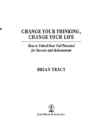
It’s much easier to bounce back from financial loss or reverses in your career than it is to deal with negative people in your work or personal life. One major negative relationship can be enough to cut off all your chances of achieving your full potential in your career. Choose your relationships with care. ■ SEEK OUT A MENTOR Most successful people have mentors at different stages of their lives. A person whom you know and who knows you and helps you on a regular basis often determines your success in life. The right ccc_tracy_7_118-135.qxd 6/23/03 2:48 PM Page 130 130 ➤ CHANGE YOUR THINKING, CHANGE YOUR LIFE mentor at the right time can save you from countless mistakes and years of hard work. At each stage of your life you can benefit from the advice and
The 4-Hour Workweek, which gave me permission to write this book, was just an idea until you encouraged me to take the leap. I cannot thank you enough for your wisdom, early support, and incredible friendship. To Sifu Steve Goericke and Coach John Buxton, who taught me how to act in spite of fear and ght like hell for what I believe, this book--and my life--is a product of your in uence. Bless you both. The world's problems would be far fewer if young men had more mentors like the two of you. Last but not least, this book is dedicated to my parents, Donald and Frances Ferriss, who have guided me, encouraged me, loved me, and consoled me through it all. I love you more than words can express. PHOTO AND ILLUSTRATION CREDITS Grateful acknowledgment is made to the following for permission to use their photographs, illustrations, and graphics. 3.1 © Philippe Halsman, The Halsman Archive 4.1 © James Duncan Davidson 5
 annaabi.ee