· Monotremes - egg-laying mammals (nowadays found only in Australia and New Guinea) Marsupials - babies born in embryonic condition and kept firmly attached to a teat in a pouch or nestled behind a protective skin-flap while developing further Placentals - unborn young are nourished by a placenta and born at a more advanced stage, some still naked, blind and unable to walk for a week or two, others able to run on their day of birth Monotremes: Marsupial: Placentals: Echidna Kangaroo Dugong Dingoes The Dingo is Australia's wild dog. It is found in Australia, in all states but Tasmania. The Dingo is a medium sized dog, with a bushy tail, and red to yellow coat. Dingos do not bark, but they do howl. Platypus Echidna · The most distinctive · The echidna, or spiny monotreme is the ant-eater, is another platypus, a river-dwelling monotreme, which has a
biggest group of animals in Australia. Most of the she-marsupials have pouches in which they carry their young. The kangaroo is one Australian animal that everybody knows.There are more than 50 species of kangaroo. They are furry animals that hop on their hind legs. The biggest are red kangaroos, grey kangaroos and euros. The smallest are thekangaroos that belong to the group called rat kangaroos. There are million of kangaroos in Australia. Another Australian marsupial is the wombat. It lives in burrows in grassland areas of Australia and Tasmania. It has short strong legs and long claws for digging burrows.Wombats live in groups and come out to look for food at night. They have poor eyesight but they can smell and hear very well. Their nearest living relatives are koalas. The koala is one of the best known Australian animals. They live in eucalyptus trees,sleeping for 18 hours and eating 1 kilo of leaves each day. They drink almost
Koalas The koala is an arboreal herbivore marsupial native to Australia. It is easily decide by its strong, tailless body; round, fluffy ears; and large, spoon-shaped nose. The koala has a body length of 6085 cm and weighs 415 kg. Fur colour ranges from silver grey to chocolate brown. At the beginning of the 20th century people hunted Koala because their fur. Today this animal is under the protection but they still are in danger. Koalas from the northern populations are typically smaller and lighter in colour than the other.
Endangered animal koala bear Though often called the koala "bear," this cuddly animal is not a bear at all, it is a marsupial. Koalas live in eastern Australia, where the eucalyptus trees they love are most plentiful. In fact, they rarely leave these trees. That is why they are usually called "treehuggers". Koalas have thick, grayish fur, with white on their chests, inner arms, and ears. They have large furry ears and leathery noses.The koala has large, sharp claws to assist with climing tree trunks. The koala is one of the few mammals that have fingerprints.
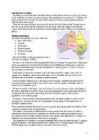
Australia is located in the Pacific ocean and it's sixth country in the world for it's size. It's total area is 7741220 km². This country doesn't have an official language, but it's national language is English. Australia has much lakes and rivers in it. More exactly about 68 920 km² is made up by lakes and rivers. Climate in australia is dampish and warm. Australia's capital is Canberra, but the largest city is Sidney. The symbol of Australia is kangaroo, it's the biggest marsupial (kukkruloom) in the world. Also it has the greatest number of reptiles (roomajad) of any country, more than 700 species. United Kingdom consists of England, Scotland, Wales and Northern Ireland. It is girded (ümbritsema) from North Sea, strait of La Manche and Atlantic Ocean. Total area of United Kingdom is 244 820 km² and population is 60 776 000 people. England is part of the united kingdom. England's territory occupies most of the island of Great Britain
Thylacine AKA the Tasmanian Tiger/Wolf • The Tasmanian Tiger was the largest known carnivorous marsupial of modern times. • Native to continental Australia, Tasmania and New Guinea. • Believed to have become extinct in the 20th century. • Became extremely rare or extinct on the Australian mainland before British settlement of the continent, but it survived to the 1930s on the island of Tasmania. https://www.youtube.com/watch?v=6vqCCI1ZF7o • The thylacine was able to open its jaws to an unusual extent: up to 120 degrees
outback. The outback does not get very much rain and is very dry. Not very many people live in the outback. In the outback, there are some sheep and cattle ranches (property.) There are about ten times more sheep than people in Australia. Sheep are raised for wool and for meat. In Australia what Americans call a ranch is known as a station. Stations are very big. Some stations are so big they have to use planes to keep track of the animals. The most famous animals in Australia are marsupials. A marsupial is a mammal that has a pouch to carry its young. Some kangaroos can jump 30 feet. The koala sometimes stays in the same tree for days and is endangered. The Great Barrier Reef is also in Australia. It is made up of coral and algae. Coral are tiny invertebrate animals. The Great Barrier Reef is about 1250 miles long. There is a channel of water that separates the reef from the Queensland coast. It is the largest deposit of coral in the world. It is also the world's largest living structure
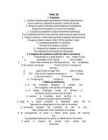
them break bones C trying to scare each other off H black with a white collar or patch around its neck D sleeping in dens lined with grass and leaves I both the settlers and hunters killed them E loved by careful drivers The Tasmanian devil The Tasmanian devil is the largest meat-eating marsupial in Australia. It is usually (1) H and weighs between 6 and 8 kg. It has an extremely large poeerful head with a wide jaw with sharp teeth and pink ears (that turn red when angry) and dark eyes. The Tasmanian devil is now only found on the island of Tasmania. They spend the daytime out of sight (2) D made in small natural caves. Tasmanian devils are not aggressive (3) A . Then they might kill even another devil that wated its catch
seven weeks inside it's mother. It is completely blind and only an inch or an inch and a half long. It crawls into its mother's pouch and attaches itself to a nipple there. There it stays for almost three months, when it begins to stick its head out. It is six months old before it is big and strong enough to leave the pouch. Some of the marsupials in Australia look very much like higher animals. The koala, which looks like a live teddy bear, is not really a bear at all but a marsupial. Today Australian marsupials are dying out. Dogs, cats, and rabbits brought to Australia by men are rapidly destroying the gentler marsupials. Some day there may be nothing left of the ancient animals. Australia has around 800 species of birds, 400 of which are unique to this country. There are 55 species of parrots in Australia, and the birds are as numerous as they are colourful. Two types of crocodile, the saltwater and the freshwater crocodile are found in the north.
Australia. They are reptile-mammals. Another group of Australian mammals are the marsupials. These are the kangaroo and the wombat, for example. They do not lay eggs, but their young are born before they are fully developed. A little kangaroo crawls into its mother's pouch and stays there for almost three months. Dogs, cats, and rabbits brought to Australia by men are rapidly destroying the gentler marsupials. There is only one marsupial still alive in the United States today it is the opossum. Many of the plants of Australia aren't found anywhere else. Agriculture. Australia's farms are highly mechanized and therefore require the minimum of human labour. Only about 5 per cent of the country's workers are farmers. Farmland covers about 65 per cent of Australia. However, most of this land is dry grazing land. Crops are grown on only 5 per cent of the farmland. About 10 per cent of the cropland is irrigated
pouched mammals and egg-lying mammals. Ordinary mammals live also in Australia and these mammals are mostly imported there. Marsupials are kangaroos, wombats, koalas, Tasmanian wolves and Tasmanian devils. Their cubs are born before they are fully developed. Today marsupials are dying out, cause cats and dogs and rabbits, who were exported to Australia many, many years ago, are destroying the gentler marsupials. There is only one marsupial still alive in the USA today- the opossum. But there are also very strange kind of animals, they have hair, like dogs and cats but they also lay eggs- these are the spiny anteater and the platypus. They are only found in Australia and nowhere else in the world and they are called reptile-mammals. Economy The Australian economy is dominated by its services sector, yet it is the agricultural and
pouch where they stay for several months. The most numerous among marsupials is the 4 kangaroo. There are more that 50 different species of them. Kangaroo is a furry and quite long animal who is known for its jumping. They can jump more than 4 meters and achieve 70 km/h. Kangaroos eat grass and leaves. The koala is one of the best-loved Australian animals. It is a small marsupial that lives in eucalyptus trees and it can sleep for 18 hours straight. The aborigines named it "the animal that does not drink", but it eats leaves and bark. The wombat is a small animal that has short, but strong legs and claws, which it uses for digging burrows. It lives on Tasmania, but also in burrows in grasslands of Australia. They do not see well, but they can hear and smell very well. The platypus is a strange-looking marsupial that lays eggs. It has a
ample evidence of their passage, treating fences as a minor inconvenience to be gone through or under and leaving distinctive cubic scats. Wombats are herbivores, their diet consisting mostly of grasses, sedges, herbs, bark and roots. The Tasmanian devil and the Tasmanian wolf are the only carnivores among marsupials and are almost extinct. Tasmanian devil is a size of a small dog, but stocky and muscular, the Tasmanian Devil is the largest carnivorous marsupial in the world. It is characterised by its black fur, offensive odour when stressed, extremely loud and disturbing screech, and viciousness when feeding. It is known to both hunt prey and scavenge carrion and although it is usually solitary, it sometimes eats with other devils. It has a squat and thick build, with a large head and a short, stubby tail. The devil stores body fat in its tail and an unhealthy devil often has a thin tail
The best known animal that lives in Australia is the kangaroo ofcourse. There are about 50 species of kangaroo, ranging in size from the big red kangaroo of the outback to wallabies and smaller ratkangaroos. Kangaroos are marsupials too. Their babies develop inside their mother's pouch. About half of Australia's 230 mammal species are marsupials. As well as meateating Tasmanian devils, possums, bandicoots and ofcourse kangaroos, wombats and koalas. The largest meateating marsupial Tasmanian Tiger is probably extinct. Most of Australian native animals move around at night. But the birds which are very colourful are easy to see. There are about 750 species ofbirds in Australia. Two types of crocodiles, the saltwater crocodile and the freshwater crocodile can be found in the north. The dingo or the native dog is not really an Australian native. It has brought from Asia around 3500 years ago. The dingo is an efficient sheep hunter
eucalyptuses are small bushes in the semi deserts, some are the main trees in the savannas, but the biggest eucalyptuses grow as tall as hundred metres. Eucalyptuses give the people timber and eucalyptus oil. Of 600 kinds of acacias, the golden wattle is the best know because it is the national flower of Australia. Of the other trees there are bottle trees in the savannas and tree-ferns in the tropical forests and many others. Most of the animals which live in Australia are marsupial or pouched mammals. There are 150 different species of them. The babies of there animals are too small to start their lives on their own. After birth, they move to the pouch on the stomachs of their mothers and live there for several months. The kangaroo is the most numerous among marsupials. There are more than 50 species of them. It's a furry animal that hops on its hind legs. An adult can measure 2,4 metres high. They can jump more than 4 metres and travel 70 km/h
creatures. The best known animal that lives in Australia is the kangaroo of course. There are about 50 species of kangaroo, ranging in size from the big red kangaroo of the outback to wallabies and smaller rat-kangaroos. Kangaroos are marsupials too. Their babies develop inside their mother’s pouch. About half of Australia’s 230 mammal species are marsupials. As well as the meat-eating Tasmanian devil, possums, bandicoots and of course kangaroos, wombats and koalas. The large meat eating marsupial, the Tasmanian tiger is probably extinct. Most of Australian native animals move around at night. But the birds which are very colourful are easy to see. There are about 750 species of birds in Australia. Two types of crocodiles, the saltwater and the freshwater crocodile can be found in the north. The dingo or the native dog is not really an Australian native. It was brought from Asia around 3500 years ago. The dingo is an efficient sheep hunter. To protect sheep The Dog
mama's pouch. They are born as small, bean-sized hairless babies that climb up into the safety of the pouch. After 33 weeks the little kangaroos have to leave the pouch. At top speed kangaroos can make 4m leaps and reach the velocity of 50 km/h. The long, heavy and powerful kangaroo tail makes it all possible by providing balance and stability. Only tree kangaroos can move their hind feet independently of one- another. The wombat is a marsupial rat. The koala or pouched bear lives in the gum- trees. It is the loveliest of all the Australian animals. The Tasmanian wolf and the Tasmanian devil, the only native carnivores of Australia, are almost extinct. The egg-laying mammals are the strangest of all Australian animals. They lay eggs like birds and feed their young with milk like mammals do. They form a link between birds and mammals. The duck-bill or platypus lives in the rivers of East Australia mostly. The
 annaabi.ee