using that system was economic. King gave the land to "vassals" in return of army services and goods. When a noble dies, his son took over the estate. When there was no family, the land went back to king who could give it to another noble or just keep it for a few years. In 1086 he wanted to know exactly who was using his land and how much it produced so he could organise and plan economy and taxes. People called the book with all that information `the Domesday book'. And it still exists. Kingship: a family business After William's death in 1087, the land went to his elder son Robert who gave England to his son William II Rufus when he went to the holy land to fight the Muslims. When William Rufus died, he had no son to take the crown. At the time of William's death, his father was on his way back from the holy land. Their younger brother Henry acted quickly and took the crown for himself. That made Robert very angry and tried to invade England. In 1106 Henry
Guinevere's dowry when they were married. Arthur resolved the conflict among knights, having them sit around circular table. Now all the knights were equal. Excalibur · There are two legends that explain how Arthur receives his sword Excalibur. · First: young Arthur pulls the sword from a stone. His ability to pull the sword from the stone gives him ascendance to the throne. Symbol of kingship, power, and responsibility. · A second: Arthur and Merlin meet a woman at a lake. Merlin asks her to approach. Excalibur emerges from the lake, held by a mysterious hand. The woman takes the sword, the hand disappears, and she delivers the sword to Arthur. Pages used: · http://images.google.ee/ · http://www.moraga.k12.ca.us/jm/resources
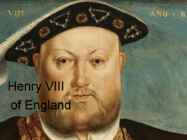
Beind a big, fierce-looking man. Early life Not much is known about his early life, because he was not expected to become king. Around the age of ten his brother Arthur died, thus leaving the crown to him. He also married his brother`s widow, Catherine of Aragon. Little Henry VIII Young King Henry He was a great king and he loved all his subjects. And England loved him as a king. But he wasn't interested in kingship but in arms, armor, sports, and women. Wanted to be a solider. King Henry King Henry didn't look like this all the time, he used to look like this when he was younger. The wives Catherine of Aragon Was married to Prince Arthur, but he died. Then married Henry VIII on 11 June 1509. They were married 24 years Had a daughter Mary Tudor. Gave birth to six children, but five of the died. Later Henry found a new lover Anne Boleyn, so
By 600 Saxon settlements had gradually formed 7 kingdoms (Essex, Sussex, Wessex, Kent, Mercia, East Anglia, Northumbria). They were constant struggle against one another for predominance. From time to time some stronger state seized the land of the neighbouring kingdoms & made them pay tribute or even ruled directly. The number of kingdoms & their boundaries were always changing. The greatest & most important kingdoms were Kent, Northumbria, Mercia & Wessex. King Offa of Mercia claimed ,,Kingship of the English". His power his shown by the border barrier he built between Mercia & Wales Offa's Dyke. It probably took 5000 men to build it. It stretches for about 180 km, was 7 metres high, the ditch in front of it 2 metres deep. By the beginning of the 9th cent. Wessex had become the strongest. Wessex never again lost its supremacy. In 829 King Egbert was acknowledged by Kent, Mercia & Northumbria. This was the beginning of the united kingdom. King Egbert became 1st King of England
Mysticism. Emergence of perspective view, stage machinery, artificial light, revolution. The stage cast the monarch in the focal point (the lines of perspective of the stage met there. Inigo Jones. Masque an educative vehicle, towards classical antiquity and architecture. Tide towards absolute monarchy. Masque – linked poetry and moral philosophy into art. Music, dance, poetry, lavish illusionistic scenic display to express the doctrines of divine kingship. Great impact. Like gods come down to earth. 2. The Caroline masque Charles decided on subject matter, and acted and danced in masques. Now the regal divinity even more obvious. Ben Jonson. Divine minds of this incomparable pair. Arts role – to set a noble ideals, to strengthen practice of virtue. He and queen living incarnations of ideals. Visual style of his reign more classical than James’s. Thomas Carew „Coelum Britannicum”. King’s policy of peace (peace in every courtly
that became known as the Domesday Book, which provided information for William's tax officers. It so reminded people of the paintings of the Day of Judgement, or `doom', on the walls of their churches that they called it the Domesday Book. The Domesday Book still exists, and gives us an extraordinary amount of information about England at this time. William's policies cost English many of their liberties, but brought them peace and order. To understand the idea of kingship and lordship in the early Middle Ages it is important to realise that at this time there was little or no idea of nationalism. William controlled two large areas: Normandy, which he had been given by his father, and England, which he had won in war. Both were personal possessions, and it did not matter to the rulers that the ordinary people of one place were English while those of another were French. To William
and sixteenth centuries, although the ruling class greatly disliked it. Later the story was changed. Robin Hood was described as a man of noble birth, whose land had been taken by King John. Almost certainly this was an effort by the authorities to make Robin Hood ‘respectable’. Notes 1. Edward the Confessor, king of England (1042–1066), was more interested in the Church than in kingship, encouraged church building. By the time he died there was a church in almost every village. Эдуард Исповедник. 2. Harold II, king of the English, Jan. – Oct. 1066. Гарольд II. 3. Hastings ['heI-], a resort town on the coast of East Sussex, north of which William the Conqueror defeated the Anglo-Saxon king Harold II at a famous battle in 1066. Pop. 75,000. Гастингс. 4
gives rise to the insatiable thirst for wealth. Still, I do not mean to find fault with the accumulation of property, provided it hurts nobody, but unjust acquisition of it is always to be avoided. The great majority of people, however, when they fall a prey to ambition for either military or civil authority, are carried away by it so completely that they quite lose sight of the claims of justice. For Ennius says: There is no fellowship inviolate, No faith is kept, when kingship is concerned; and the truth of his words has an uncommonly wide application. For whenever a situation is of such a nature that not more than one can hold preeminence in it, competition for it usually becomes so keen that it is an extremely difficult matter to maintain a "fellowship inviolate." We saw this proved but now in the effrontery of Gaius Caesar, who, to gain that sovereign power which by a depraved imagination he had conceived in his fancy, trod underfoot all laws of gods and men
A hero may also be extra-strong in some areas as a defense for the wounded parts. T h e movie The Fisher King is a thorough study of two men and their psychic wounds. T h e story is inspired by the Arthurian legend of the H o l y Grail and the Fisher King, whose physical wound symbolized a wound of the spirit. T h i s legend tells of a king who was wounded in the thigh and was therefore unable to rule his land or find any pleasure in life. Under his weakened kingship, the land was dying, and only the powerful spiritual magic of the H o l y Grail could revive it. T h e quest by the Knights of the Round Table to find the Grail is the great adventure to restore health and wholeness to a system that has been almost fatally wounded. T h e Jungian psychologist Robert A. Johnson brings insight to the meaning of the Fisher King wound in his book on masculine psychology, He. Another wounded, almost tragic hero is Tom Dunson, played by John Wayne
 annaabi.ee