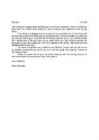
I am writing to complain about the behaving of one of your employees. I want to inform you about that I was treated really rudely by a shop assistant at your department store the day before. I was doing my shopping at your department store yesterday after I came from work and I got into a rude conversation with your employee after I did not remember my credit card pin-code and tried to pay in cash after that. But except a pleasant smile, I got insulted and told that I should know if I do have money on my credit card or not. Concerning how pleasant the employees at your shop usually are I was very surprised by this acting. That caused me deep disapproval about your shop. The name of employee who insulted me was Michael. I expect that you will resolve my problem immediately, not just for me, but for all the people who might get insulted by your shop assistant.
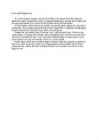
Love and forgiveness Is it hard to forgive someone, that you love? Most of the people think that asking for forgiveness makes you look like a loser. In asking for forgiveness you also have to admit you are wrong and people do not like to do that. Nobody wants to be humiliated. In the first place, when someone has insulted you, and the person admits that he has been wrong, then i see no reason why not to forgive him. I think that it is important that the person himself understands his fault. Everyone needs a second chance. Furthermore, you want to forgive someone, who is really related to you. However, you cannot forgive everything. For example, when your girlfriend has cheated on you and when she even do not admit her fault. That is true that everybody needs a second chance, but not
Hugh had pulled the trigger, but there was nothing in the field. After that William heard two extremely different voices: a scream like that of a wild animal and Morgan crying out as if in mortal agony. He gazed at Hugh and it seemed like his body was split into pieces. When he approached the body, his companion was dead. The jury can't believe that an invisible force could do something like that, so one juror asks: „From what asylum did you escape?“ The witness feels insulted by that comment and starts to leave. Just before going out of the door he sees coroner reading the victim's diary and asks for a permission to reveal Morgan's writings, but the coroner denies his request. At the end of the meeting jury decides that the victim was slaughtered by a mountain lion. But the diary is still revealed by a third person. Although some pages are torn out, it has certain interesting entries about the Damned Thing that had tried to get Hugh Morgan out of his house.
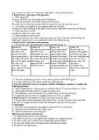
She was a little deaf and the nabers and wasn't it's owner. She warned He didn't say anything quite old. She has a there on the night when Christopher and about the dog, probably grandson who is the the crime was suggested him to mind because Christopher same age as commited. He was his own business. walked away from him Christopher. She quite surprised hearing after being insulted. offered him a drink and about the crime. a cake. 2.2. Does the information give him a clue to who might have killed Wellington? Yes, he didn't think any of the nabers would have killed the dog. 3. Your turn. Describe what sort of person could be Wellington's murderer. Consider the following questions: 3.1. What relationship does that person have with Mrs Shears? This person knows mrs Shears. 3.2. What might be his/her motive
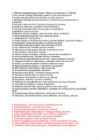
He came to realise that he was mistaken 20.Ta näis kõhklevat She appeared to be hesitating 21.Teda peetakse targaks meheks He is believed to be a clever man 22.Teda sunniti lepingule alla kirjutama He was made to sign the treaty 23.Ta tavatses lugeda põnevusromaane She used to read thrillers 24.Varsti ta õppis vene keelt rääkima Soon she learned to speak Russian 25.Ma ei teadnud mida vastata I did not know what to answer 26.Mul oli kahju, et olin teda solvanud I was sorry to have insulted her 27.Ta oli esimene kes tuli She was the first to come 28.Nad olid liiga noored, et protestida They were too young to protest 29.Ta ei osanud piisavalt inglise keelt, et vaielda He did not know enough English to argue 30.Tal oli tähtsamatki teha, kui raamatukogusse minna He had more important things to do than to go to the library 31.Kui kuulata teda rääkimas, võiks mõelda, et ta on professor To hear hom talk, you would think he was a professor 32
He had re-established his control & captured a huge quantity of treasure. It is surprising that people never rebelled against Ed III. He was an expensive king. Ed III & his eldest son, the Black Prince, were greatly admired for their courage on the battlefield & their courtly manners. They became symbols of the ,,code of chivalry", the way in which a perfect king should behave. According to it the perfect king fought for his good name if insulted, served God & the king & defended any lady in need. Ed III introduced the idea of chivalry into his court. Ed III chose 24 knights. They met once a year on St. George's Day at Windsor Castle, where Arthur's Round Table was supposed to have been. The custom is still followed. Chivalry was a useful way of persuading mend to fight by creating the idea that war was a noble & glorious thing. War coult also be profitable. But the realities of war were cruelty, death, destruction.
running the household. And she starts reading dangerous books, deals with business. The father has sex with escimo women and when he returns he thinks his changed wife is his punishment for what he's done. The younger brother of the mother is revolutionary, radical. The second family is black. The only family that has a name. The family of Coalhouse Walker, a black ragtime pianist. They become victims of racism. When he can't find legal help he kills several men who insulted him, then he became an outlaw and mother younger bother joins him. The brother transform fathers patriotich fireworks to something else, bombs probably, fathers factory becomes a factory for weapons for the revolutionists. The third perspective is not related to the firt 2 families. It's a immigrant family Tateh, Mameh and a little girl. Their in the US in serach of the American Dream, probably from Russia. But what they find from NY is even more poverty
It is Sony Television, Sony VCR, Hitachi, Aiwa that. The Japanese have us wrapped around their fingers and can twist us any way they like. You can never get respect from a people who believe no matter whatever they call you and how much they hate you, you have no alternative but to come back for more insults. They know that you are inferior. You are not intelligent. So why even bother mincing their words in public. You cry foul, you shout that they insulted you; they offer lukewarm apologies, but the fact remains that they are not really remorseful. Yes, they offer apologies, but behind closed doors, they congratulate themselves – and after the initial uproar they sit back and laugh. “You see how those idiots have not leant a thing or two about us. Dumb asses,” that is the only way they can describe us. One thing is certain. Africans like to dance. They like to party. They like to sing. They have enriched the
much more capable of dealing with it effectively. ■ THE OPINIONS OF OTHERS The third major cause of negative emotions, according to Ous- pensky, is inward considering. This occurs when you become overly concerned with the way people are treating you. If you perceive that someone is not giving you the respect that you feel you de- serve, you can feel insulted and angry, and want to strike back. If people are rude or indifferent to you, you can experience their behavior as an attack on your personality or character. This in- terpretation of their attitude or behavior can make you angry or depressed. Psychologists say that everything we do is to increase our self- esteem and sense of personal value, or to protect it from being di-
I am no stranger to the particulars of your youngest sister's infamous elopement. I know it all; that the young man's marrying her was a patched-up business, at the expence of your father and uncles. And is such a girl to be my nephew's sister? Is her husband, is the son of his late father's steward, to be his brother? Heaven and earth!--of what are you thinking? Are the shades of Pemberley to be thus polluted?" "You can now have nothing further to say," she resentfully answered. "You have insulted me in every possible method. I must beg to return to the house." And she rose as she spoke. Lady Catherine rose also, and they turned back. Her ladyship was highly incensed. "You have no regard, then, for the honour and credit of my nephew! Unfeeling, selfish girl! Do you not consider that a connection with you must disgrace him in the eyes of everybody?" "Lady Catherine, I have nothing further to say. You know my sentiments." "You are then resolved to have him?"
It is hard to know whom to blame more, the insensitive man or the exploiters who had abused his tendency to reciprocate a gift until his response had soured to a refusal. No matter whom you find more blameworthy, the lesson is clear. We will always encounter authentically generous individuals as well as many peo- ple who try to play fairly by the reciprocity rule rather than to exploit it. They will doubtless become insulted by someone who consistently rejects their efforts; social friction and isolation could well result. A policy of blanket rejection, then, seems ill advised. Another solution holds more promise. It advises us to accept the offers of others but to accept those offers only for what they fundamentally are, not for what they are represented to be. If a person offers us a nice favor, let's say, we
 annaabi.ee