Plot introduction Jane Eyre is a first-person narrative of the title character. The novel goes through five distinct stages: Jane's childhood at Gateshead, where she is emotionally abused by her aunt and cousins; her education at Lowood School, where she acquires friends and role models but also suffers privations; her time as the governess of Thornfield Manor, where she falls in love with her Byronic employer, Edward Rochester; her time with the Rivers family at Marsh's End (or Moor House) and Morton, where her cold clergyman-cousin St John Rivers proposes to her; and her reunion with and marriage to her beloved Rochester. Partly autobiographical, the novel abounds with social criticism. It is a novel considered ahead of its time. In spite of the
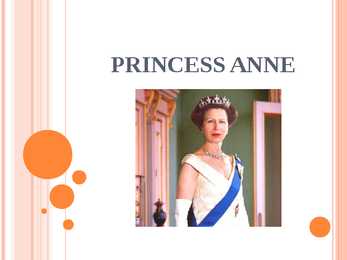
PRINCESS ANNE early life and education Anne was born at Clarence House on 15 August 1950. She was named Anne Elizabeth Alice Louise. The second child and the only daughter of the Queen and Prince Philip. In 1987 she recived the title Princess Royal. Her first governess was Catherine Peebles. The 1st Buckingham Palace Company called Girl Guides was reformed in 1959. Since 1963 she studied in Benenden School. family Father: Prince Philip Mother: Queen Elizabeth II Brother: Prince Charles Brother: Prince Andrew Brother: Prince Edward Husband: Mark Phillips Son: Peter Phillips Daughter: Zara Phillips Husband: Timothy Laurence Klõpsake juhtslaidi teksti laadide redigeerimiseks Teine tase Kolmas tase
marine artists of the 19th century BIOGRAPHY Aivazovsky was born in the town of Feodosiya, Crimea to a poor Armenian family. His father taught him to play the violin and speak Polish and Ukrainian fluently. His talent as an artist earned him sponsorship and entry to the Simferopol gymnasium №1 and later the St.Petersburg Academy of Arts, which he graduated with a gold medal. At 31, Aivazovsky married Julia Graves, an English governess in St. Petersburg. They had four daughters. The marriage was dissolved, and at the age of 65, Aivazovsky, married Anna Boornazian, a young Armenian widow from Theodosia. In 1895, he painted a number of works on the subject such as "The Expulsion of the Turkish Ship," and "The Armenian Massacres at Trevizond." He spent his last years in Feodosia where he supplied the town with water from his own estate, opened an art
Click to edit Master text styles able to maintain a large house with several servants. As was the custom of the day, Beatrix was cared for and raised by a nurse. She spent long hours alone, seeing her parents only at bedtime and special occasions. Her younger brother Bertram was born when she was six, and was raised in a similar manner. Both children were educated at home by a governess until Bertram was old enough to attend school. Beatrix did not attend school however, and stayed at home under the care of a Governess who encouraged her to read and write and taught her music and art. Second level All in all, Beatrix lived a lonely life at home, having little contact with other people.
Symmington's maid was murdered. Shockingly, the body was found by Megan, Mr Symmington's 20 year old step-daughter. Scotland Yard sent someone to investigate, and came to the conclusion that the letter- writer/murderer was a middle-aged woman who must be one of the citizens of Lymstock. The village was plunged into suspicion and terror. Once a village of trust, now all inhabitants were on the verge of accusations. There was a break in the case when the Symmington's beautiful young governess, Elsie Holland, received an anonymous letter typed with the same typewriter that had been used to create previous letters. The doctor's sister, Aimee Griffith, was arrested, since she had been seen both typing the letter and delivering it. Everything fell back into place for a moment, which lasted a bit longer than usual. Jerry and Megan went to London to run some errands, visit his doctor and buy new clothes for Megan. He
headmaster was Mr. Brocklehurst, a cruel, hypocritical, and abusive man, who treated the students really bad. In school Jane found a friend named Helen Burns who was also at same age as Jane. In the winter Helen got sic and died. The epidemic also resulted in the departure of Mr. Brocklehurst by attracting attention to the insalubrious conditions at Lowood. Jane spent eight more years at Lowood, six as a student and two as a teacher. After teaching for two years, Jane accepted to be a governess at a manor called Thornfield, where she thought a French girl named Adele. The housekeeper Mrs. Fairfax did the housekeeping and told Jane about the hose and Rochester. Jane employer Rochester was a dark, impassioned man. After a while Jane found herself falling in love with him. One night Jane heard strange voices and discovered that Rochester’s room was in fire and saved his life. Rochester told Jane that the fire was started by a drunken servant named Grace Poole, but Jane
By 1851 it was 21 million. By 1900, Queen Victoria reigned over 410 million people. British Victorians were excited by geographical exploration, by the opening up of Africa and Asia to the West, yet were troubled by the intractable Irish situation and humiliated by the failures of the Boer War. EDUCATION Education in nineteenth-century England was not equal - not between the sexes, and not between the classes. Gentlemen would be educated at home by a governess or tutor until they were old enough to attend Eton, Harrow, Rugby, Winchester, Westminster, Charterhouse, or a small handful of lesser schools. The curriculum was heavily weighted towards the classics - the languages and literature of Ancient Greece and Rome. After that, they would attend Oxford or Cambridge. Here they might also study mathematics, law, philosophy, and modern history. Oxford tended to produce more Members of Parliament and government officials,
EMMA Youthful Emma Woodhouse, whose long-time governess and friend Miss Taylor has just married Mr. Weston, takes some solace in being left alone with her aging father by claiming that she made the match herself. An old friend of the family, Mr. George Knightley, does not believe her, but in her certainty she decides that she must also marry off the young rector, Mr. Elton. Among her friends and acquaintances in the large and populous village of Highbury, she begins to notice young Harriet Smith, the pretty illegitimate seventeen-year-old who lives at Mrs. Goddard's boarding school. Determining first to improve Harriet, Emma discourages her interest in worthy Robert Martin of Abbey-Mill Farm, declares that Harriet must be from more genteel parents than his, and fixes upon Harriet as Mr. Elton's future wife. In bringing the two together socially, Emma does a drawing of Harriet which Mr. Elton admires and takes off to London to be frame...
1. It´s about time you took a holiday 2. It´s time you to gave up smoking 3. It´s about time you saw a dentist 4. It´s about time you bought a new suit 5. It´s about time you to went to the laundrette 6. It´s about time you went to bed Sõnad 1. Telepathic - telepaatiline 2. Plainness- lihtsus 3. Prevent sb. From doing smth eemale hoidma 4. Attic pööning 5. Reverend kõrgeauline 6. Be blind - pime 7. Moors nõmmed 8. Governess koduõpetaja 9. Tray - kandik 10. Gloomy sünge 11. Neglected hooletusse jäetud 12. In the great võrel 13. Occupant asukas 14. Yelp klähvima 15. Trodden peale astuma 16. Tread, trod, trodden peale astuma 17. Whine kiunuma 18. Curl up kerra tõmbuma 19. Forgotten about neglected 20. Resting one´s body against leaning 21. Stepped on tread on 22. In a commanding voice käskivalt 23. Grabbed violently haarama 24. Wrapped around ümber põimuma 25
Jane. A massive typhus epidemic sweeps Lowood, and Helen dies of consumption. The epidemic also results in the departure of Mr. Brocklehurst by attracting attention to the insalubrious conditions at Lowood. After a group of more sympathetic gentlemen takes Brocklehurst’s place, Jane’s life improves dramatically. She spends eight more years at Lowood, six as a student and two as a teacher. After teaching for two years, Jane yearns for new experiences. She accepts a governess position at a manor called Thornfield, where she teaches a lively French girl named Adèle. The distinguished housekeeper Mrs. Fairfax presides over the estate. Jane’s employer at Thornfield is a dark, impassioned man named Rochester, with whom Jane finds herself falling secretly in love. She saves Rochester from a fire one night, which he claims was started by a drunken servant named Grace Poole. But because Grace Poole continues to work at
godfather, Tsar Alexander II of Russia. Edward died when Victoria was eight months old, upon which her mother enacted a strict regimen that shunned the courts of Victoria's uncles, George IV and William IV. Father Mother Edward, the Duke of Kent Princess Victoria of Saxe-Coburg. Warmhearted and lively, Victoria had a gift for drawing and painting; educated by a governess, Louise Lehzen, and the Reverend George Davys at home. She was certainly busy.( Queen Victoria published two books during her lifetime, 'Leaves from the Journal of Our Life in the Highlands' and 'More Leaves' in 1868 and 1884 respectively.) She was given religious instruction and lessons in French, Latin, German, Italian, arithmetic, drawing, music, geography and history . A young Victoria
Edward. Elizabeth's first Lady Mistress, Margaret, Lady Bryant, wrote that she was "as toward a child and as gentle of conditions as ever I knew any in my life". By the autumn of 1537, Elizabeth was in the care of Blanche Herbert, Lady Troy who remained her Lady Mistress until her retirement in late 1545 or early 1546. Catherine Champernowne, better known by her later, married name of Catherine Ashley, was appointed as Elizabeth's governess in 1537, and she remained Elizabeth's friend until her death in 1565. She clearly made a good job of Elizabeth's early education. Mary I's Regin Edward VI died on 6 July 1553, aged 15. His will swept aside the Succession to the Crown Act Lady Jane was proclaimed 1543, excluded both Mary and queen by the Privy Council, Elizabeth from the succession. but her support quickly Instead declared as his heir crumbled, and she was
"Anna Karenina" Lev Tolstoi Part 1 The novel opens with a scene introducing Prince Stepan Arkadyevitch Oblonsky, "Stiva", a Moscow aristocrat and civil servant who has been unfaithful to his wife Darya Alexandrovna, nicknamed "Dolly". Dolly has discovered his affair - with the family's governess - and the house and family are in turmoil. Stiva's affair and his reaction to his wife's distress shows an amorous personality that he cannot seem to suppress. In the midst of the turmoil, Stiva reminds the household that his married sister, Anna Arkadyevna Karenina is coming to visit from Saint Petersburg. Meanwhile, Stiva's childhood friend Konstantin Dmitrievich Levin ("Kostya") arrives in Moscow with the aim of proposing to Dolly's
Do your sisters play and sing?" "One of them does." "Why did not you all learn? You ought all to have learned. The Miss Webbs all play, and their father has not so good an income as yours. Do you draw?" "No, not at all." "What, none of you?" "Not one." "That is very strange. But I suppose you had no opportunity. Your mother should have taken you to town every spring for the benefit of masters." "My mother would have had no objection, but my father hates London." "Has your governess left you?" "We never had any governess." "No governess! How was that possible? Five daughters brought up at home without a governess! I never heard of such a thing. Your mother must have been quite a slave to your education." Elizabeth could hardly help smiling as she assured her that had not been the case. "Then, who taught you? who attended to you? Without a governess, you must have been neglected." "Compared with some families, I believe we were; but such of us as wished to learn
 annaabi.ee