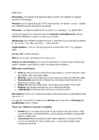
1938 · No written form untill 19th century · Has been under different foreign rules CHANGES · Only changes is the increasing usage of loan-words · Less important · Vanishing in my opinion FEATURES Consonants Bilabial Labio-dental Dental Post-alveolar Velar Pharyn-geal Glottal Nasal m n voiceless p t k Plosive voiced b d voiceless ts t Affricate voiced dz d voiceless f s Fricative
Plosives of English: Bilabial Alveolar Velar Fortis p t k Lenis b d g Fricatives are produced by narrowing the distance between 2 articulators to produce a turbulent airflow. Continuant consonants can be produced until all the air is out of the lungs – s, m, n etc. Fricatives on English: Labiodental Dental Alveolar Post- Glottal alveolar Fortis f s Lenis v z Affricates are sounds that start with a plosive and end with a fricative – both have the same place of articulation. Affricates of English: Nasal consonants are produced so the air flow in the oral cavity is completely blocked and the velum lowers and air escapes through the nasal cavity. Nasals of English:
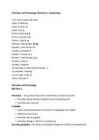
Phonetics and Phonology. Mid-term 1. Terminology. Testi tuleb kindlasti see tabel! Nasal, Bilabial: m Nasal, Alveolar: n Nasal Velar: Plosive, Bilabial: p; b Plosive, Alveolar: t; d Plosive, Velar: k; Affricate, Post-Alveolar: t; d Fricative, Labio-dental: f; v Fricative, Dental: ; Fricative, Alveolar: s; z Fricative, Post-Alveolar: ; Fricative, Velar: x Fricative, Glottal: h Approximant, Alveolar ja Post-Alveolar: Approximant, Palatal: j Approximant, Velar: w Lateral, Alveolar: l Phonetics and Phonology. Mid-term 1. Phonetics the general study of the characteristics of speech sounds: how they may be "strung" together to form meaningful units how they are produced It studies: how to describe the speech sounds in the languages of the world what these sounds are how they fall into patterns
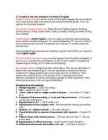
country) and socially (to higher social classes). The erosion of the English class system and the greater social mobility in Britain today means that this trend is more clearly noticeable than was once the case. (Wells 1997) - `the sudden emergence of a new type of English' results from irresponsible disregard for the facts. 3. Commonly cited salient features of Estuary English · l-vocalization, milk miwk · glottalling, using a glottal stop · happY-tensing; happy, coffee, valley · yod coalescence; Tuesday, tune, attitude, duke, reduce · diphthong shift, FACE, PRICE and GOAT vowels (wotshor nime?) (Wells 1997) perhaps to a phonemic split (wholly holy) (Wells 1994) The features that Wells excludes from EE's phonetic make-up that are typical of Cockney are: · h-dropping, so that Cockney hand on heart becomes ('and on 'eart). · th-fronting, using labiodental fricatives instead of dental fricatives
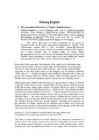
RP has a large number of diphthongs and not a particularly close relationship to English orthography. RP is a social accent, rather than regional, and is associated particularly with the upper-middle and upper classes. Some features: · The /i:/ of bee, rather than the // of be, occurs in the final syllable of very, many, etc. · The vowel // in unstressed syllables (in RP) often corresponds to // (in near-RP accents). · The consonant /t/ may be realized as a glottal stop [?]. · Most EngEng accents have lost the original contrast. · Some English accents are ,,rhotic" or ,,r-ful" and others are ,,non-rhotic" or ,,r-less". 3. Estuary English - a dialect of English widely spoken in South East England. IT is commong among young Londoners. Something between RP and Cockney. Some features: · Non-rhotic · They use intrusive / r / · They use the broad / a: / sound · They use glottal stop more often (instead of k/p/t)
 annaabi.ee