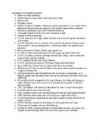
· 1488- Columbus and his lover Beatriz Enriquez de Arana got child called Ferdinand. · 1488- Columbus made another trip to Portugal to get support from John II · In 1492 finally he got a supporting decision and he signed a contract with Castile on April 17 in 1492. · In 1492 Columbus reached South-America, but he thought that it was India. · The last part of Columbus life was full of illnesses. · On May 20, 1506, Columbus died and was buried Franciscan robes. His bones were shipped to Santo Domingo about 1540 to rest with honour in the Cathedral.
Baja California became the northwest limit of Spanish colonization, and even there, efforts to settle the area and bring native tribes to Christianity and European ways were halfhearted at best. Not until the Seven Years War (1756-1763) realigned European alliances and their colonial empires did Spain seriously attempt to assert control of Alta California. This was to be done through a combination of military forts (presidios) and mission churches overseen by Franciscan fathers led by Junípero Serra. In 1769, the first parties set north from Baja California, and the line of Spanish settlement along the coast was inaugurated when soldiers and priests established a presidio and mission church at San Diego. By the end of the Spanish colonial period, Alta California had three more presidios (at Monterey, San Francisco, and Santa Barbara) and no fewer than twenty-one missions. In addition to the missions,
The monastery also drew profit from the veneration of relics. Many documents mention twelve silver reliquaries containing the heads of saints. Some reposed on the high altar whereas others were enshrined on side altars. Each `head was reputed to cure a different set of diseases. In 1517 the Reformation started in German and very quickly spread into the Baltic states. The loyalty of the friars to Rome made them immediate victims. In 1523 a Lutheran mob burnt down the Franciscan monastery in Kuramaa. The Dominican monastery in Tallinn was destroyed on ,1524. In 1954 the former garden, cloister and refectory of the Dominican monastery were restored and opened to visitors. One of the most beautiful and peacefri pleaces in Talliun is the cloister garden whict is-bordered on one side by the church of Saints Peter and Paul and on the other by the original church of Saint Catherin. The .cloisxer and refectory contain a permanent exhibition of carved stone slabs.
declare their love for each other. The young lovers decide to marry without informing their parents, because they would obviously disallow it due to the planned union between Paris and Juliet, and because they are from enemy families. Juliet sends the nurse to find Romeo. Accompanied by one Peter, who carries her fan, the nurse exchanges some spicy insults with the bawdy Mercutio. With the help of Juliet's Nurse and the Franciscan Friar Lawrence, the two are married that day. The Friar performs the ceremony, hoping to bring the two families to peace with each other through their mutual union. Events take the darker turn after that. Tybalt, still smarting from the incident at the Capulets' ball, had previously sent a letter to the Montagues challenging Romeo to a duel. Meeting Romeo by happenstance, he attempts to provoke a fight. Romeo refuses to fight Tybalt because they are now kinsmen -- although Tybalt doesn't
1944. Siis hukati kolm austrialast ja 2 poolakat, nende põgenemis katse pärast. 6 jaanuaril hukati 4 juudi naist, kuna nad varustasid mässulisi lõhkeainetega. Surnuks näljutamine Alates 1941. aastast hakati hukkamise viisina kasutama surnuks näljutamist. Karistust kasutati pärast kellegi põgenemist. Ohvrid valiti välja õhtuse loenduse ajal. Nad viidi 11 osakonda ja näljutati nii kaua, kuni põgenenud vang tagasi tuli. Tavalisel lõppe see surmaga. Kuulsaim kinnipeetav oli Franciscan Maksymillian Kolbe. Ta läks vabatahtlikult, vahetades välja ühe teise kinnipeetava, 11 osakonda. Kolbe surmati lõpuks surmava süstiga. Alates 1943. aastast kasutati näljutamist harvemini ja lõpuks see karistusviis lõpetati. Rudolf Franz Ferdinand Höß Rudolf Franz Ferdinand Höss sündis 1900 aastal 25 novembril Baden-Badenis kristlikus peres. Hössi isa oli kunagine ohvitser, kes sõdis Ida-Aafrikas. Pärast isa surma liitus Rudolf armeega. Temast sai juba 17 aastaselt ohvitser
they traded. Two Franciscans, Fray Juan de la Asuncion and Fray Pedro Nadal, who traveled north in 1538 on a missionary journey, were also told of a country where people wore cotton clothes, had many turquoises and knew of larger and wealthier villages than their own. The first European to enter what is now Arizona was probably Fray Marcos de Niza in 1539.* The viceroy, Antonio de Mendoza, had selected the Franciscan to lead a small party north. Accompanying Fray Marcos was a Negro who was one of the survivors in Cabeza de Vaca's party. This Negro, now a slave of Mendoza, was still called Estevan de Dorantes, after his former master. The party also included Fray Onorato and a number of Piman Indians who had come to Mexico with Cabeza de Vaca. Traveling northward the friar sent Estevan ahead with instructions to send back reports on what he found
less attractive). 6) A resident of New York is called a ‘New Yorker’. How are residents of the following places called? Continue the list with five more names. Las Vegas – ‘Las Vegan’ or simply ‘Vegan’ (pronounced as vay-gan, not vee-gan) Michigan – ‘Michigander’, ‘Michiganian’, ‘Michiganer‘, ‘Michiganite’, ‘Michigine’, ‘Yooper’ Chicago – ‘Chicagoan’ Indiana – ‘Indianian’, ‘Indianan’, ‘Hoosier’ San Francisco – ‘San Franciscan’ Oklahoma – ‘Oklahoman’, ‘Okie’, ‘Sooner’ Pittsburgh – ‘Pittsburgher’ Virginia – ‘Virginian’ Oregon – ‘Oregonian’ Iowa – ‘Iowan’, ‘Hawkeye’ Tennessee – ‘Tennessean’, ‘Volunteer’, ‘Big Bender’, ‘Buttenut’ 7) Discuss the differences between bourbon and Tennessee whiskey. First of all, all Bourbons are Whiskey but not all Whiskeys are Bourbons. Bourbon refers to a
More of a scholar than a ruler, Rudolf founded observatories for Tycho Brahe and Johannes Kepler, established a botanical garden, and set up an alchemical laboratory to which he invited numberless scientists. The presence of the manuscript at his court in Prague was later proved by the discovery in a margin of the autograph of Johannes de Tepenecz, a Bohemian scientist who was a favorite of Rudolf. Marci also reported the belief that the author of the manuscript was Roger Bacon, the English Franciscan friar who lived from about 1214 to 1294. Bacon had speculated, centuries before they became reality, on the possibility of microscopes and telescopes, motorboats, horseless carriages, and flying machines. Popular legend credited him with great magical abilities, a reputation probably enhanced by his extensive writing on alchemy. He interests modern science because of his precocious emphasis on observation of natural phenomena, so unlike the a priori scholasticism of his time
 annaabi.ee