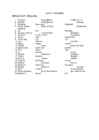
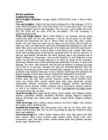
13.Jalutuskäru pushchair stroller 14.Värv colour color 15.Au honour honor 16.Naaber neighbour neighbor 17.Teater theatre theater 18.Keskus centre center 19.Dialoog Dialogue dialog 20.Epiloog Epilogue Epilog 21.Reisinud Travalled Travaled 22.Reisija Traveller Traveler 23.Kino cinema movie theater 24.Kinno minema go to the cinema go to the movie 25.Järjekord queue line
Published in 2005, it was the author's first novel. Set in India, it tells the story of Ram Mohammad Thomas, a poor young waiter who becomes the biggest quiz-show winner in history, only to be sent to jail on accusations (but with no evidence or proof) that he cheated. It was the basis of the 2008 feature film Slumdog Millionaire. The novel was re-published under the title Slumdog Millionaire after the success of the film. The book is divided into 14 topics (included the prologue and the epilogue). Each chapter of the book focuses on questions and answers from the quiz-show, but also a story, how Ram Mohammad Thomas knew answer for all the questions he was asked for. One of the main reasons whay I started to read this book, was the success of the movie Slumdog Millionaire. Although I had not seen the film I thought that the theme of the book and the film was very interesting. So I decided to read the novel first, because the chances are (predictably and
He represents the spirit of learning. The Shipman represents many of his countrymen, other sailors, including pirates, who were making a name for England as a powerful maritime nation. o They each tell a story suitable for their class, different genres. The Knight a romance, the Miller a fabliau, the Prioress a religious legend. Each story has its own prologue and epilogue. There are numerous interruptions, characterised by the pilgrims' own actions. The whole tales are a broad panorama of human nature including everything that is noble and base (the opposite of noble). · GC was in a transitional stage into the Renaissance. There is humanity and humanism in his works and it is why he has sympathy for people. · GC decided to break free from Italian and French literature. His vocabulary is very
e- that is, viz- videlicet, etc- et cetera, e.f- confer Latin adjectives for english nouns- nose-nasal, mouth-oral, sun-solar, moon-lunas, son-filial, daughter- filial, mother- maternal, father- paternal. GREEK- abbot, angel, apostle, bishop, school, cilinder, cycle, dialoge, cardiac, phonetic, gymansium, biathlon, pentathlon, decathlon, olympic, diagnoses, prognoses, analyses, technology, epic, drama, poem, tragedy, comedy, theatre, epilogue, prologue, methaphor CELTIC- welsh, walloon, wallnut, bannock, bin, brock, badger, caln, whiskey, lock, slogan, arthur, donald and mac. SCANDIAVIAN- take, taken, grasp, seire, catch, call, cast, hit, trive, want, raise, indow, husband, fellow, gate, sky, ski, skirt, skin, plought, ill, ugly, law, thrall, beck, tharp, breed, orientering and sorgasbord FRENCH- law, culture, fashion, religion, odour, slent, king, queen, lord, lady, duke, dutchess,
dexterity, nucleus, formula, vertebra, corpuscle, atomic, carnivorous, incubate, molecule, i.e- that is, viz- videlicet, etc- et cetera, c.f- confer Latin adjectives for english nouns- nose-nasal, mouth-oral, sun-solar, Greek borrowings abbot, angel, apostle, bishop, school, cilinder, cycle, dialogue, cardiac, phonetic, gymnasium, biathlon, pentathlon, decathlon, olympic, diagnosis, prognosis, analysis, technology, epic, drama, poem, tragedy, comedy, theatre, epilogue, prologue, metaphor Celtic borrowings welsh, walloon, walnut, bannock, bin, brock, badger, caln, whiskey, lock, slogan, arthur, donald and mac. Scandinavian borrowings take, taken, grasp, catch, call, cast, hit, thrive, want, raise, endow, husband, fellow, gate, sky, ski, skirt, skin, plough, ill, ugly, law, thrall, beck, tharp, breed, and sorgasbord French borrowings law, culture, fashion, religion, odour, slent, king, queen, lord, lady,
Approach to the Inmost Cave 143 T h e Ordeal 155 Reward 175 T h e R o a d Back 187 T h e Resurrection 197 Return with the Elixir 215 vi EPILOGUE: Looking Back on the Journey 231 T h e Writer s Journey 293 APPENDICES 297 Stories Are Alive 299 Polarity 315 Catharsis 341 T h e W i s d o m of the Body 355 Trust the Path 365 FILMOGRAPHY 371 BIBLIOGRAPHY 373
5. Greek borrowings The Greek language has contributed 50,000 words to the world. Christianity: New Testament in Greek. Catholic Church – Scclesiastical Latin. Examples: abbot, angel, apostle, bishop; school, cylinder, cycle, criterion, dialogue, cardiac, phonetic, gymnasium, marathon (pentathlon, biathlon), athlete, diagnosis, prognosis, analysis, epic, drama, poem, comedy, poetry, theatre, epilogue, prologue, metaphor. 6. Celtic borrowings Welsh: walnut, bannock a round flat cake of oatmeal,bin, clan loch, sea, slogan Celtic personal names: Arthur ‘high, noble’ Donald ‘proud chief’ Mac ‘son of’ (Scottish) O’ ‘son of’ (Irish) O’Connor 7. Scandinavian borrowings 1,000 words, in some sources 2,000 closed class words: they, them, their
themes. The Rape of the Lock – based on piece of real-life gossip. The Dunciad – savage attack on hacks and booksellers, told in the form of a celebration of the progress of an empire, that of Dullness. Commonplace subjects are described in elevated, heroic style of classical epic. By parody and deliberate misuse of heroic language, emphasises triviality of subject. Moral Essays, Epistle to Augustus, The Epilogue to the Satires, Epistle to Dr Arbuthnot John Dryden: satires good-tempered, smth devastating scorn, has genius for verse rhytm, exceptional expressiveness of language. MacFlecknoe, Absalom and Achitophel, The Medal. Johnson: London, TheVanity of Human Wishes. 23. Augustan reflective and nature poetry (Winchilsea, Thomson, Denham, Dyer, Akenside, Pomfret, Pope) Especially first half of the 18th C.
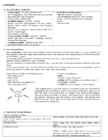
o Abbot, angel, apostle, bishop Everyday words 2 o School, cylinder, cycle, criterion, dialogue, cardiac, phonetic, gymnasium, marathon, athlete, Olympic, diagnosis, prognosis, thesis, analysis, technology Literature o Epic, drama, poem, tragedy, comedy, theatre, epilogue, prologue, metaphor, Affixes o a-, geo-, halo-, hyper-, hypo-, mega-, meta-, -ology, -o-, photo-, tele-, Inflectional endings retained but spelt in the Latin style o Abiogenesis, aegis, analysis, anemone, antithesis, automaton, charisma, cinema, crisis, criterion, cytokinesis, diagnosis, dogma, drama, electron, enigma, genesis, gnosis, hoi
abounding with ideas and vitality. Already during his Tartu years he had an intention to write an opera on the national epic Kalevipoeg. In Germany, the search for national expression became manifest in Capriccio (1909) based on the Estonian folk tune Varese sõjasõnumida (The Crow’s War Message), the ballad Sest Ilmaneitsist ilusast (The Beautiful Heavenly Maiden, 1911) and Kalevipoja epiloog (Kalevipoeg’s Epilogue, 1912) for reciter and orchestra. In Berlin he became acquainted with some prominent musicians, Ferruccio Busoni among them, who held in high esteem his piano playing, erudition in music and openness. During the last six years of his life (1912-1918), apart from a two year hiatus in the German army, he taught music theory at Königliche Hochschule für Musik (Berlin Royal College of Music). The years in Germany, especially the war years,
Text Size-- 10-- 11-- 12-- 13-- 14-- 15-- 16-- 17-- 18-- 19-- 20-- 21-- 22-- 23-- 24 TWILIGHT By Stephenie Meyer Contents PREFACE 1. FIRST SIGHT 2. OPEN BOOK 3. PHENOMENON 4. INVITATIONS 5. BLOOD TYPE 6. SCARY STORIES 7. NIGHTMARE 8. PORT ANGELES 9. THEORY 10. INTERROGATIONS 11. COMPLICATIONS 12. BALANCING 13. CONFESSIONS 14. MIND OVER MATTER 15. THE CULLENS 16. CARLISLE 17. THE GAME 18. THE HUNT 19. GOODBYES 20. IMPATIENCE 21. PHONE CALL 22. HIDE-AND-SEEK 23. THE ANGEL 24. AN IMPASSE EPILOGUE: AN OCCASION twilight STEPHENIE MEYER LITTLE, BROWN AND COMPANY New York Boston Text copyright © 2005 by Stephenie Meyer All rights reserved. Little, Brown and Company Time Warner Book Group 1271 Avenue of the Americas, New York, NY 10020 Visit our Web site at www.lb-teens.com First Edition: September 2005 The characters and events portrayed in this book are fictitious. Any similarity to real persons, living or dead, is coincidental and not intended by the author.
 annaabi.ee