allegorical epic in which Gloriana, the Faerie Queene, represented Elizabeth. The popularity of sonnet led to the writing of sonnet sequences, usually telling the story of unrequited love. Lyric poetry also flourished as courtier and commoner alike found in song an outlet for the exuberant Renaissance spirit. 12. What was the leading genre in English literature at that time? How did it develop? Beyond question, the Elizabethan period was the golden age of English drama, including among its dramatists Christopher Marlowe, William Shakespeare and Ben Jonson, along with more than a dozen other first-rate playwrights. Under the skillful handling of these dramatists, blank verse, introduced into the lg by Surrey, became the main vehicle for tragedy and comedy. Native English drama, which had existed at least since medieval times, was the wellspring of Elizabethan drama. Although Classical drama had been known earlier, its initial
introduced from Europe to the British by the Romans. Many auditoriums were constructed across the country. The most famous British playwright is obviously William Shakespeare. He lived from 1564 to 1616. During that time he wrote about 40 plays, which are still played and used in today's theatre. His plays are performed more often than those of any other playwright. The first professional woman playwright was Aphra Behn. Nowadays there are not so many world famous dramatists in England but the memory of William Shakespeare and many others has preserved until today. Important modern playwrights include Alan Ayckbourn, John Osborne, Harold Pinter, Tom Stoppard, and Arnold Wesker. Music Many British music composers have made major contributions to world's music, and are known internationally. They also have many orchestras including BBC Symphony Orchestra, the Royal Philharmonic Orchestra, the Philharmonia etc.
· Futuristlike muusikute manifest Manifesto of Futurist Musicians (Balilla Pratella: Musica futurista per orchestre riduzione per pianoforte, 1912) · Futuristliku muusika tehnika manifest Technical Manifesto of Futurist Music (Pratella) · Teine futuristlik poliitiline manifest Second Political Manifesto of Futurism (Marinetti) · Itaalia Tripoli manifest Manifesto to Italian Tripoli (Marinetti) · Futuristlike näitekirjanike manifest Manifesto of Futurist Dramatists (Marinetti) · Futuristliku skulptuuri tehnika manifest Technical Manifesto of Futurist Sculpture (Umberto Boccioni, 11.4.1912) · Futuristliku naise manifest Manifesto of the Futurist Woman (Valentine de Saint-Point. lendleht, 11.1.1913) · Futuristliku kirjanduse tehnika manifest Technical Manifesto of Futurist Literature (Marinetti) · Futuristliku meelelisuse manifest Futurist Manifesto of Lust
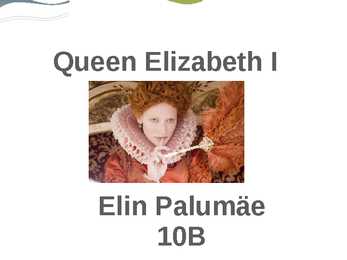
This same period of economic and political uncertainty, however, produced an unsurpassed literary flowering in England. The first signs of a new literary movement had appeared at the end of the second decade of Elizabeth's reign, with John Lyly's Euphues and Edmund Spenser's The The notion of a great Elizabethan age Shepheardes Calender in 1578. depends largely on the builders, dramatists, poets, and musicians who During the 1590s, some of the great names of were active during Elizabeth's reign. English literature entered their maturity, including William Shakespeare and They owed little directly to the queen, Christopher Marlowe. who was never a major patron of the During this period and into the Jacobean era arts.As Elizabeth aged her image
üle kanda, aga remargid tuleb sõnaliselt kujult üle kanda hääletooni, zestidesse, lavakujundusse, muusikasse. Draamatekst jätab alati ka tõlgendamisruumi & kaasaloomisvabadust nii lavastajale, näitlejatele kui ka kunstnikule. Lavastus on füüsilisel kujul olemas vaid selle ettekandmise ehk etenduse ajal. Lavastus on selle kõikide etenduste muutumatu ühisosa. (wiki) Dramaturgy is the art of dramatic composition and the representation of the main elements of drama on the stage. Some dramatists combine writing and dramaturgy when creating a drama. Others work with a specialist, called a dramaturg , to adapt a work for the stage.Dramaturgy may also be defined, more broadly, as shaping a story into a form that may be acted. Dramaturgy gives the work or the performance a structure Draama on seotud nii kirjanduse kui teatriga (&/või teiste tegevusaladega) dialoogiline ja olevikuline (st. ei ole valikut - see on nüüd ja praegu)
buffoonery may seem childish play without any real relevance. The “traditional” art aesthetics remained firmly in their place and was expressed diversely in painting (portrait, nude, landscape, interior) by Olev Subbi, Leili Muuga (b. 1922), Enn Põldroos (b. 1933) and several elder masters. Estonian theatre of this decade may be characterised as casting light on the whole complexity of the relations between Man and society. Western dramatists had an important role: Arthur Miller, Friedrich Dürrenmatt, John Osborne and others. As for other foreign classics, plays by Ibsen, Strindberg and Chekhov remained popular. Young directors showed promise: Jaan Tooming (b. 1946), Mikk Mikiver (1937-2006), Evald Hermaküla (1941-2000). As a common denominator for the work of the young, activity of search and strengthening of form are remarkable. Tooming catches our attention with his evocative amplification of human inner tensions, many-faceted
 annaabi.ee