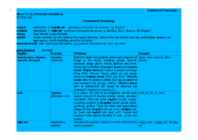
Nouns are commonly thought of as "naming" words, and specifically as the names of "people, places, or things". Nouns also denote abstract and intangible concepts such as birth, happiness, evolution, technology, management, imagination, revenge, politics, hope, cookery, sport... Determiners are followed by the noun. Determiners are the, a or an. The determiner the is known as the definite article and a is indefinite article. Verbs have traditionally been defined as „action“ words or „doing“ words. Travels, sings, walked, cooked... Adjectives typically describe an attribute of a noun. Cold, large, violent, beautiful... Adverbs are used to modify a verb, and adjective, or another adverb. Slowly, quickly, softly, suddenly, gradually... Prepositions typically come before a noun
the Empire State Building; the Taj Mahal; the Mona Lisa; the Sunflowers • organisations: the United Nations; the Seamen’s Union • hotels, pubs and restaurants*: the Ritz; the Ritz Hotel; the King’s Head; the Déjà Vu *Note: We do not use the definite article if the name of the hotel or restaurant is the name of the owner, e.g.,Brown’s; Brown’s Hotel; Morel’s; Morel’s Restaurant, etc. • families: the Obamas; the Jacksons demonstrative determiner There are four demonstrative determiners in English and they are: this, that, these and those Note that demonstrative determiners can also be used as demonstrative pronouns. When they are used as determiners they are followed by the nouns they modify. Compare: This is my camera. (Demonstrative used as a pronoun, subject of the verb is) This camera is mine. (Demonstrative used as a determiner modifying the noun camera. demonstrative pronoun
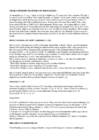
adding affixes to base forms. This brings about a change of meaning and/or grammatical class. determiner määratleja Item which indicates the kind of reference a noun Definite/indefinite: the dining phrase has. Determiners include words like a, the, some, room, a ruler my, his, each, those, which, several which express a Possessive: my study, their range of meanings including definite/indefinite, children Demonstrative: this box, possessive, demonstrative, quantifier, and numeral. that man Quantifier: some milk,
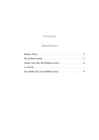
Interrogative Pronouns 48 Demonstrative Pronouns 49 11 Conjunctions 135 5 Adjectives 52 12 Interjections 138 Adjective Endings 54 Kinds of Adjectives 58 Comparison of Adjectives 65 13 Sentences 139 What is a Sentence? 139 6 Determiners 71 Kinds of Sentences 140 The Imperative 141 The Articles 71 The Subject and the Object 143 Demonstrative Determiners 73 Direct and Indirect Objects 144 Interrogative Determiners 74 Positive and Negative Sentences146 Possessive Determiners 75 Questions 147
For example: consider, considered, considers. Open class words (content words) → These are the word classes that take in new words, for example by adding affixes to them or borrowing words from other languages. In English these words are most commonly nouns, verbs (not auxiliaries), adjectives and adverbs. Closed class words (function words) → These are words that do not take in any new words. In English the word classes are prepositions, pronouns, determiners and conjunctions. Syntax is the study of how sentences are formed in a language. For example what is the word order ( in English it’s usually subject, verb object) or how words relate to each other in sentences etc. Germanic languages → Belong to the Indo-European language family. Germanic languages divide into West Germanic and North Germanic languages
CHARACTERISTIC FEATURES OF OLD ENGLISH - 15 monophtongs, (7 long, 7 short, 1 central), 4 diphtongs, 17 consonants. Free variaton of R, and it was pronounced everywhere. Very much Germanic in character. Quite some special consonants that no longer exist. About morphology: synthetic with numerous aglutinating tendencies. System of tenses Germanic, but with a reduction of tenses. Paradigmatic leveling; Stress shift; Word order; Loan words (Old Norse, Old French). Dual pronouns. Determiners - no separate definite article. Strong and weak verbs. Word order relatively free with tendencies towards SVO. SVO, SOV, VSO most common. Adposition and podposition were both possible (eesliide ja tagaliide). About syntax: clauses were joined much simpler than nowadays, using and, then etc. Because of case syncretion the word order in a sentence became much more important to be able to tell the difference between words. FIRST CONSONANT SHIFT (GRIMM'S LAW)
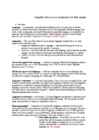
Countable nouns are names of the things you can count (one elephant, two elephants, three elephants, etc). Uncountable nouns are names of the things you cannot normally count (love, air, philosophy, etc). The can usually be used when we mean this. The Indefinite Article – a/an (= one!) can only be used with singular countable nouns. a child, a book, an elephant, an apple On the other hand, singular countable nouns cannot be used without any determiner. Determiners are both articles (a/an and the) and different pronouns (e.g., one, another, each, every, this, that; personal pronouns: my, your, his, her, its, our, their). Only one determiner can be used at a time: My house was deserted. Or: The house was deserted. Another problem is the pollution that the factory causes to the environment. Or: One other problem is the pollution the factory causes to the environment.
alternative grammatical forms of words. Inflectional affixes are always suffixes in English. consider, considers, considered Open vs. Closed class words: In linguistics, a closed class (or closed word class) is a word class to which no new items can normally be added, and that usually contains a relatively small number of items. Typical closed classes found in many languages are adpositions (prepositions and postpositions), determiners, conjunctions, and pronouns.[1] Contrastingly, an open class offers possibilities for expansion. Typical open classes such as nouns and verbs can and do get new words often, through the usual means such as compounding,derivation, coining, borrowing, etc. [2] Syntax: studies how words group together to make phrases and sentences. Sentences are not simply random strings of words; they conform to specific patterns determined by the syntactic rules of the language.
3 His new employer had gone on Challenge! 3 4 What are the pros and cons of holiday. Students' own answers online shopping? 3 1 C 3 F 5 E 2B Determiners page 12 2 A 4 D 6 G 4 The most obvious advantage of ... is 1 1 8 a 15 the that ... 4 1 F 3 T 5 T 7 T 2 the 9 16 the Another disadvantage is that ... 2 F 4 F 6 F 8 T
 annaabi.ee