com/5452 · Pilt [9] ,,U.S. Intelligence Says Water Shortages Threaten Stability" http://www.scoop.it/t/geography-education/p/1487549893/2012/03/25/u-s-intelligence-says-water-shortages-threaten-stability · Pilt [10] ,, Wielka susza sprowadzila glód do Rogu Afryki" http://afryka-i-my.blogspot.com/ · Pildid [11] ja [12] ,,In pictures: The Sahel drought" http://www.aljazeera.com/indepth/inpictures/2012/06/2012624213039862469.html · Pilt [13] ,,International charities criticise efforts to build resilience in the Sahel" http://www.theguardian.com/global-development/2012/aug/01/international-charities-criticise-efforts-resilience-sahel ·
differ difference biology biological organize organization criticise critic know knowledge Verb Noun govern government Verb Noun
thoughts and feelings. And the positive side is, that you do not have to speak. You put your thoughts on the paper and just publish it. But publishing may sometimes make a lot of trouble. Books have caused big conflicts. From the past, we know a lot of cases, in which the books have been burnt and the writers been killed. That shows clearly, that books are not absolutely dead things. But I think that, no one should be killed or punished because of expressing their thoughts. If people criticise and say negative arguments about something, then it is clear, that something is wrong and must be changed. But we know that many of us do not endure criticism and therefore punish them, who actually want good. Definitely, one of the positive argument is, that reading of any book does not make us dumber. All books give you some kind of information and knowledge. They teach you, they may give you advice, they are like teachers and instructors. I believe that books have saved people's lives
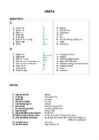
lootus at 8. hopeless (adj) 8. lootusetu Idioms 1. take my hat off - admire 2. on the go- busy and active 3. hold still- not move 4. has heart of gold- be kind 5. was having a go at- criticise 6. loase heart- become dissapointed 7. be taken for granted- not show gartitude for 8. kept his head- remain calm 9. had butterflies in his stomach - be nervous 10. kill two birds with one stone- be able to achieve 2 things rahter than 1 11. take the bull by the horns- do sth that you fell you have to do even though it is
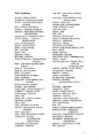
Unit 2 vocabulary cope with toime tulema, hakkama saama abruptly järsult, äkiliselt crash (into) kokku põrkama, vastu absorbed in hõivatud, süvenenud sõitma (avariis) achieve saavutama, läbi raskuste criticise kritiseerima teostama crooked (teeth) puseriti hambad allow lubama, võimaldama crowd rahvamass, summ anatomy anatoomia, kehaehitus curl lokk, kihar announce teadustama, kuulutama, damsel preili välja kuulutama deaf kurt announcement teadaanne, kuulutus deafening kõrvulukustav arched kaarjas (... eyebrows declare kuulutama, deklareerima
about what they´re like. if a student doesn´t want to answer the teacher´s questions, that doesn´t mean thant (s)he dislikes studying. Perhaps (s)he is shy and needs more cofidence. Kevin: At school we get ready for real life. thus it is the time to learn how to communicate with other people. If you don´t then learn to speak up for yourself, you never will. That´s why I erally like the teachers who honestly say what they think of me. I never feel angry when they criticise me. Alan: I think a perfect teacher tries to become his students´ friend. He treat students with respect and avoids being too strict. This year our new maths teacher was really strickt and made me work as hard as possible. He never helped me when i was in trouble. Naturally this bad feeling had an effect on my results. 1 Whos emarks went down because of the teacher? Alan´s 2 Who thinks a teacher should help students when they have difficulties? Jane
that Wish / if only (but I didn't) happened or didn't happen in the + past perfect If only she hadn't cheated me. past (but she did) To criticise other people or complain about a situation now, I wish you wouldn't talk with in the future or generally. Wish / if only I.e., to express: your mouth full. + subject + would + bare inf. · A polite imperative
students of weaker ability. (Hanlon, 2009, pp. 6-7) Secondly, it can be said that one of the major concerns of blogs' usage for teaching classrooms is the anonymity on the Internet. According to the survey collected from the student teachers carried out by Yang (2009), the issue of revealing identity on the Internet remained a concern during the whole semester. Namely, students did not like having to criticise a peer's reflection, fearing it would damage friendships. Students are without doubt more comfortable with critiquing themselves than others, and therefore they must be taught how to give constructive criticism rather than just criticise (Yang, 2009). Therefore students need to be in an environment that they feel respected and safe in order for them to openly reflect. It is the role of the instructor to create a positive and guided structure for successful reflection.
I usually say the opposite of what I mean, in order to seem funny. Isn't that rather clever? I have to admit that I am a perceptive person because I understand people quite well. I have read many books and I work as a clergyman, I think that this explains why am I good at understanding people. Also, I am definitely not a shy person. I tend to be rather honest, often to the point of being blunt, and express my opinions on different things and criticise them. As I said before, there are not many things to tell about me, so I will have to finish because I've got nothing to say anymore. Digested read No one who had ever seen Catherine Morland in her infancy, would have supposed her born to be a heroine. Her situation in life, the character of her mother and father, her own person and disposition, were all equally against her. Catherine had many interests, but she was never interested enough to be accomplished at anything. She
II Pessimistic period III Romantic The Optimistic period He wrote poems and sonnets (154), world famous comedies, bright comedies, two tragedies "Romeo and Juliet" and some historical plays. 4 different items. Sonnet A poem of 14 lines, perfected in Italy by Petrarch. Each line has 10 syllables an d the stress is on everu other syllable. Adressed on two people. One was so called The Dark Lady. Other was The Writers Young Friend. Started to wrote them because sonnets abled him to criticise various human vices to express his feelings of love and friendship and his admiration of beauty. The above mentioned themes were very important in the Renaissance period. The ideal woman of those days looked like Elizabeth I. She had golden hair and ... complection, but The Dark Lady was totally different from ideal. Other person was The Young Friend. Maybe was the Earl of Southampton. Author and Young Friend are sincere friend until a woman appears. The
always take up. RS http://www.independent.co.uk/news/business/sme/dont-quit-your-job-until-youre- ready-783828.html Derivations NOUN VERB ADJECTIVE ADVERB 1. Explanation explain explanatory - 2. Life live lifeless/lively lifelessly 3. Criticism criticise critical critically 4. Agreement agree agreeable agreeably 5. Ability enable able ably 6. Activeness active actively activity 7. Appreciation appreciate appreciative appreciatively 8. Excitement excite excited - 9
criminals people living in the West. In The Adventures of Tom Sawyer (1876), he paints a realistic picture of the life of two young boys growing up in the Mississippi area. The themes of childhood and nature recur in his masterpiece The Adventures of Huckleberry Finn (1885). In both these works Mark Twain shows his deep distrust of `respectable' society and his sympathy for social outcasts and the common man. He uses humour to criticise the practice of slavery and the hypocrisy and prejudices of his times. In his characterisations he displays a penetrating insight into human psychology. Mark Twain's use of language is also strikingly original. The stories of Tom Sawyer and Huckleberry Finn are told from the point of view of the young protagonists and contain slang, regional dialect and illogical sentence constructions that make the dialogue come to life. As a writer Twain did not emulate European models; he created a
The document proposes an absolutist theory of monarchy, by which a king may impose new laws by royal prerogative. *Charles I's 'tyranny' The Personal Rule (also known as the Eleven Years' Tyranny) was the period when King Charles I of England, Scotland and Ireland ruled without recourse to Parliament. He was entitled to do this under the Royal Prerogative, but his actions caused discontent among those who provided the ruling classes. Parliament began to criticise the king more harshly than before. Charles then realised that, as long as he could avoid war, he could rule without parliament. The term Eleven Years' Tyranny is indicative of the partisan nature of activities at the time, which would eventually result in the English Civil War. Charles was executed for high treason. *Archbishop William Laud's controversial church reforms Laud was one of the senior advisors to Charles I. Laud brought an end to reforms within the Church which he believed
exemplary in my investigation, it is undoubtedly Estonian symphonic music at its highest and most sublime. It is natural that high value in music, its sublime and profound impact, on the base of a grand spiritual idea, can be expressed completely only by pure and clear means. Our analyses and evaluations, be they either positive or negative, do not change the value of a single composition in an absolute sense. As Buddha put it: It was so of old, Atula. It is not just so today. They criticise him who sits in silence, they criticise him who talks a lot. They even criticise him who speaks in moderation. There is not a man in the world who is not criticised. (Dhammapada, Adage 227). A spiritual level and erudition in the arts, the ability to recognise and evaluate existing high artistic qualities is essential. The more the listener searches for the sublime spiritual germ in music and is able discover and evaluate it all, the more competent and objective they will become.
" "You make me laugh, Charlotte; but it is not sound. You know it is not sound, and that you would never act in this way yourself." Occupied in observing Mr. Bingley's attentions to her sister, Elizabeth was far from suspecting that she was herself becoming an object of some interest in the eyes of his friend. Mr. Darcy had at first scarcely allowed her to be pretty; he had looked at her without admiration at the ball; and when they next met, he looked at her only to criticise. But no sooner had he made it clear to himself and his friends that she hardly had a good feature in her face, than he began to find it was rendered uncommonly intelligent by the beautiful expression of her dark eyes. To this discovery succeeded some others equally mortifying. Though he had detected with a critical eye more than one failure of perfect symmetry in her form, he was forced to acknowledge her figure to be light and pleasing; and in spite of his
arttcle);Wherecould it be found?(in a newspaperor magazine) z9 Explainthe task.Ssdo the exercise. CheckSs'answers' Thena , l l o w5 st w o m i n u t e tso t h i n ko f a n ys i m i l aird i o m s rntheirown language. Elicitidiomsfrom Ss Ask5s:/sthis similarto/differentfromanyof theidiomsin theexercise? How? AnswerKey 1 admire 5 criticise 2 busyandactive 6 become disaPPointed 3 notmove 7 notshowgratitude for 4 bekind 8 remaincalm (Ss'own answers) 30 . Explain the task Ssdo the exercise CheckSs'answers' t h e nS se x P l a itnh e i d i o m s AnswerKey(See overprintedanswers) l beverynervous or excited
arttcle);Wherecould it be found?(in a newspaperor magazine) z9 Explainthe task.Ssdo the exercise. CheckSs'answers' Thena , l l o w5 st w o m i n u t e tso t h i n ko f a n ys i m i l aird i o m s rntheirown language. Elicitidiomsfrom Ss Ask5s:/sthis similarto/differentfromanyof theidiomsin theexercise? How? AnswerKey 1 admire 5 criticise 2 busyandactive 6 become disaPPointed 3 notmove 7 notshowgratitude for 4 bekind 8 remaincalm (Ss'own answers) 30 . Explain the task Ssdo the exercise CheckSs'answers' t h e nS se x P l a itnh e i d i o m s AnswerKey(See overprintedanswers) l beverynervous or excited
arttcle);Wherecould it be found?(in a newspaperor magazine) z9 Explainthe task.Ssdo the exercise. CheckSs'answers' Thena , l l o w5 st w o m i n u t e tso t h i n ko f a n ys i m i l aird i o m s rntheirown language. Elicitidiomsfrom Ss Ask5s:/sthis similarto/differentfromanyof theidiomsin theexercise? How? AnswerKey 1 admire 5 criticise 2 busyandactive 6 become disaPPointed 3 notmove 7 notshowgratitude for 4 bekind 8 remaincalm (Ss'own answers) 30 . Explain the task Ssdo the exercise CheckSs'answers' t h e nS se x P l a itnh e i d i o m s AnswerKey(See overprintedanswers) l beverynervous or excited
arttcle);Wherecould it be found?(in a newspaperor magazine) z9 Explainthe task.Ssdo the exercise. CheckSs'answers' Thena , l l o w5 st w o m i n u t e tso t h i n ko f a n ys i m i l aird i o m s rntheirown language. Elicitidiomsfrom Ss Ask5s:/sthis similarto/differentfromanyof theidiomsin theexercise? How? AnswerKey 1 admire 5 criticise 2 busyandactive 6 become disaPPointed 3 notmove 7 notshowgratitude for 4 bekind 8 remaincalm (Ss'own answers) 30 . Explain the task Ssdo the exercise CheckSs'answers' t h e nS se x P l a itnh e i d i o m s AnswerKey(See overprintedanswers) l beverynervous or excited
 annaabi.ee